

…throws out bid to halt disciplinary proceedings against him
Moorosi Tsiane
SUSPENDED Directorate on Corruption and Economic Offences (DCEO) Principal Investigator, Tsotang Likotsi, has suffered a major legal blow after the Court of Appeal dismissed his attempt to stop disciplinary proceedings against him, paving the way for the anti-corruption agency to continue action that could determine his future at the institution.
The apex court dismissed Mr Likotsi’s appeal with costs, ruling that his dispute over suspension and disciplinary proceedings falls under the jurisdiction of the Labour Court — not the High Court.
The judgment is a victory for DCEO Director-General, Brigadier Advocate Mantšo Sello, who had accused Mr Likotsi of engaging in conduct “detrimental to the operations of the DCEO” before placing him on precautionary suspension pending disciplinary proceedings.
Mr Likotsi had approached the courts seeking to block the disciplinary process before it commenced, arguing that the proceedings were unlawful, politically motivated and intended to remove him from “sensitive investigations” within the anti-graft body.
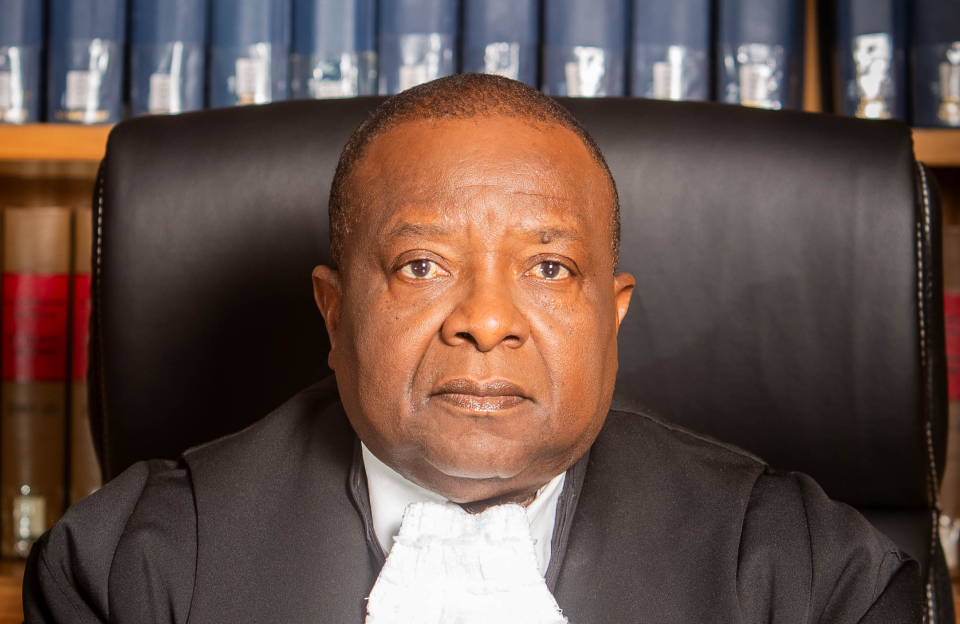
However, the Court of Appeal bench comprising Justices Petrus Damaseb, Phillip Musonda and ‘Maliepollo Makhetha rejected his arguments.
In a judgement issued on 15 May 2026, Justice Damaseb ruled that the matter squarely belongs before the Labour Court.
“In the result, the appeal is dismissed, with costs, on the ordinary scale,” Justice Damaseb said, with Justices Musonda and Makhetha concurring.
The dispute arose from a show-cause letter issued to Mr Likotsi by Brig Sello on 28 February 2025.
This followed Adv Sello’s directive for detailed reports on all cases handled by DCEO officers amid allegations that some officers were accepting bribes to dismiss cases.
On 18 March 2025, Mr Likotsi was slapped with a chargesheet, accusing him of neglection of duty for allegedly failing to complete investigations promptly, leading to the discharge of former Local Government Principal Secretary Lefu Manyokole and businessman Pitso Ntsukunyane by the Maseru Magistrates Court due to inadequate evidence in their corruption and fraud case. He was also accused of conduct prejudicial to good order and discipline for allegedly sabotaging investigations by recording inaccurate evidence and misplacing dockets, forcing prosecutors to withdraw cases.
In response, on 24 March 2024, Mr Likotsi requested further particulars, including a list of witnesses, the disciplinary committee chairperson’s details, and the specific cases and witness statements he was accused of mishandling. However, on the same day, he received his suspension letter.
Before the disciplinary committee could convene, Mr Likotsi rushed to the High Court seeking urgent relief to block the appointment of the disciplinary chairperson and suspend the entire process.
In his founding affidavit, Mr Likotsi claimed he was the target of an orchestrated campaign designed to remove him from highly sensitive investigations within the DCEO.
He argued that the disciplinary process was “irregular, unlawful and aimed at silencing him”.
According to court papers, Mr Likotsi maintained that the High Court had a constitutional obligation to intervene and protect him from what he described as abuse of public power.
He further argued that the actions of Adv Sello violated constitutional principles of legality, rationality, fairness and good faith.
Mr Likotsi also claimed that his constitutional right to a fair hearing under Section 12(8) of the Constitution was under threat.
“The disciplinary proceedings instituted against me are irregular, unlawful, and aimed at silencing me, particularly in light of my involvement in sensitive investigations,” Mr Likotsi argued in court papers.
He additionally challenged the appointment of the disciplinary chairperson, alleging “bias and impropriety”.
“These constitute administrative actions subject to judicial review on grounds of illegality, irrationality, and procedural unfairness,” he argued.
Mr Likotsi further insisted that the High Court had powers under Section 2 of the High Court Act of 1978 to grant declaratory relief.
“The High Court has a constitutional duty to scrutinize unlawful conduct by public officials and to uphold the rule of law,” he argued.
“By declining jurisdiction, the court a quo failed to discharge this duty and to afford the appellant an opportunity to vindicate his constitutional rights.”
However, Adv Sello, through the DCEO legal team, strongly opposed the application, arguing that the matter was purely labour-related and therefore belonged before the Labour Court.
Adv Sello maintained that although the Constitution grants the High Court broad powers, Parliament had already established a specialist court to deal specifically with employment disputes.
“The appellant’s grievance against his suspension and resultant disciplinary proceedings arise from an employment relationship and is thus labour-related,” Brig Sello argued.
“As such, the matter falls squarely within the exclusive jurisdiction of the Labour Court established under the Labour Act 2024.”
Adv Sello further argued that Mr Likotsi was attempting to bypass established labour remedies by directly invoking constitutional provisions.
“The appellant is required to exhaust the remedies provided under the Labour Act, in line with the principle of subsidiarity,” Brig Sello submitted.
“In other words, the appellant cannot rely directly on constitutional provisions where legislation exists to give effect to the rights in question.”
In the High Court, Chief Justice Sakoane Sakoane had agreed with Adv Sello and dismissed Mr Likotsi’s urgent application after concluding that the High Court lacked jurisdiction to entertain the matter.
Dissatisfied with that outcome, Mr Likotsi escalated the matter to the Court of Appeal, where Advocate Christopher Lephuthing represented him during the hearing on 10 April 2026.
Adv Lephuthing argued that Chief Justice Sakoane had improperly raised the issue of jurisdiction mero motu — independently and without prompting from either party.
But Justice Damaseb rejected that argument.
“The appellant’s contention that the court a quo erred in raising the issue of jurisdiction mero motu is without merit and unsupported by authority,” Justice Damaseb said.
“It is trite that jurisdiction may be raised by a court mero motu at any stage of the proceedings, including on appeal, even where the parties themselves have not done so.”
Justice Damaseb stressed that questions of jurisdiction are fundamental and do not depend on whether litigants raise them.
“These principles accord with long-standing authority that jurisdiction is not dependent on the parties’ consent or acquiescence,” he said.
“The appellant’s criticism of the court a quo in raising the issue of jurisdiction mero motu is therefore bad in law and must be rejected.”
The court further held that the Labour Act 2024 clearly grants the Labour Court authority to determine disputes arising from employment relationships, including disciplinary matters.
“Sections 3, 50 and 51 of the Labour Act 2024 collectively delineate the scope of labour matters and confer jurisdiction on the Labour Court to adjudicate disputes arising from employment relationships, including questions of legality, fairness, and compliance with applicable labour legislation,” Justice Damaseb said.
He added that the Labour Court possessed wide-ranging powers, including authority to review decisions and grant appropriate relief where necessary.
“Section 50, in particular, vests the Labour Court with broad powers to determine labour disputes and to grant appropriate relief, including review relief, while section 51 reinforces the Labour Court’s adjudicative competence in such matters,” the judge said.
Justice Damaseb concluded that there was nothing exceptional about Mr Likotsi’s case to justify bypassing the Labour Court.
“Applying these principles, the present dispute — which concerns a decision taken within the employment relationship — falls squarely within the jurisdiction of the Labour Court,” he ruled.
“There is nothing to suggest that the matter transcends the employment sphere or raises issues that the Labour Court is not competent to determine.
“On the contrary, that court is fully empowered to adjudicate allegations of unlawfulness, irregularity, or unfairness.”