

…launches national digitisation framework
Moroke Sekoboto
LESOTHO has embarked on a transformative journey to preserve its cultural identity and national history through digital technology.
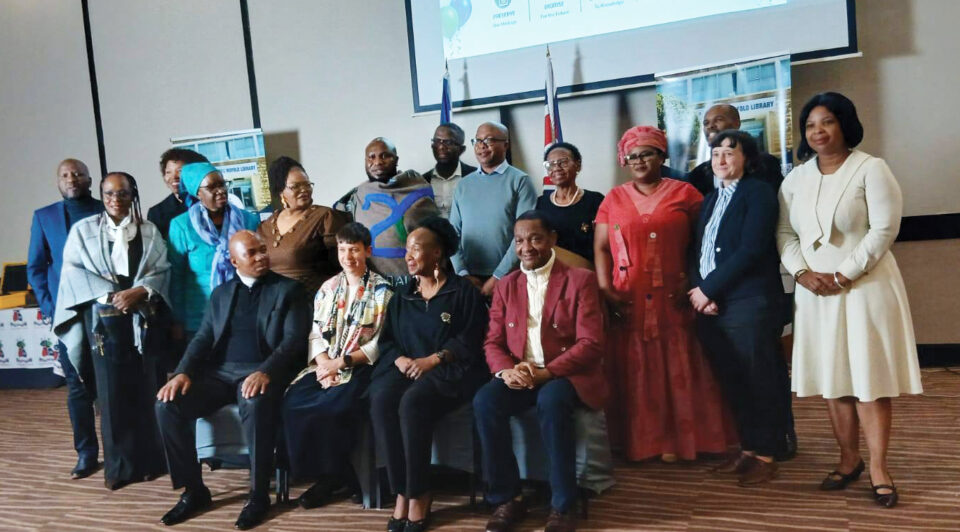
Minister of Tourism, Sports, Arts and Culture, Motlatsi Maqelepo, on Friday officially launched the Lesotho National Digitisation Framework at Avani Lesotho.
The framework aims to shift the country from fragmented institutional efforts to a coordinated, standards-driven national approach to digital resource management.
The project is coordinated by the National University of Lesotho (NUL) Library in collaboration with key institutions, including the Morija Museum and Archives, Royal Archives, the State Library and Archives, and Lerotholi Polytechnic. It is funded by the British High Commission.
Speaking at the launch, Mr Maqelepo said the initiative builds on the commemoration of 200 years since the founding of the Basotho nation in 2024.
“The bicentennial year was more than a celebration of our past; it was a moment of national reflection and renewed purpose,” Mr Maqelepo said.
“It challenged us to consider how we preserve our heritage, assert ownership of our national narrative, and ensure that the knowledge we generate today is protected and transmitted as a strategic national asset for future generations.”
Mr Maqelepo noted that the framework aligns with the National Digital Transformation Strategy 2024–2030, which positions digital technologies as key drivers of inclusive growth, efficient service delivery, innovation and good governance.
“Through this framework, we are moving from fragmented and institution-specific digitisation efforts towards a coherent, coordinated and standards-driven national approach to managing digital resources,” he said.
He added that the initiative fulfils commitments made under the Thaba-Bosiu Declaration of 2024, which called for strengthening memory institutions and safeguarding national heritage.
“The Lesotho National Digitisation Framework gives tangible and institutional expression to these commitments,” Mr Maqelepo said, adding that its success would depend on sustained collaboration across government, academia, cultural institutions and development partners.
NUL Vice Chancellor, Professor Isaac Fajana, described the launch as a significant step towards securing the country’s knowledge resources for future generations. He also credited the British High Commission in Lesotho for supporting capacity development and international exchange.
“The framework provides both structure and vision, guiding institutions towards coherent, ethical and sustainable digitisation practices,” Prof Fajana said.
He emphasised that while the launch marked an important milestone, the real impact would depend on implementation, continued investment in skills and systems, and ongoing collaboration across sectors.
“As the National University of Lesotho, we reaffirm our commitment to supporting this process through research, training and partnerships,” he said.
British High Commissioner to Lesotho, Martine Sobey, said the project—launched in February 2026—aims to establish a sustainable model for protecting intellectual and cultural assets while promoting evidence-based policymaking through reliable digital data.
She noted that local representatives had already undertaken a study visit to the United Kingdom, where they engaged with institutions such as the British Library to learn about international best practices in digitisation and preservation.
“The framework’s success will depend on sustained investment in technical systems and professional skills across participating government and academic sectors,” Ms Sobey said.
She added that the initiative seeks to create a coherent and collaborative national approach that enhances access to information while safeguarding heritage resources for future generations.
1 comment
Wow! This website is seriously top-notch! The collection of trans porn videos is insane – tons of gorgeous trans girls in crystal-clear scenes.
The loading is fast and flawless and new videos are added all the time.
If you’re looking to watch shemale porn videos featuring
hot performers and real action, this is definitely
the ultimate spot. Totally recommended!
my web site … Thai ladyboy
Comments are closed.