

Mohloai Mpesi
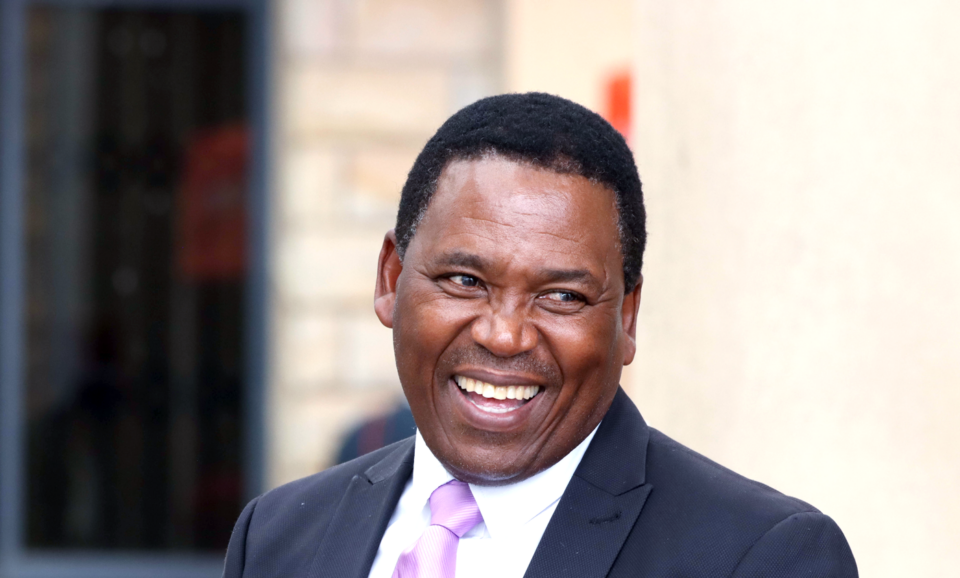
OUTSPOKEN Revolution for Prosperity (RFP) MP for Mokhethoaneng constituency, Mokhothu Makhalanyane, has issued a stern warning to fellow party legislators over an alleged power struggle within the ruling party, saying such internal conflicts often lead to political downfalls.
His remarks, which surfaced in an interview with the Sunday Express yesterday, come amid circulating allegations of factionalism within the RFP, with claims that some of the party’s most influential figures—who also hold senior government positions—are engaged in a struggle for influence.
Reports suggest the emergence of three factions allegedly aligned with Deputy Prime Minister Nthomeng Majara, Trade Minister Lebona Lephema, and Finance Minister Dr Retšelisitsoe Matlanyane. Sources further claim that the groups are competing for influence over key leadership positions, including the deputy leadership and secretary-general posts, ahead of future succession battles.
One faction is said to support Mr Lephema and allies aligned with Prime Minister Sam Matekane, another is reportedly linked to Ms Majara alongside Messrs Mpotjoane and Tau, while a smaller bloc is associated with Dr Matlanyane. However, senior officials including Messrs Lephema, Mpotjoane and Tau have dismissed claims of divisions, insisting the party remains united under Mr Matekane’s leadership.
The RFP has already suffered a setback following the formation of a splinter party by its Peka and Matala legislators, Mohopoli Monokoane and Tšeliso Moroke. Further tensions within the party could lead to additional breakaway groups, potentially weakening it into a marginal political force unable to retain its charm in the 2028 general elections.
Although he did not directly reference the alleged factions, Mr Makhalanyane warned that internal disputes could destabilise the government and potentially lead to the collapse of Prime Minister Matekane’s administration.
He said stable governments were built on stable political parties, adding that history showed internal conflict had often been the downfall of political formations in Lesotho.
“As the experience of previous regimes shows, governments are not toppled by external forces but by enemies within,” Mr Makhalanyane said.
He cited the Basotho National Party (BNP), Lesotho Congress for Democracy (LCD), All Basotho Convention (ABC) and Democratic Congress (DC) as examples, saying each eventually suffered internal divisions that led to fragmentation.
“All of them had factions that eventually broke away to form new parties. Since RFP started in 2022, it has already given rise to UAT and Khanya. If remaining groups also split, it shows instability is driven internally, not externally.”
Corruption concerns
Mr Makhalanyane further argued that corruption was the main driver of instability within political structures.
“The main reason for these factions is corruption. When governance is weak, people begin to pursue personal interests and those of their allies instead of the nation.
“That is why I hate corruption—because it leads to nepotism and tender abuse while many Basotho are left behind. Corruption divides governments, weakens parties, and destroys the economy. When everyone is chasing tenders, production suffers and the country cannot progress.”
He also raised concern over declining voter turnout, warning it could worsen in future elections.
“Voter turnout has already deteriorated. In the last general elections, only 36 percent of Basotho voted. If the current trajectory continues, it could drop to around 30 percent, and that would undermine democracy,” he said.
Economic and production concerns
Mr Makhalanyane said corruption and political infighting were also undermining efforts to strengthen local production and value chains.
“If we invest properly in processing mohair, clothing and other sectors, this country can produce for itself. But progress is hindered by leaders who prioritise personal gain.”
He added that unemployment remained a major challenge and urged government to explore labour export opportunities, particularly in sectors such as nursing.
“We should be focusing on exporting labour where opportunities exist, especially for professions like nursing. But internal political fights risk sabotaging such initiatives, which would be a loss for thousands of unemployed nurses.”
He warned that continued instability could harm governance and service delivery.
“Basotho are tired of governments that do not last even two years. It would be unfortunate if this administration follows the same path,” he said.
Relations with parliamentarians
Mr Makhalanyane also criticised strained relations between the executive and Members of Parliament, saying ministers were often inaccessible to legislators.
“Even those alleged to be forming factions are not supporting MPs. They are not easy to work with, and MPs will eventually decide how to respond because cooperation is essential for a party to win constituencies,” he said.
He cautioned that Mr Matekane ought to take firm action to maintain unity within the party.
“The RFP will be in serious trouble unless Mr Matekane brings it under control, or chooses to step aside, because he will constantly have to deal with internal fights,” he said.
He warned that governance challenges were affecting public trust.
“It is unfortunate when leadership focuses on status and power at the expense of starving Basotho, poor governance and weak service delivery. I pray that God does not bless such behaviour,” he said.