

Kabelo Masoabi
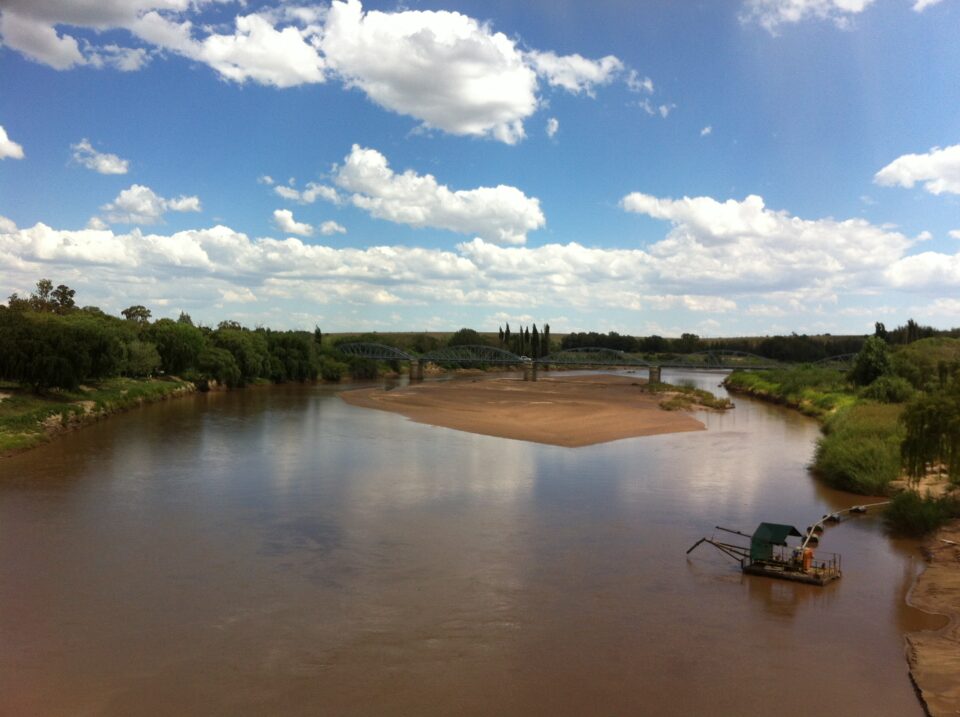
THE disappearance of 26-year-old Thapelo Damane, who was allegedly swept away by the Mohokare River this past week, has left a deep wound in his family and community in Ha ’Mathata, Maputsoe.
Known by friends as “Skitiri” or “Mafifi”, Thapelo was the main provider for his family, earning a living by helping herd livestock across the Mohokare River into South Africa.
On the day he vanished, he left home as he often did, following a truck loaded with sheep and goats towards the river. His mother, ’Mamoliehi Damane, did not know it would be the last time she would see her only son.
Hours passed without his return. Later that night, devastating news came through a friend: Thapelo had reportedly been swept away by the river that separates Lesotho and South Africa, and could not be found.
Witnesses say he had just finished helping move nearly 50 animals across when South African soldiers appeared, causing people at the scene to scatter.
In the confusion, it remains unclear whether he was caught by the current while trying to return home or attempting to cross again. Despite a search by police divers, no trace of him has been found. This was confirmed by Lesotho Mounted Police Service spokesperson Thabo Mohai.
For his mother, the pain lies not only in the loss, but in the absence of closure. She continues to hope that his body will be recovered so she can give him a proper burial. Thapelo leaves behind a wife, a young daughter, and two sisters who depended on him.
In a household with no other income, his loss is both emotional and deeply practical. Friends remember him as strong and experienced — someone who knew the river well and was considered a skilled swimmer — making his disappearance all the more shocking.
Presumed dead by his family, his body can be identified by several distinctive tattoos: his name, “Thapelo”, tattooed on one shoulder, and the word “Peace” on the other. At the time of the incident, he was wearing only boxer shorts, having left his clothes on the riverbank before attempting to cross.
His story reflects a broader and troubling pattern. In Maputsoe alone, between December 2020 and January 2021, three people — two women and one man — drowned while attempting similar crossings, and their bodies were never recovered.
Over the same period, at least seven bodies were found in nearby rivers. Many migrants rely on makeshift flotation devices such as inflated mattresses and tyre tubes, risking powerful currents in swollen rivers, especially during the rainy season.
“It’s a risk we face every single day just to put bread on the table for our families. The waters of the Mohokare are powerful and unforgiving — no matter how strong a swimmer you are, an unseen rock or hidden current can pull you under without warning.
“I know that at any moment I could lose my life out there. But still, I choose this path, because to do nothing would mean watching my family starve. And that, to me, is a far greater fear,” said a man known as Stoki, who helps people cross the river at the porous border.
For families like Thapelo’s, the statistics are not just numbers — they are lived realities marked by grief, uncertainty, and unanswered questions. His mother’s plea is simple: that someone, somewhere, might find him and bring a measure of peace to those he left behind.