

Rethabile Pitso
NATURAL Resources Minister, Mohlomi Moleko, has said communities in Koro-koro and Maama will soon have access to clean, running water, bringing relief to villages that have long depended on boreholes and unsafe wells for daily use.
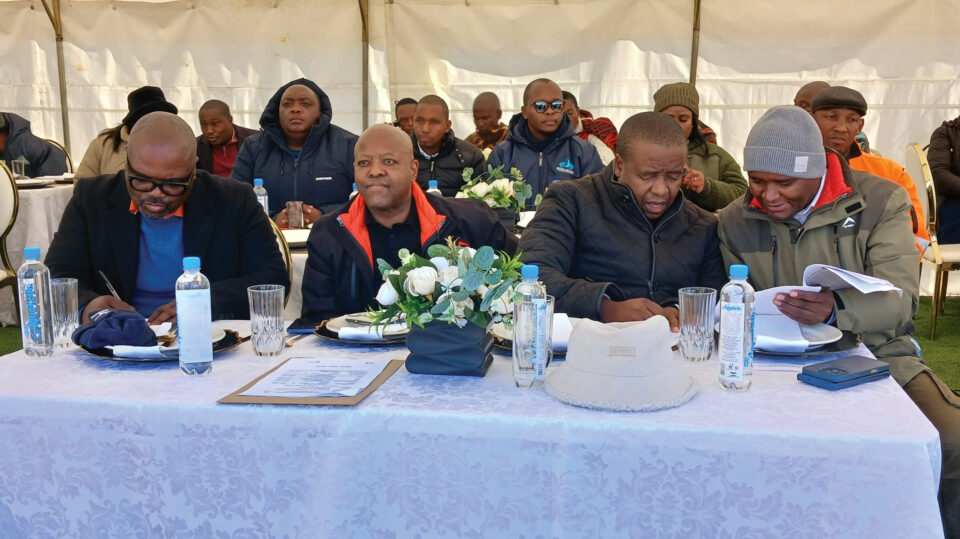
Speaking on Friday during the launch of a long-awaited water supply project in Koro-koro, Mr Moleko said the initiative would address persistent shortages that have forced residents to rely on untreated water sources for drinking, cooking and livestock.
The project will benefit Koro-koro and Maama villages, as well as several communities in Berea that were left out of previous water schemes.
Mr Moleko introduced Mango Tree Construction and HS Construction as contractors for the project. Mango Tree will undertake works in Ha Mphoto, Mohajane, Lihanela, Tsatu and Maquba, while HS Construction will cover Ha Mohlakafaso, Mokotjo, Motanyane, Mokhohla and Poopa.
He expressed satisfaction that the project had finally commenced after delays, including disruptions caused by the COVID-19 pandemic. He also assured residents that remaining villages such as Ha Tlebere would be incorporated in due course, urging patience as government balances both domestic and regional water supply obligations.
“Lesotho supplies water not only locally but also to the region. This comes with the responsibility to balance local needs with regional demand, including countries such as Botswana that rely on our water,” Mr Moleko said.
He also urged officials to ensure timely payments to contractors to avoid unnecessary project delays.
Project Coordinator for the Lesotho Lowlands Rural Water Supply and Sanitation Project (LLRWSSP), Thabiso Tsasane, said the World Bank- and African Development Bank-funded initiative is designed to withstand climate change impacts.
He explained that studies by the Rural Water Supply Unit and the Department of Water Affairs revealed limited natural surface water in the area, prompting a shift to high-capacity boreholes.
“The boreholes will provide a reliable backup supply, especially during drought, ensuring communities are not left without water,” he said.
Mr Tsasane added that the next phase will involve the construction of reservoirs, pumps and pipelines to deliver water directly to households.
The project will include 10 reservoirs, a 22-kilometre pipeline and 53 pumps across Ha Lihanela, Mohajane, Mpotjo, Katu and Maqhuba. Additional infrastructure—two reservoirs, a 5.3-kilometre pipeline and 16 pumps—will be built in Ha Lemeke, Lebakae and Potjo.
In Berea, villages previously excluded—Ha Mathafa and Matlere—will benefit from four reservoirs and a 2.98-kilometre pipeline.
To address environmental challenges, the project will conclude with the planting of 650 trees across 52 villages, creating short-term employment opportunities for locals. Workers are expected to earn about M107 per day.
Meanwhile, community leaders have raised concerns about poor road infrastructure, saying it continues to hinder development.
Koro-koro councillor, Thabang Thapeli, said some villages, particularly Ha Tlebere, still rely on unsafe wells for all household needs and livestock.
“The village has been without water for a long time, and Ha Tlebere remains excluded. Residents there still draw water from wells for both domestic use and animals,” Mr Thapeli said.
He also highlighted the deteriorating state of the main road serving the area, noting it has not been rehabilitated in over 20 years.
Koro-koro Member of Parliament, Abinyane Mahatanya, echoed the concerns, saying the poor road network continues to isolate the community and delay development.
“It is unfortunate that communities near the Metolong reservoir do not benefit from its water, yet it is supplied elsewhere. People here have relied on wells for years, which has held back development,” Mr Mahatanya said.
He added that the poor condition of the road poses serious risks, particularly for sick patients being transported to hospital, with some reportedly dying in transit.