

…as Appeal Court revives his M855m Frazer Solar corruption case
Moorosi Tsiane
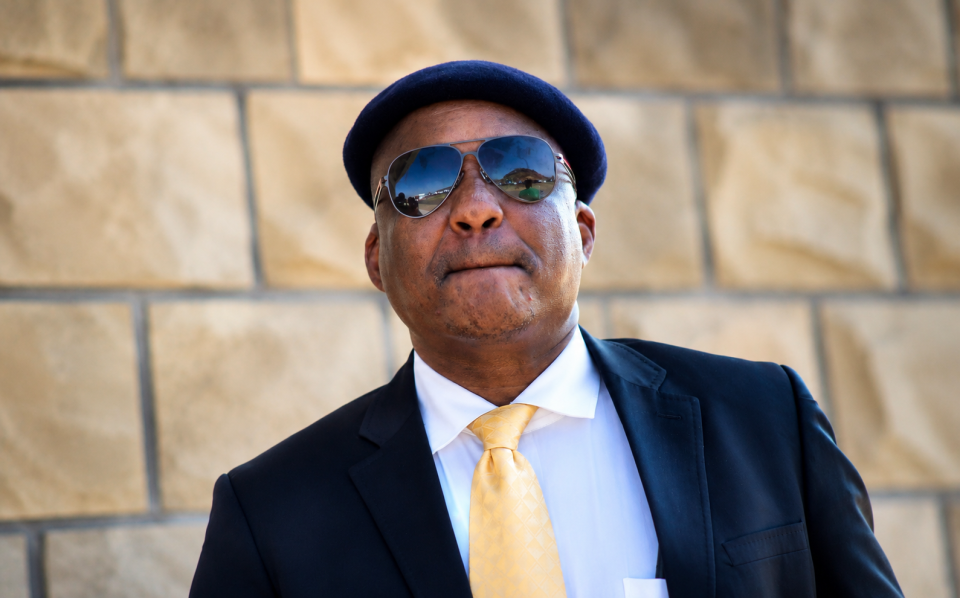
FORMER Trade Minister, Temeki Tšolo, has suffered a major legal setback after the Court of Appeal on Friday reinstated high-profile corruption and fraud charges linked to the controversial M855 million Frazer Solar deal.
In a significant victory for the Directorate on Corruption and Economic Offences (DCEO), the apex court overturned the High Court’s August 2025 ruling by Justice Tšeliso Mokoko, which had permanently stayed the criminal proceedings against Mr Tšolo.
The Court of Appeal has now referred the matter back to the High Court for trial before a different judge, effectively reviving a case that had appeared dead and buried.
The charges arise from allegations that Mr Tšolo unlawfully represented the government in September 2018 and entered into an agreement with Frazer Solar (Pty) Ltd and Frazer Solar without proper authority, exposing Lesotho to massive financial liabilities.
The appellate bench — comprising Court President Justice Kananelo Mosito, Chief Justice Sakoane Sakoane and Justice Johann van der Westhuizen — ruled that the High Court had erred in permanently halting the prosecution.
“The High Court misdirected itself and its order cannot stand and must be set aside. Therefore, the High Court order is set aside and the matter is remitted to the High Court before a different judge,” the court ruled.
The court further directed that strict case management measures be implemented to ensure the matter proceeds expeditiously and without further delays.
Justice Mokoko had, in August last year, delivered a strongly worded judgment criticising the DCEO for repeatedly failing to prosecute the matter despite having what he described as adequate resources at its disposal.
He faulted the prosecution for failing to proceed with trial hearings scheduled for the weeks of 21 October 2024 and 18 August 2025, finding that the delays unfairly prejudiced Mr Tšolo.
Particular criticism was directed at lead prosecutor Advocate Jay Naidoo SC. The court said, although the South African-based senior counsel was in Lesotho during one of the scheduled hearings, he neither appeared before court nor communicated his absence.
Justice Mokoko also observed that key witnesses had not been subpoenaed for the August 2025 hearing dates.
“The court finds that the Crown failed to prosecute the matter on two occasions… The Crown had all resources at its disposal,” Justice Mokoko ruled at the time, concluding that the repeated delays justified a permanent stay of proceedings.
However, the DCEO appealed the ruling, arguing that permanently halting a corruption prosecution was excessive and legally unsustainable.
Appearing before the Court of Appeal on 9 April, Adv Naidoo explained that although he had been in Lesotho during the disputed period, he had not yet been formally briefed on the Tšolo matter because the DCEO had recently appointed a new Director-General and he was occupied with other cases.
Attorney Mojalefa Shakhane, also appearing for the DCEO, argued that he and defence lawyer Adv Molefi Masoabi had discussed the possibility of postponing the matter.
Adv Masoabi, however, distanced himself from that assertion, maintaining that he had merely advised that if the Crown intended to seek a postponement, it should formally apply for one before the court.
In its ruling, the Court of Appeal stressed that a permanent stay of prosecution is an extraordinary remedy with serious implications for the administration of justice, particularly in corruption cases involving public interest.
“The accused is not the only one with rights,” the court observed, adding that society also has a legitimate interest in seeing corruption allegations properly ventilated before the courts.
At the same time, the appellate court cautioned prosecutors against conduct that contributes to delays in criminal proceedings, warning that inefficiency within the justice system undermines public confidence.
With the appeal now upheld, Mr Tšolo once again faces the full weight of criminal prosecution in a case that continues to attract intense public and political scrutiny.
He was initially charged alongside Frazer Solar owner, Robert Frazer, whom the DCEO regards as a fugitive from justice.
Meanwhile, the government remains embroiled in a separate legal battle with Frazer Solar in South Africa. In 2020, a South African tribunal ruled in favour of Frazer Solar, finding that Lesotho had breached the 2018 agreement to supply solar power equipment and electricity, and awarded the company €50 million (about M1 billion) in damages.
The South African High Court upheld the award in 2021, although Lesotho’s High Court later declared the agreement illegal in 2022.
The government has since appealed the South African ruling, arguing that the contract was never lawfully approved because it bypassed mandatory requirements, including the consent of the Minister of Finance and the Council of Ministers.
The matter is currently before the South African Supreme Court of Appeal in Bloemfontein.