

Kabelo Masoabi
THE rain began before sunrise, drumming softly against the rusted zinc roof of a small house in Mpharane on the outskirts of Maputsoe. Inside, Cecilia Manosi sat awake on the edge of her bed, staring into the darkness beyond the curtain while her son, Tebatso, slept beside her beneath a faded wool blanket.
In another room, her father coughed heavily as her mother whispered prayers into the cold morning air. Ms Manosi had not slept because the letter lying folded beside her had already destroyed the life she had spent years trying to build.
“We regret to inform you…”
Those words marked the end of her employment at a textile factory in Maputsoe, where she had worked for eight years. The wages had never been enough, but they bought food, medicine for her father, school shoes for Tebatso, paraffin for winter nights and even paid for the small coffin in which they buried her sister the previous winter.
Then the factory closed after foreign investors withdrew and machines were relocated elsewhere, leaving hundreds unemployed in a single afternoon. Workers walked out carrying plastic bags filled with belongings and hearts heavy with humiliation.
Ms Manosi walked home silently that day. Her mother noticed immediately that she had returned early, but her father already understood because suffering travelled quickly among the poor.
That evening, they ate boiled cabbage without cooking oil while Tebatso spoke excitedly about football at school and little Limakatso, her late sister’s daughter, quietly licked salt from her fingers beside an almost empty plate.
Ms Manosi watched her family carefully: her father’s trembling hands, her mother’s swollen feet, her son’s torn jersey and the orphaned child staring at food that did not exist. Something inside her shifted slowly, like a door opening somewhere deep in the darkness.
The weeks that followed were merciless.
She searched everywhere for work — in restaurants, shops, offices, wealthy homes and even at construction sites where men laughed openly at her requests for employment. Every place offered the same response:
“There is no vacancy here.”
“Leave your number.”
“We’ll call you.”
Nobody ever did.
During the day, she sold vegetables near the taxi rank and sometimes earned enough for bread, while on other nights she could not even afford transport home. Debt arrived quietly and then settled permanently into her life. She borrowed small amounts at first, then larger amounts, until unpaid rent, electricity shortages and empty cupboards became normal. Creditors stopped smiling when they saw her.
One evening, while walking home, she overheard two women near a tavern joking that there was money in lonely men. She ignored them until desperation made ignoring impossible.
It began with a single room and a truck driver named Shabu, who paid her for company after meeting her outside the tavern. She hated every moment — the smell of alcohol on his breath, the way he spoke as though she had already lost her humanity and the shame she carried afterwards.
But when he placed folded notes into her hand before leaving, she realised the money meant groceries, cooking oil, school uniforms and medicine.
That night, Tebatso ate chicken for the first time in months while her mother cried softly and thanked God for answered prayers. Ms Manosi could not look at her.
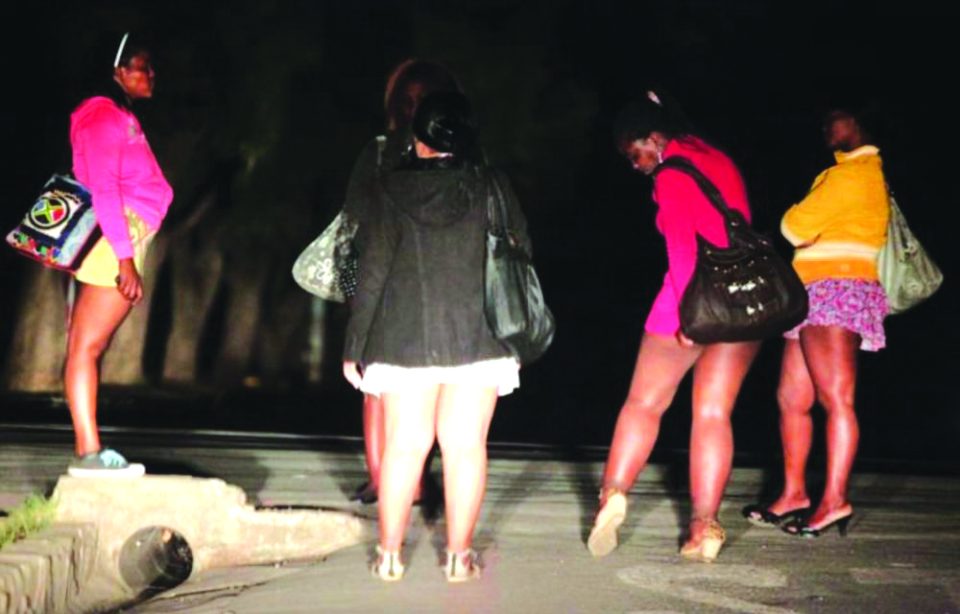
Months passed, and survival slowly transformed into routine. Business appointments for willing men were arranged through a dedicated Facebook group titled Likoena Tsa Maputsoe. Unlike in Maseru, where sex workers are visibly present on the streets, the trade in Maputsoe operates more discreetly, with several establishments allegedly functioning as covert brothels.
As the business expanded, other vulnerable women quietly approached Ms Manosi, asking if they could work there as well. One had fled an abusive husband, another was raising twins alone, while another had returned from South Africa with nothing but fear and hunger after crossing the border.
At first, Ms Manosi resisted, but eventually she agreed. The room she rented became two rooms, and then more rooms at residential flats. Slowly, the place transformed into something hidden during daylight but painfully obvious at night. Cars arrived after sunset, curtains remained tightly closed and soft music played to drown unfamiliar sounds.
The community pretended not to notice, yet everyone noticed. Children were called indoors earlier than before. News spread quickly and eventually reached her home village of Mpharane. Church women stopped greeting her mother. Taxi drivers smirked whenever her name was mentioned, and the local pastor preached sermons condemning immoral women without ever saying her name directly.
Still, nobody offered food, school fees or medicine. They offered only judgement.
Ms Manosi learned quickly that survival required rules: no violence, no underage girls, no drugs inside the house and payment first. Anyone causing trouble would never return.
Without realising it, she became hardened. Men who once ignored her now respected her because money passed through her hands. Everyone condemned her publicly while many benefited privately. That hypocrisy angered her more than the work itself.
One summer evening, Tebatso returned home bruised and silent. When she demanded to know what had happened, he eventually whispered that boys at school had called her a prostitute.
The word pierced her more deeply than poverty ever had.
That night, she locked herself in the bathroom and cried into a towel so nobody would hear her breaking apart. For the first time since opening the house, shame arrived fully — not because of the law or the church, but because her son now understood what she had become.
Despite everything, business continued growing. Truck drivers spread the word. Mineworkers visited on weekends. Wealthy men arrived in expensive cars pretending to be lost after dark.
Money improved their lives: her father finally received proper treatment, Tebatso attended a better school, Limakatso owned books instead of borrowed pages and the leaking roof was repaired.
Yet prosperity never brought peace; it only replaced hunger with fear. Every knock at the gate sounded dangerous, every police siren tightened her stomach and every church sermon felt aimed directly at her soul. Still, she continued because returning to hunger terrified her more than judgement ever could.
One morning, everything finally erupted.
A group of men and women armed with sjamboks and sticks arrived outside her place, shouting angrily while neighbours watched from a distance. Among them stood the village chief. They demanded that she leave immediately, accusing her of spreading immorality and destroying families.
The women hurled insults at her and the others living there, calling them shameful and dirty while insisting they had no place among decent people.
Ms Manosi stood silently in the doorway, staring at the crowd and understanding at last that poverty had pushed her into a war she could never truly win.
For their safety, they moved out that evening — not back to their respective homes, but elsewhere, where they would establish brothels again and continue chasing survival in a society that condemned them while benefiting from their desperation.
However, Ms Manosi and her associates are allegedly not the only people involved in the operation. Evidence suggests that a growing number of unemployed women and teenagers have also become part of the illicit trade.
These establishments are often linked to broader criminal activities, including human and drug trafficking as well as armed robberies, creating an environment that poses serious risks to unsuspecting clients.
Reports indicate that some clients are deliberately targeted and lured into these premises under false pretences. Once inside, victims may allegedly be ambushed by accomplices who gain entry while services are being rendered, robbing them of cash, mobile phones and other valuables.
In more serious cases, clients are reportedly offered drinks suspected to have been laced with intoxicating substances. Victims allegedly regain consciousness hours later, only to discover that their belongings have been stolen.
Investigations further suggest that certain individuals operating these brothels may falsely present themselves as victims of the robberies in an attempt to avoid suspicion, despite allegations that they are active participants in criminal syndicates orchestrating the crimes.
A mineworker from Botha-Bothe, identified as Bitso, recounted a disturbing ordeal he allegedly experienced in Maputsoe while travelling back to work in South Africa.
According to Mr Bitso, he met a woman through a Facebook page and later decided to visit her while passing through Maputsoe. He said the situation quickly turned violent after he arrived at the woman’s room.
Mr Bitso explained that while they were inside, he suddenly heard the door being unlocked before two unidentified men forcefully entered the room. The suspects allegedly assaulted him, kicking him in the ribs as he attempted to gather his clothes. They reportedly robbed him of cash, an expensive belt and a valuable wristwatch.
“One of the men accused me of having an affair with his girlfriend while they held me hostage,” Mr Bitso said.
He further stated that what raised his suspicions was the woman’s reaction during the incident. According to him, she neither attempted to intervene nor appeared frightened by the attackers. He also noted that the assailants did not threaten or assault her, nor did they exchange any words with her during the ordeal.
After several minutes, the attackers reportedly left the room, allowing Mr Bitso to leave shortly afterwards. Embarrassed by the incident, he chose not to report the matter to police.
He continued his journey to South Africa without his belt, forcing him to hold up his trousers by the loops.
“I am telling this story to caution others. Maputsoe is a busy place, and people should be careful because anything can happen,” he warned.
A man reportedly died about two weeks ago in Ha Nyenye, Maputsoe, while visiting a woman he allegedly did not know. Reports indicate he stayed overnight and later showed signs of illness, including foaming at the mouth, before his death. The cause of death has not yet been disclosed.
Police are investigating and working to identify the deceased and locate his next of kin. The woman involved has reportedly been cooperating with authorities and assisting efforts to trace his family.
“Because men constitute the majority of victims in robberies linked to such establishments, many incidents go unreported to police. Victims often fear that reporting the crimes could expose the matter to their families, particularly their spouses, potentially compounding their distress,” said a police officer stationed in Maputsoe, speaking on condition of anonymity because he was not authorised to comment publicly.
“As a result, many choose not to pursue formal complaints. Cases are typically reported only when they escalate into serious offences such as murder. Persistent unemployment and deepening poverty have pushed many vulnerable women in Maputsoe into sex work as a means of survival.”
Situated along the South African border, Maputsoe has long depended on the textile and apparel industry, which employed thousands of local workers, particularly women. However, years of factory downsizing and closures have left many economically vulnerable, with limited options for survival after losing stable incomes.
According to the Lesotho National Development Corporation (LNDC), national textile employment fell from more than 51 000 workers in 2020 to just over 34 000 in 2024. Closures such as Ace Apparel in Maputsoe alone reportedly left about 1,000 people jobless. The decline has been attributed to falling export demand, rising operating costs, supply chain disruptions and uncertainty over continued United States market access under the African Growth and Opportunity Act (AGOA).
Against this backdrop of shrinking economic opportunities, many unemployed women have increasingly turned to transactional sex to secure food, rent, school fees and other essentials.
Maputsoe’s proximity to the South African border further heightens vulnerability, exposing women to exploitation, unsafe migration and the risk of trafficking as they search for alternative sources of income.
Sex work remains illegal in Lesotho under Section 55 of the Penal Code Act of 2010. The law criminalises prostitution and related activities, including procuring or associating with individuals engaged in sex work for commercial gain.
Section 55(2) states that “a person who incites, instigates or procures another to engage, either in Lesotho or elsewhere, in prostitution commits an offence”, while Section 55(4) criminalises individuals who “live with or habitually associate with a prostitute” in a manner suggesting commercial benefit.
Human rights advocates argue that the criminalisation of sex work has contributed significantly to the abuse and marginalisation experienced by sex workers in Lesotho.
The Key Affected Populations Alliance of Lesotho (KAPAL) says the law forces sex workers underground, discouraging them from reporting violence, exploitation and abuse for fear of arrest.
KAPAL executive director, Lepheana Mosooane, has previously argued that many women do not enter sex work by choice, but because unemployment, limited skills and economic desperation leave them with few alternatives.
For women like Ms Manosi, survival has become a painful negotiation between hunger and dignity — one fought quietly behind closed curtains in towns where poverty continues to deepen and judgement arrives faster than help.