

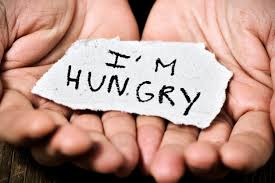
…as the unemployed caregiver says she lied about a family death to secure society funds
…allegedly after government assistance failed to reach her
Hopolang Mokhopi
FOR 40-year-old Mamaboka Likalele, hunger was no longer simply an empty stomach. It was a threat to a child’s life.
Unemployed and struggling to provide for her own family, the Ha Mofoka woman found herself caring for her late sister’s four-year-old son — a child living with HIV and a disability who, she says, was brought to her in a severely deteriorated condition.
With no stable income, mounting responsibilities and what she describes as years of being passed between government offices in search of assistance, Ms Likalele says she eventually reached a point where desperation outweighed her fear of the law.
She allegedly lied to her village burial society that one of her dependants had died.
The claim brought her groceries worth M10,000 and M9,000 for transport — a total alleged loss of M19,000 to the society.
Now, the same desperate act she says was intended to keep a vulnerable child alive has landed her before the courts, charged with fraud.
The case presents a painful question: when poverty strips a person of every legitimate means of survival, where does desperation end and crime begin?
‘I had no choice’
Speaking to the Sunday Express this past week, Ms Likalele said she did not commit the alleged fraud for luxury or personal gain.
She says she did it because a child was dying.
“He is my sister’s son who passed away. I took him to his grandmother who didn’t take good care of him. He was on his death bed,” she said.
According to Ms Likalele, she subsequently took responsibility for the boy and became his full-time caregiver.
That responsibility came at a heavy cost.
She said she had to abandon piece jobs because the child required constant care. At the same time, she remained responsible for her own family.
Her husband, she said, is also unemployed.
The family therefore had little or no reliable income to cover basic necessities, let alone the additional demands of caring for a child living with HIV and a disability.
The boy requires nutritious food and regular clinic visits, she explained.
But when there is no money for transport, even something as routine as attending a medical appointment can become an impossible burden.
“Sometimes we end up missing check-ups due to lack of funds,” she said.
“This child needs proper food for him to get better.”
It was against this backdrop, she said, that she made the decision that would eventually lead to her arrest.
“I ended up defrauding the society because I had no choice but to save the child’s life.”
Two years searching for help
Ms Likalele says her decision did not come suddenly.
For about two years, she claims, she had been trying to secure assistance through government structures.
But instead of finding a safety net, she says she encountered a bureaucratic maze.
“I have been trying to seek help from the council after Social Development transferred me back, saying I was not in their jurisdiction,” she said.
For an unemployed caregiver looking after a medically vulnerable child, such delays can have consequences far beyond paperwork.
They can mean missed clinic appointments. They can mean inadequate nutrition.
And, ultimately, they can mean choosing between breaking the law and watching someone vulnerable go without.
The alleged burial-society fraud
The court charge sheet alleges that on or about 30 June 2023, at or near Ha Motoka in the Maseru district, Ms Likalele, who was a member of a village burial scheme at Ha Mofoka, made a false representation to members of the scheme.
According to the charge, she falsely represented that one of her dependants had died.
The prosecution alleges that the representation was made with the intention of causing the society to provide benefits amounting to groceries worth M10,000, together with M9,000 for transport.
The society allegedly acted on the representation and provided the benefits.
The charge sheet states that the accused knew the representation was false and that the society consequently suffered a loss of M19,000.
Legally, the allegation is straightforward: a false claim was allegedly made, the society acted on it, and money and goods were lost.
But behind those figures is a much more complicated human story — one involving unemployment, disability, HIV, caregiving and the struggle to access social assistance.
From caregiver to accused
On 4 August 2026, Ms Likalele appeared before Magistrate Itumeleng Letsika.
The fraud charge was read and explained to her, and she indicated that she understood it.
She was advised of her right to apply for bail and to obtain legal representation of her choice.
When presenting her personal circumstances in support of her bail application, Ms Likalele told the court that she is unemployed and married with two children, aged 22 and 18. Her husband is also unemployed.
She further told the court that she is caring for her sister’s four-year-old disabled son.
Crown Counsel Advocate Ts’enoli appeared for the Crown and did not oppose bail.
Magistrate Letsika subsequently admitted Ms Likalele to bail on a M800 deposit, ordering her to attend remands, stand trial and refrain from interfering with witnesses.
She was remanded to 18 August 2026, when the criminal proceedings against her will continue.
When survival collides with the law
Ms Likalele’s case illustrates a darker dimension of poverty — one in which deprivation can create conditions where illegal choices begin to look like the only available choices, according to counselling practitioner, Lipalesa Maoeng.
“For unemployed households, a medical condition can quickly become a financial crisis. Transport to clinics costs money. Nutritious food costs money. Constant caregiving can make employment impossible. And when government assistance is delayed, unavailable or difficult to access, families can be left to fend for themselves.
“For Ms Likalele, the alleged M19,000 fraud was not merely a criminal transaction, according to her account. It was a desperate attempt to create a lifeline for a child she believed was running out of time.
“But desperation does not erase the law. The burial society, according to the charge sheet, was itself a victim — its members allegedly deceived into surrendering resources intended to support families during genuine bereavements. That creates the tragic contradiction at the centre of this case: a woman allegedly broke the law to protect one vulnerable family member, while in doing so causing another community institution to suffer a loss,” Ms Maoeng told the Sunday Express.
The case, she said, therefore raises questions that extend beyond one accused woman and one burial society.
“What happens when the people expected to provide care have no money?
“What happens when a child’s medical and nutritional needs exceed the resources of an unemployed household?
“And what happens when a social protection system cannot reach the people who need it before desperation takes over?”
For now, those questions remain unanswered. But her story has already exposed a painful reality: poverty does not automatically turn people into criminals — but extreme poverty can create the desperation in which criminal choices become imaginable.
Children left behind as Lesotho struggles with HIV transmission rates
The circumstances surrounding Ms Likalele’s case also point to a wider challenge facing Lesotho: children remain among the most vulnerable groups in the country’s fight against HIV/AIDS, despite the country surpassing global HIV targets.
Recent data shows that children aged 0 to 14 continue to lag significantly behind national progress.
According to the National AIDS Commission’s 2025 report, mother-to-child transmission of HIV remains a major concern. The report puts the Prevention of Mother-to-Child Transmission rate at 5.5%, which remains above the World Health Organisation’s elimination threshold.
An estimated 6,000 children are living with HIV in Lesotho, highlighting the continued vulnerability of children despite the country’s broader progress in its HIV response.
For families already struggling with unemployment and poverty, caring for a child living with HIV can bring additional financial and social pressures.
In Ms Likalele’s case, those pressures include the cost of nutritious food, regular clinic visits and transport, while her responsibility as a full-time caregiver has also made it difficult for her to maintain employment.
The figures underscore a troubling gap: while Lesotho has made significant strides towards controlling the epidemic, children are still being left behind.
For caregivers like Ms Likalele, the consequences of that gap are not simply reflected in statistics. They can be measured in missed clinic appointments, inadequate food, unemployment and, in her case, an alleged criminal act that she says was committed in an attempt to keep a vulnerable child alive.
Her case now sits before the courts, where the law will determine the consequences of the alleged fraud.
But beyond the courtroom, her story raises a broader question for Lesotho: what happens to vulnerable children when the families responsible for caring for them have nowhere else to turn?