

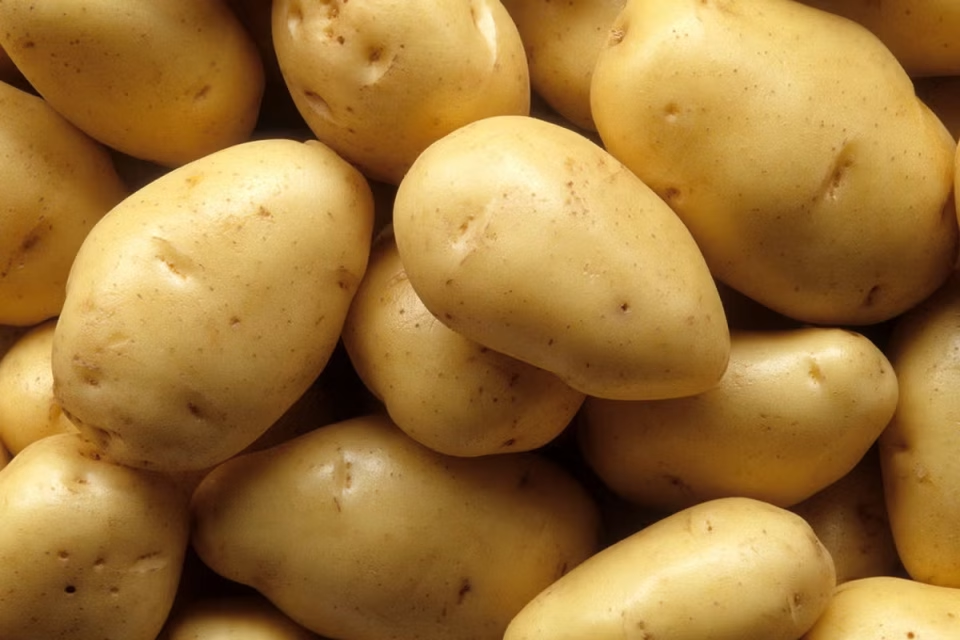
…marks International Potato Day
Moroke Sekoboto
LESOTHO is positioning potatoes as a strategic commodity to drive national food security, rural employment, and inclusive economic growth.
By aligning local agricultural initiatives with international frameworks, the country aims to transition from an import-dependent market to a self-sufficient potato producer.
Speaking during the commemoration of International Potato Day at Avani Lesotho on Friday, Minister of Agriculture, Food Security and Nutrition, Selibe Mochoboroane, said the occasion provided an opportunity to celebrate partnerships, innovations, and collective efforts shaping the transformation of the agricultural sector.
Mr Mochoboroane said the commemoration came at a time when countries across the globe were facing serious challenges such as climate change, food insecurity, unemployment, rising food prices, and persistent poverty.
He said these challenges required innovative and sustainable approaches that strengthen resilience while expanding economic opportunities for citizens.
“Agriculture remains central to addressing these challenges. In Lesotho, the potato has emerged as one of the most promising agricultural commodities with strong potential to drive value chain development and agro-industrial growth. Our favourable agro-ecological conditions, characterised by high altitudes, cool temperatures, and fertile soils, position the country strategically for potato production, particularly seed potato production,” Mr Mochoboroane said.
“It is therefore not by coincidence that Lesotho became one of the first African countries to embrace the FAO One Country One Priority Product Initiative, commonly known as OCOP. Following extensive national consultations, the potato was identified as Lesotho’s special agricultural product because of its comparative advantage, socio-economic importance, and potential contribution to food systems transformation.”
He said the development of the potato sector was fully aligned with Lesotho’s national development aspirations and policy frameworks.
Mr Mochoboroane noted that government recognises agriculture as a key driver of economic growth, employment creation, and poverty reduction, as outlined in the National Strategic Development Plan II (NSDP II).
He said the plan prioritises commercialisation of agriculture, private sector participation, climate-smart production systems, and value addition as pathways towards inclusive economic transformation.
“In addition, the Ministry continues to implement the National Agriculture Investment Plan (NAIP), which emphasises market-oriented production, improved productivity, mechanisation, agro-processing, and strengthened agricultural value chains. The potato industry presents significant opportunities within these policy priorities.
“Furthermore, Lesotho’s participation in the African Union’s Comprehensive Africa Agriculture Development Programme (CAADP) reaffirms our commitment to sustainable agricultural growth, food security, and increased agricultural investment. Through the support of FAO and our strategic partners, Lesotho conducted a comprehensive potato value chain analysis that identified both opportunities and constraints within the sector,” he said.
Mr Mochoboroane said while domestic demand for potatoes continued to increase, national production remained below market demand, resulting in continued reliance on imports.
He said the country’s annual potato demand stood at 122 000 metric tonnes, while local production averaged only 13 200 metric tonnes annually, representing about 10 percent of demand.
“The country imports 18 340 metric tonnes at a cost of M69 325 200, while the target for 2026/2027 is 25 000 metric tonnes. To meet national demand, the plan is to increase production targets by 10 percent annually over a five-year period, allowing time for resource mobilisation.”
He said the analysis also revealed substantial untapped opportunities for investment, commercialisation, and employment creation, particularly for women and youth actively involved across the potato value chain.
“The government intends to reduce imports of five agricultural commodities over the next three to five years, namely potatoes, cabbage, spinach, poultry, and piggery products. The country has the potential to produce these commodities, and the focus will be on resource mobilisation to support both the public and private sectors,” Mr Mochoboroane said.
He identified the shortage of quality seed as one of the most critical challenges affecting the sector.
“Quality seed remains the cornerstone of productivity and competitiveness. For many years, Lesotho has depended heavily on imported seed potatoes, a situation that undermines our aspirations for agricultural self-sufficiency and resilience.”
Meanwhile, Lesotho Potato Association deputy secretary, Teboho Lefu, commended the ministry for purchasing potato tubers from seed-multiplying farmers and supplying them at subsidised prices to mashed potato producers and other growers.
Mr Lefu said the initiative had significantly contributed to the growth of potato production in Lesotho by improving access to quality seed and encouraging more farmers to participate in potato farming.
“This support is aligned with the Food and Agriculture Organisation initiative known as the One Country One Priority Product programme, where potatoes have been identified as Lesotho’s priority product. This recognition highlights the importance of potatoes in improving food security, nutrition, employment, and economic development in our country,” Mr Lefu said.
He said partnerships and initiatives within the sector were helping strengthen the potato value chain in Lesotho.
However, he said potato farmers continued to face serious challenges that slowed growth and reduced profitability.
“One of the biggest challenges is inadequate infrastructure. Many farmers do not have proper storage facilities, resulting in potatoes spoiling quickly after harvesting. Farmers are often forced to sell immediately, even when market prices are low, simply because they lack storage.
“There is also a shortage of modern farming equipment for both pre-harvest and post-harvest operations. Some farmers still depend on traditional tools, which reduce productivity and increase labour costs.”
He said many farmers also struggled to access reliable markets for their produce.
“We need organised aggregation facilities where farmers can sell potatoes at fair prices. Transportation is also very expensive, especially for farmers in remote areas. Some spend a large portion of their profits transporting produce to towns and markets. Middlemen often take advantage of farmers by buying potatoes at very low prices and selling them at much higher prices.”
Mr Lefu added that potato farmers also faced serious threats from pests and diseases.
“Diseases such as late blight can destroy entire fields within a short period. Insects and pests also reduce both the quality and quantity of potatoes. Many farmers lack access to proper agricultural extension services, quality chemicals, and training on disease management,” he said.