

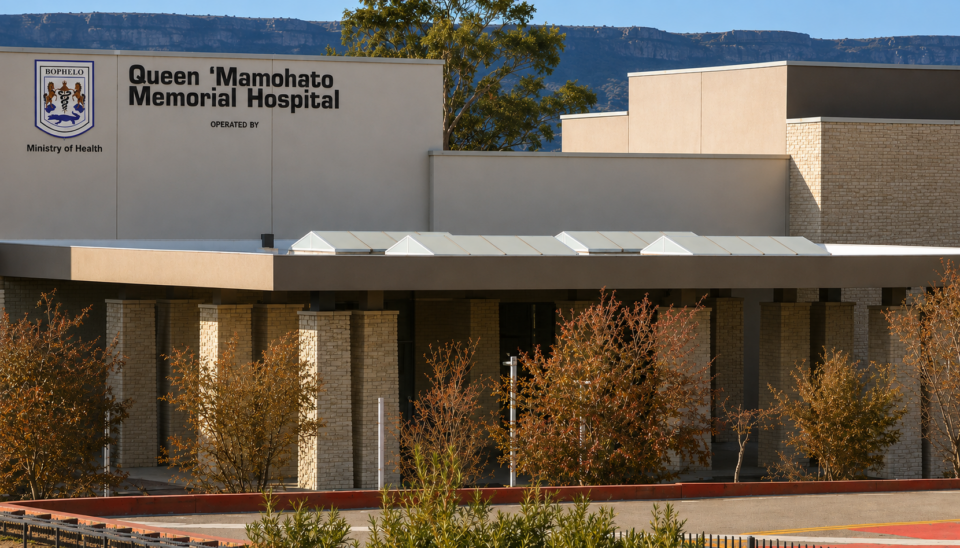
…as furious MPs demand hospital closure
Mohloai Mpesi
QUEEN ‘Mamohato Memorial Hospital (QMMH) is buckling under a staggering M184 million debt, sparking outrage from Members of Parliament who have questioned whether the troubled referral hospital should remain open.
The financial crisis came to light when QMMH and the Ministry of Health appeared before Parliament’s Portfolio Committee on the Social Cluster on Thursday, seeking funding to settle outstanding liabilities.
The Committee heard that, in addition to owing the National Drug Service Organisation (NDSO) M34 million, the hospital has accumulated M150 million in debts owed to various service providers.
QMMH Managing Director Dr ‘Makhoase Ranyali warned MPs that the hospital’s medicine budget would only sustain operations for another two quarters.
“The pharmacy has notified us that the budget for medication can only last two quarters. We have sat down as QMMH to ensure that we don’t have a shortage, but unfortunately, we already do. We have a high influx of patients and offer 24-hour service across our facilities,” Dr Ranyali said.
She said the M34 million owed to the NDSO had accumulated during the 2025/26 financial year alone.
The revelation stunned the Committee, which demanded a comprehensive breakdown of all creditors.
Committee chairperson Mokhothu Makhalanyane said every debt incurred by the hospital ultimately became Parliament’s burden.
“Every debt of the nation is a budget coming to us. It’s a supplementary budget that we have to agree on. M150 million? You owe such a lot of money for what?” Mr Makhalanyane asked.
Dr Ranyali requested a separate sitting to explain in detail how the liabilities had accumulated.
QMMH finance manager, Tšele Sehlabo, outlined some of the debts, including M2 million owed to Roche for laboratory reagents, M4.9 million to Integrated for Medicines, M9.2 million to Advanced Holdings for biomedical equipment installation, and M3.6 million to Philips for installing X-ray machines.
Mr Makhalanyane said the hospital’s financial woes ran much deeper than the latest debt.
He accused the Ministry of Health of failing to disclose substantial overspending, including M250 million incurred during the 2024/25 financial year.
“As Parliament, we allocated a sufficient budget. During the 2024/2025 financial year, the Ministry of Health failed to disclose everything. We made a supplementary budget and a statement of excess. When you look back, Health had already overspent M250 million that was undisclosed during the budget estimates.
“It is something we fought about with QMMH this year. They need to disclose their debts. This year, we learnt that they have a M400 million deficit. QMMH entered the budget process with a deficit but did not disclose it until we asked for it.”
He also questioned how M77 million approved by the Ministry of Finance through a virement for medicines, oxygen and patient food had allegedly been diverted.
“There is an issue of M77 million that QMMH requested as a virement, and the Minister of Finance approved it. It was earmarked for medicines, oxygen and food for patients. When it was disbursed, we discovered that some of the money did not pay for what it was meant for. Part of it went towards RSL and salaries. We have those vouchers, the ministry’s request, what the Minister of Finance approved, and how it was actually spent. It has confused a lot of the finances.”
Mr Makhalanyane further blamed the hospital’s worsening financial position on the recruitment of hundreds of employees without corresponding budget allocations, adding that another unresolved dispute involving M52 million continued to haunt the institution.
Committee member Mohlominyane Tota launched a scathing attack on the hospital’s management, accusing it of squandering public funds year after year and suggesting the institution should be shut down.
“We always allocate money for QMMH and they misuse the funds we give them. We keep quiet about it and pass it on to the next budget because we are afraid patients will suffer.
“Is it not better to shut down QMMH, because we are not going to continue with it for long anyway? We are not the ones who employed 394 people, burdening your payroll with costs that should be used for health services but are instead being used where they are not supposed to be. I don’t understand how we have such a huge debt when there is such misuse of finances at QMMH.”
Public Accounts Committee (PAC) member, Dr Tšeliso Moroke, described the hospital as an institution crippled by poor leadership and financial mismanagement.
“On these issues, there has never been any action taken. We don’t know who hired so many people who messed up the budget. This institution doesn’t have leadership. No institution should have five administration managers and claim that such people care about Basotho taxes.
“We don’t even know what to call this — whether it is part of the government or operating on its own. There is a huge gap that allows for the misuse of finances. We need to find a solution now because we cannot continue in this state.”
Another PAC member, Montoeli Masoetsa, accused Parliament itself of repeatedly shielding the hospital from accountability.
“This is a mess, and I think we are compromising ourselves as parliamentary Committees on the oversight front. Every time the government institutions do reckless things, some of us will always say Basotho will suffer. The question is whether Basotho are not already suffering because of these very things, under an administration where there is no audit on whether the right people were hired for the correct positions.
“Should we continue with the same management where there is no skills audit — five human resources staff and seven finance staff? What are five human resources officers doing if not simply drawing salaries?”
Responding to calls for closure, Mr Makhalanyane insisted that shutting down QMMH was not a realistic option because of the country’s fragile healthcare system.
“You are rightfully holding them accountable because we are talking about money. But we cannot close this hospital. In the 2025 financial year, this hospital admitted over 100,000 patients, and the health system in the country has collapsed, hence most people go to QMMH. If we close any institution, it will cause more crises unless we respond to the health issues in general.
“I understand that you are looking at the recklessness in the use of finances; in no way are we condoning any wrongdoing at the hospital. I am therefore asking the PAC to do its best — a forensic audit must be conducted. By October 30, we will have information on what happened to QMMH’s money, and a decision will be made on how we move forward.”
Health Minister, Mamokete Ntšekhe, agreed that urgent intervention was needed, saying the hospital required decisive leadership changes.
“We need to fix QMMH. We need to take tough decisions as the ministry, because the situation we are in requires tough decisions. This hospital needs a change of management. Should we allow this issue to continue, Basotho will ask questions and we will lack answers. We will reach a point where we can’t even provide healthcare.
“I am still considering what immediate action can be taken on the leadership of this hospital. We need to rescue the hospital.”
QMMH has endured persistent financial turmoil since opening in October 2011 to replace the century-old Queen Elizabeth II Hospital.
The 425-bed referral hospital was established under a public-private partnership signed in 2008, with South African healthcare giant Netcare holding a 40 percent stake in the Tšepong Consortium, which operated the facility.
Once celebrated by the World Bank as a model for financing healthcare infrastructure in Africa, the arrangement later became heavily criticised after consuming nearly half of Lesotho’s health budget. The government terminated the 18-year agreement in 2021, about five years before it was due to expire.
The termination triggered a protracted legal dispute. Netcare and its subsidiary, Botle Facilities Management, are pursuing claims exceeding M200 million, while local shareholders accuse Netcare of siphoning more than M1.1 billion from the consortium between 2016 and 2020.
Earlier this week, Parliament’s PAC resolved to block any government payment to Netcare until former QMMH employees receive their outstanding severance packages and provident fund benefits.
It is against this backdrop of chronic financial instability, governance failures and unresolved legacy disputes that MPs are now demanding answers over the hospital’s latest M184 million debt.