

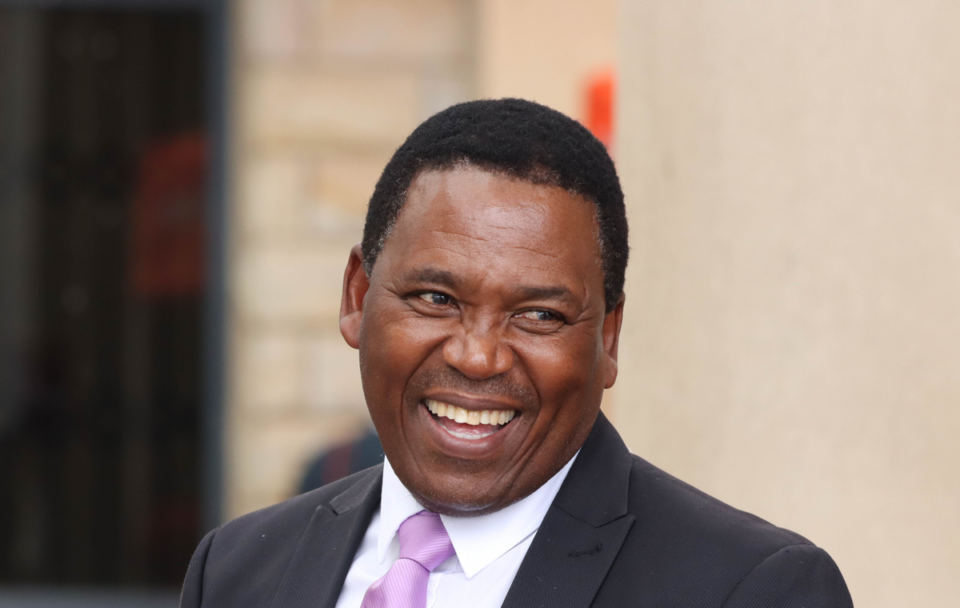
Mohloai Mpesi
NATIONAL Assembly Chair of Chairs, Mokhothu Makhalanyane, has been appointed to spearhead key continental and regional anti-corruption bodies.
Mr Makhalanyane, who is also a Revolution for Prosperity (RFP) legislator for Mokhethoaneng, has been named to lead the African Parliamentarians Network Against Corruption (APNAC) and the Southern Africa Parliamentarians Network Against Corruption (SAPNAC).
Known for his outspoken stance against corruption, Mr Makhalanyane has stepped down as chair of the Network of African Parliamentary Committees of Health (NEAPACOH) to assume his new responsibilities at regional and continental levels. He made his final appearance in that role at the 17th NEAPACOH meeting held on Friday in Lusaka, Zambia, after completing two full terms.
APNAC and SAPNAC are mandated to combat corruption, illicit financial flows and money laundering by promoting transparency, accountability and integrity, and by strengthening legislative frameworks and institutions tasked with curbing corruption across Africa.
In a letter seen by this publication, SAPNAC Board Vice President and Chairperson, Sabhuku Themba Mliswa, said Mr Makhalanyane’s appointment was based on his efforts to advance Lesotho’s anti-corruption agenda.
“This is reflected in your commitment under the United Nations Convention Against Corruption (2002), the African Union Convention on Preventing and Combating Corruption (2003), the SADC Protocol Against Corruption (2001), the United Nations Convention Against Transnational Organised Crime (Palermo Convention, 2000) and the United Nations Vienna Convention (1988), among others,” Mr Mliswa wrote.
“While APNAC and SAPNAC acknowledge the national efforts your country continues to exert in confronting the pervasive challenge of corruption—an impediment to shared progress and prosperity as guided by Agenda 2063 and the African Continental Free Trade Area (AfCFTA)—it is imperative that we collaborate and stand united in our resolve.
“Corruption, in all its forms, threatens the foundations of our democracies, erodes public trust and diverts much-needed resources from critical development priorities, including foreign direct investment,” he added.
Mr Mliswa further indicated that APNAC intended to convene a high-level meeting with heads of state and members of parliament across the continent to deliberate on corruption-related issues and strengthen the participation of law enforcement agencies in advancing anti-corruption awareness.
“In this regard, I respectfully seek to convene a consultative meeting with your Honourable Speaker and other heads of state, government and parliament across the continent,” he said.
“The primary purpose of this meeting is, inter alia, to reaffirm our collective stance against corruption; explore institutional mechanisms for enhanced inter-parliamentary and inter-governmental collaboration; engage former and current legislators in APNAC’s continental initiatives; strengthen the participation of law enforcement agencies; promote civic education and advocacy; sign a memorandum of understanding; establish a local APNAC chapter; and appraise the work of APNAC and its stakeholders.”
He noted that meaningful progress towards integrity often provokes resistance, but stressed that collective resilience and unity of purpose must prevail.
“Only through inclusive, coordinated efforts involving the executive, legislature, judiciary, law enforcement agencies, academia, civil society organisations, development partners and other stakeholders can we drive the transformational change required to combat corruption and its vices,” Mr Mliswa said.
“I would be honoured to engage with your esteemed office at a time convenient to you to discuss how your government and parliament can further contribute to this cause and align with APNAC’s continental agenda. Your commitment will not only inspire other nations but also strengthen our moral leadership on the global stage.”
Speaking to the Sunday Express from Lusaka, Mr Makhalanyane said he intends to be more active in his new anti-corruption appointment.
“I plan to play a more active role in this position. I have already done my part as chairperson of NEAPACOH, where I served two terms. Each term lasts three years, and I still have two years remaining,” Mr Makhalanyane said.
He also said he did not want to overburden himself with work, saying that he already has substantial responsibilities in Lesotho.