

…identifies renewable energy, infrastructure and agriculture as key growth drivers
Moroke Sekoboto
PRIME Minister Sam Matekane says his government is prioritising industrial development, renewable energy, infrastructure enhancement, increased agricultural productivity and a strong response to climate change to drive economic growth.
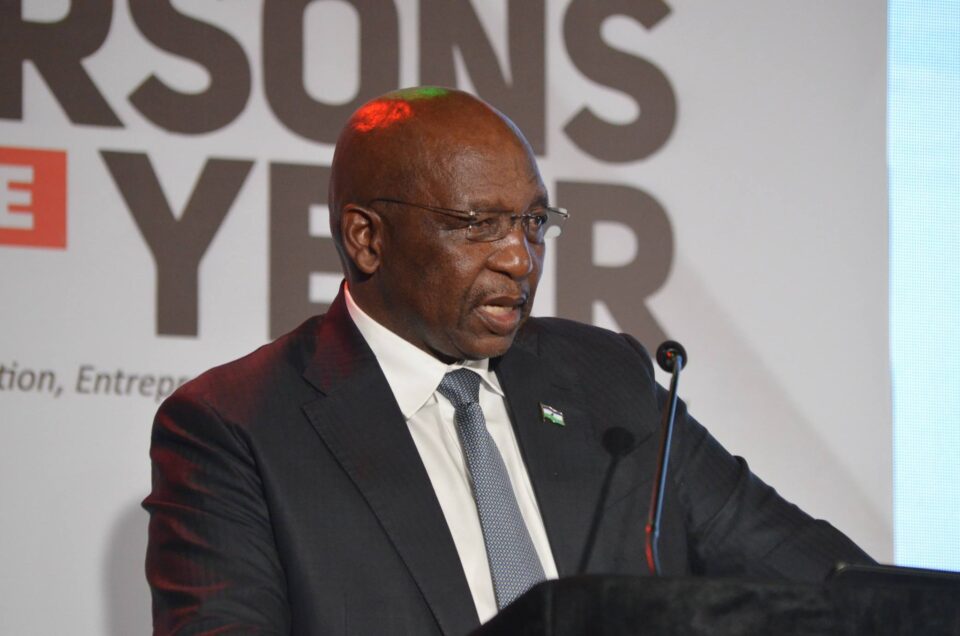
Speaking at the African Magazine Awards in Ghana’s capital, Accra, on Friday, Mr Matekane said Lesotho’s future would not be built by government alone but through partnerships with African investors, innovators and institutions to turn opportunity into prosperity.
According to Prime Minister’s Press Attache, Thapelo Mabote, Mr Matekane’s participation follows formal notification from the African Leadership Organisation, publishers of the African Leadership Magazine, confirming approval by its editorial board of a Special Country Edition dedicated exclusively to the Kingdom of Lesotho under the theme “Lesotho Reimagined: Bold Leadership, Smart Reforms & Africa’s Rising Frontier.”
Mr Mabote said the special edition will provide a comprehensive, analytical and evidence-based account of Lesotho’s reform agenda since 2022. It will highlight progress made in public finance management, institutional strengthening, private sector development, youth empowerment and infrastructure advancement, as well as the strategic repositioning of the Kingdom as a resilient, investment-ready economy.
In his speech, Mr Matekane said the African Continental Free Trade Area (AfCFTA) had opened new horizons, but trade agreements alone do not create jobs.
“What creates jobs is production. What creates wealth is value addition. What transforms economies is industrialisation. That is why we are advancing reforms and instruments that make investment practical and profitable,” Mr Matekane said.
Among these initiatives, he cited Lesotho’s commitment to Special Economic Zones (SEZs) aimed at creating efficient, investor-friendly industrial ecosystems. He said the SEZ legal framework was being finalised and will enable investors to establish operations with greater speed, clarity and confidence.
Mr Matekane said the government was also focusing on tourism investment—not only as a leisure activity, but as an engine of employment, a catalyst for infrastructure development, a preserver of heritage and a driver of economic diversification.
“For a country like Lesotho—small, landlocked, but richly endowed with landscape and culture—tourism is a powerful pathway to build wealth without depleting our natural assets.”
He added that the government was keen to attract multi-million-dollar tourism investments, including eco-lodges, adventure resorts, conference and wellness retreats, heritage circuits, film and creative tourism, and high-quality hospitality developments that appeal to modern travellers such as digital nomads.
Mr Matekane said he had brought along key institutions mandated to partner with investors, including the Lesotho National Development Corporation (LNDC), which serves as the government’s implementing arm for industrial and commercial development, and the Lesotho Tourism Development Corporation (LTDC), tasked with facilitating tourism investment.
“These institutions are pillars of our enabling ecosystem—enhancing the ease of doing business, improving investor support and ensuring that opportunities move from paper to project swiftly and successfully.”
He stressed that good governance remained central to economic growth.
“Good governance is good economics. Investors want policy certainty, transparent processes and accountable institutions. We are responding with a clear investment-climate reform agenda, strengthened governance in tourism and improved public–private partnership frameworks.”
He said Lesotho was serious about reforms, partnerships and results, and was eager to welcome African investors and innovators with proven solutions into its growth sectors.
Mr Matekane highlighted tourism and hospitality, manufacturing and value addition, agriculture and agro-processing, renewable energy and climate-smart infrastructure, as well as technology and digital services, as key pillars of economic growth.
“Lesotho offers competitive operating costs, a dependable workforce and an emerging culture of enterprise—especially among our youth. But in today’s world, no country wins alone,” Mr Matekane said.