

…as 976 Mafeteng households gain access to electricity
Moroke Sekoboto
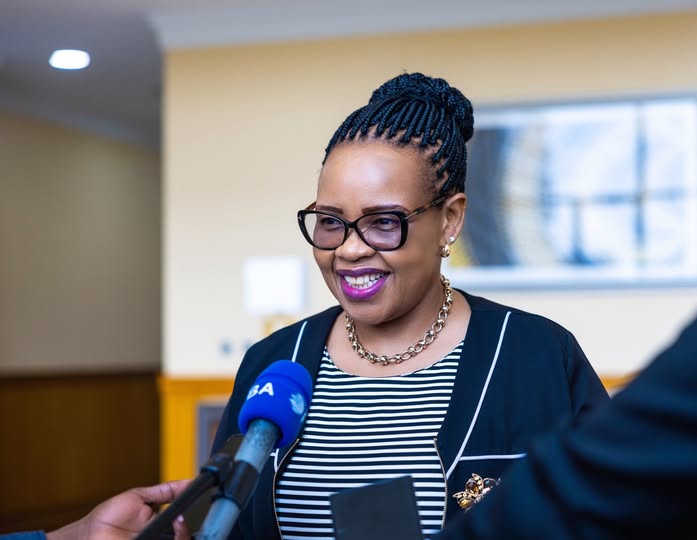
DEPUTY Prime Minister, Nthomeng Majara, has launched an electrification project for Qalabane, extending electricity to 976 households in Mafeteng.
During the launch in Qalabane on Friday, Ms Majara also handed over eight vehicles to the Lesotho Electricity Company (LEC) Rural Electrification Unit; 21 houses to vulnerable Basotho under the Disaster Management Authority relief programme; two computer laboratories to Bereng and Masentle High Schools; street lights; an Econet network tower; blankets to the Community Policing Forum; and grains, school uniforms and stationery to underprivileged children.
Addressing the gathering, Ms Majara said the provision of computer labs and network infrastructure demonstrated the government’s commitment to improving access to education and technology. She reaffirmed her coalition government’s focus on service delivery, noting that it was honouring promises made during the election campaign.
A total of 976 households have been connected—520 at Makaung and 456 at Ha Lepolesa and Ha Motanyane.
“The government is prioritising access to electricity to improve the lives of Basotho. Our national goal is for every Mosotho to have access to electricity by 2030,” Ms Majara said.
“We have connected 520 households in Makaung at a cost of M21 million, while 456 households in Ha Lepolesa and Ha Motanyane were connected at a cost of M16 million. We have also erected street lights to improve safety, reduce night-time accidents and support economic growth.”
She urged the community to safeguard the new infrastructure, stressing its importance to daily life and the growth of local businesses.
“We have provided 21 houses to vulnerable people, creating a lasting impact on their lives. The network tower further underscores the government’s commitment to improving connectivity and embracing technology as a driver of economic growth,” she said.
Minister of Natural Resources and Energy, Mohlomi Moleko, echoed the message, saying access to clean water and electricity in rural areas was a constitutional obligation.
“These projects align with the national objective of achieving universal access to electricity by 2030,” he said, adding that the government is working to boost local power generation to reduce reliance on imports from South Africa and Mozambique.
Member of Parliament for Qalabane, Retšelisitsoe Matlanyane, thanked the government on behalf of the community, describing electricity as a long-standing need. She called for accelerated electrification across all constituencies.
“We promised to bring services to the people during election campaigns, and we are delivering—unlike past governments.
“Be wise when voting. I am glad you elected a government that turns words into action,” Dr Matlanyane said.