
THE court challenge against barring learners from examinations over unpaid school fees is a test of Lesotho’s commitment to the right to education, equality and the protection of children.
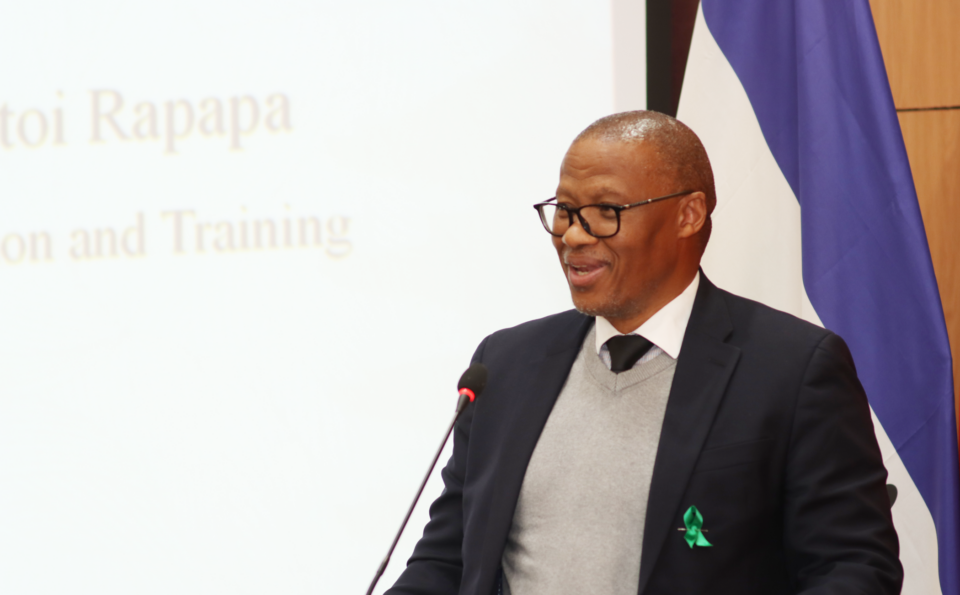
The decision by human rights activists SECTION 2 to drag Education and Training Minister, Professor Ntoi Rapapa, and other education authorities to the Constitutional Court over the exclusion of learners from final examinations is a welcome intervention.
At stake is a fundamental question: should children lose access to education because their parents or guardians cannot pay school or examination fees on time? The answer should be an emphatic no.
SECTION 2’s Constitutional Court application raises serious arguments that deserve careful judicial consideration.
Education is not simply another service to be withdrawn when a payment is overdue. It is the foundation upon which children build their prospects for employment, independence and meaningful participation in society. Denying a learner the opportunity to sit a final examination can have consequences extending far beyond the immediate school term.
An examination missed today may mean repeating a year, delaying further studies or losing an opportunity to enter tertiary education. For a child already struggling with poverty, such a setback can deepen the very disadvantage that education is supposed to overcome.
This is why the practice of punishing learners for their parents’ debts is so troubling. It transfers the burden of financial obligations from those responsible for paying them to children who have neither incurred the debts nor the means to settle them.
It also risks turning schools into institutions where a family’s economic circumstances determine a child’s educational prospects. Learners from financially secure households can continue with their studies, while those from poorer backgrounds face exclusion, humiliation and uncertainty.
Such an outcome is difficult to reconcile with the principles of equality, dignity and the protection of children’s best interests.
SECTION 2 argues that the constitutional provisions governing socio-economic rights do not give the State and educational authorities a licence to interfere with learners’ access to education. Its argument deserves attention, particularly its contention that the progressive realisation of rights under section 25 of the Constitution should not be interpreted as making those rights unenforceable.
The organisation is also not demanding that the government assume every outstanding school fee or commit additional public funds to settle parents’ debts. Instead, it proposes that parents be allowed to pay their arrears gradually, according to their financial circumstances, while their children remain in school and sit their examinations.
This is a reasonable starting point for finding a balance between the financial sustainability of schools and the rights of learners.
Schools need money to operate. Teachers must be paid, learning materials purchased and essential services maintained. Parents who can afford to pay their fees should honour their obligations, and school authorities have a legitimate interest in recovering outstanding amounts.
But the need to collect fees does not automatically justify every method used to enforce payment. Financial accountability and the protection of children’s rights need not be mutually exclusive.
Schools and education authorities should explore less harmful alternatives, including structured repayment arrangements, individual assessments of parents’ circumstances and appropriate support for vulnerable families. Where necessary, government should consider targeted assistance through existing bursaries, scholarships and other support programmes.
SECTION 2 has also asked the court to consider allowing learners to write their examinations while their results are withheld until the outstanding fees are paid. It proposes this only as a last resort, after less restrictive measures have been exhausted.
Whether such an arrangement is legally appropriate is a matter for the court to determine. However, the proposal highlights an important distinction: recovering money owed to a school should not automatically mean denying a child the opportunity to demonstrate what they have learnt.
The authorities must also recognise that poverty is not necessarily a sign of parental irresponsibility. Families can fall behind because of unemployment, illness, economic hardship or other circumstances beyond their control. A blanket policy that treats every indebted household alike ignores these realities and risks penalising those who are already struggling.
The Constitutional Court now has an opportunity to clarify the legal obligations of the State, schools and examining bodies in protecting learners from exclusion over unpaid fees. Its ruling could provide an important framework for reconciling the financial needs of educational institutions with the rights of children.
While the legal process unfolds, the Ministry of Education and Training should not wait for a final judgment before examining the practice and considering interim measures to protect learners from missing their examinations. Education authorities must be proactive, not merely reactive, when children’s futures are at stake.
The broader responsibility, however, extends beyond the courtroom. Parents must make every reasonable effort to meet their financial obligations, schools must manage their finances responsibly, and government must ensure that its education policies do not deepen inequality.
Ultimately, a child’s educational future should not be held hostage to a parent’s unpaid bill. If Lesotho is serious about protecting children and expanding access to education, it must ensure that financial hardship does not become a barrier to learning.
SECTION 2 has placed an important question before the courts. The outcome should help establish a system in which schools can pursue legitimate debts without sacrificing the rights, dignity and future prospects of the children entrusted to their care.
Silence over crystal meth bust raises even more troubling questions