

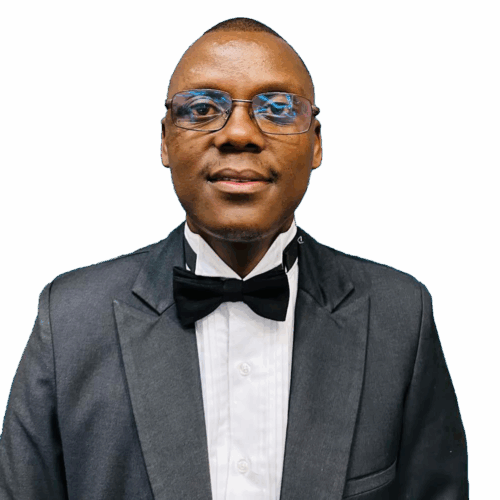
…as it inaugurates 49th council
Moroke Sekoboto
THE Lesotho Institute of Accountants (LIA) has reaffirmed its commitment to promoting transparency, accountability and sound management of public resources, saying the accounting profession must adapt to emerging technologies and sustainability demands while upholding ethical standards.
Speaking at the Institute’s gala dinner at Lehakoe Recreational and Cultural Centre on Friday, LIA president Mokheseng Mofolo said its mandate to protect the public interest, which dates back to 1977, remained unchanged despite the evolving demands of the profession.
Mr Mofolo said the Institute had aligned its work with international requirements arising from its global affiliations and partnerships, while positioning itself to support Lesotho’s economic development.
He said the rapidly changing operating environment required accountants and institutions to embrace innovation, particularly in artificial intelligence (AI), green finance and sustainable business practices.
“The environment in which organisations and governments operate is changing at an unprecedented pace. Climate change has compelled both public and private institutions to reassess how they conduct their operations, taking into account the environmental impact of every activity,” Mr Mofolo said.
“At the same time, advancements in artificial intelligence demand our attention and action if we are to remain productive, competitive, and relevant. We cannot afford to overlook the opportunities presented by green finance, nor can we ignore the efficiencies and innovations artificial intelligence offers.”
He said technological advancement was progressing so rapidly that discussions were already extending beyond AI to Artificial Superintelligence (ASI), requiring professionals to remain informed and prepared.
Mr Mofolo said more than 100 participants had attended two days of discussions on AI, exploring its potential and the responsibilities associated with its use.
“One of the key lessons from these discussions is that information has become one of the world’s most valuable assets,” he said.
He said the discussions had also examined the risks of relying on data infrastructure located outside Africa and the need to develop local and regional digital capacity.
Mr Mofolo added that the Institute was ready to help organisations adopt sustainable business practices through the implementation of sustainability reporting standards.
Meanwhile, Minister of Education and Training, Professor Ntoi Rapapa, said the LIA was mandated to determine qualifications for admission to membership, regulate the accountancy profession, provide for training and education, promote professional interests and undertake activities necessary to advance the profession and protect the public interest.
Prof Rapapa said the Institute’s strategic pillars of sustainability, relevance, member value and professionalism reflected its legislative responsibilities.
He identified the LIA’s membership of the International Federation of Accountants (IFAC) as one of its most significant milestones, saying it had positioned Lesotho’s accounting profession within the global framework of professional standards, ethics, education and quality assurance.
“Joining IFAC was never about prestige alone. It was about positioning Lesotho’s accounting profession within the global architecture of professional excellence, ethics, education and quality assurance. It was about ensuring that our accountants are globally competitive and that the standards applicable in Lesotho are benchmarked against international best practice,” Prof Rapapa said.
He said the Institute should continue participating in discussions around the Southern African Development Community (SADC) Protocol on Trade in Services and the Mutual Recognition Agreements under development.
Prof Rapapa said recognition of Basotho accountants across the region and beyond would improve their mobility and employability, while helping reduce unemployment and expand Lesotho’s export of professional services.
“This work is not academic. It has direct implications for employment creation and economic development. When Basotho accountants are recognised across SADC and other jurisdictions, they become mobile, employable and competitive in regional and global markets,” he said.
He also highlighted sustainability reporting as an increasingly important responsibility for the accounting profession, arguing that accountants had a role to play in ensuring organisations transparently measured and reported their environmental and social impacts.
While accountants might not directly conserve forests, protect water resources or reduce carbon emissions, he said, they could hold organisations accountable for how they used resources and managed environmental risks.
Prof Rapapa said sustainability disclosures were also creating opportunities for green finance, making it increasingly important for organisations to demonstrate responsible and transparent management.
Turning to public financial management, he said the government had a responsibility to safeguard public assets and account for them comprehensively.
“Citizens expect us not only to safeguard public resources but to account for them comprehensively and transparently,” he said.
He noted that Lesotho’s legislative framework provided for the possible adoption of International Public Sector Accounting Standards (IPSAS) accrual accounting when conditions were appropriate, with the government required to pronounce itself on the transition at the appropriate time.
Prof Rapapa also commended the LIA’s contribution to strengthening public financial management, combating money laundering and the financing of terrorism, and preventing fraud.
He said the Institute had remained involved in anti-money laundering and countering the financing of terrorism initiatives, as well as national risk assessment activities, despite resource constraints.
He urged the LIA to sustain these efforts, noting that protecting financial systems was a responsibility that extended beyond national borders.
The minister said trust remained central to the accounting profession and could only be sustained through ethical conduct.
“Above all else, the accounting profession derives its value from trust. Trust is built upon ethics,” he said.
He added that integrity must remain central to the profession as technology, AI and digital transformation continued to reshape how accountants worked.
Prof Rapapa also acknowledged the Institute’s efforts to advance the Institute of Chartered Accountants of Lesotho (ICAL) Bill, saying the process had been lengthy and challenging but that the LIA’s leadership had remained persistent.
He reaffirmed the government’s commitment to ensuring that the Bill became law before the dissolution of the current government in 2027.
“I am pleased to reaffirm the government’s commitment that the ICAL Bill will become law before the dissolution of this Government in 2027. That is my commitment to you,” Prof Rapapa said.