

Rethabile Pitso
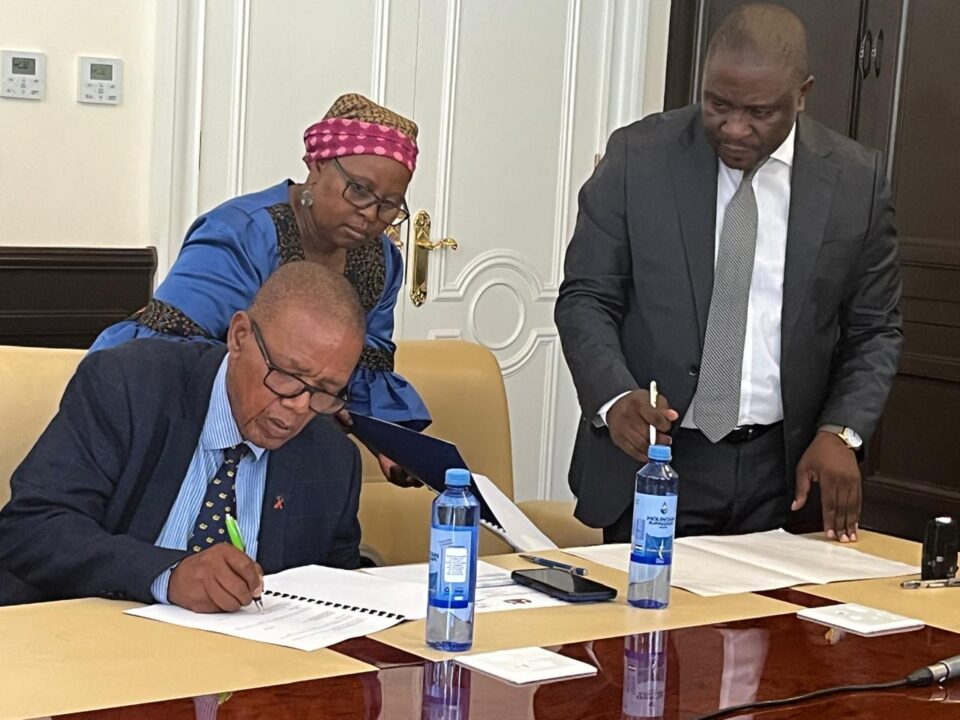
THE government has renewed its Memorandum of Understanding (MoU) with the Christian Health Association of Lesotho (CHAL), strengthening a long-standing partnership which dates back to 2007.
The updated agreement comes after the original MoU, signed nearly two decades ago, became partly outdated amid financial and operational challenges, prompting CHAL to seek government intervention.
Under the new understanding, the government will provide medical supplies to CHAL facilities, ensure that services at CHAL align with national standards, and negotiate for CHAL staff to benefit from a 50 percent repayment plan for National Manpower Development Secretariat (NMDS) loans, down from the 65 percent currently applied to private sector employees.
Crucially, the government has also committed to settling CHAL’s existing debts, which have reportedly reached M152 million. Most of this debt is owed to the Revenue Services Lesotho (RSL) for unpaid Pay-As-You-Earn (PAYE) taxes and to the National Drug Service Organisation (NDSO) for medicines.
CHAL, an association of hospitals run by various churches across the country, provides around 40 percent of national health services through 71 health centres, eight hospitals, and four nurse training colleges. Operational costs are funded by the government (70 percent), churches (20 percent), and patient fees (10 percent).
Health Minister, Selibe Mochoboroane, described the renewed MoU as “long-awaited” and a milestone in recognizing CHAL’s vital role, particularly in reaching remote communities.
“There are several important achievements in this agreement. It has taken years to reach this point since the 2007 MoU, which had been overtaken by events. Today marks a significant milestone with the necessary updates,” Mr Mochoboroane said.
He highlighted key provisions of the agreement, including government commitments to supply medical stocks to CHAL and Red Cross facilities, ensuring all health centres have adequate resources.
The minister also announced a reduction in the repayment rate for NMDS loans for CHAL staff—from 65 percent to 50 percent—alleviating financial pressure on employees, most of whom are nurses.
“Through this agreement, we aim to support nurses and teachers serving a public good, whether in the public or private sector. Their selfless work often limits their personal advancement, and this step meets them halfway,” he said.
Speaking on behalf of CHAL, Reverend Bernard Mojaki Kometsi praised the government for its timely response.
“This milestone is particularly significant nearly two decades after the original 2007 agreement, which had never been formally reviewed. Revisiting and strengthening this partnership demonstrates foresight and dedication to improving our health sector,” he said.
Reverend Kometsi said CHAL facilities had faced severe challenges, including medicine shortages, mounting debt, and staff dissatisfaction linked to funding constraints. He urged the government to provide timely support to ensure consistent and equitable healthcare delivery to Basotho communities.
Speaking on behalf of Prime Minister Sam Matekane, Deputy Prime Minister Nthomeng Majara underscored CHAL’s critical societal role.
“On behalf of the Prime Minister and the government, I wish to express deep appreciation for the indispensable role our churches play in supporting communities, uplifting the vulnerable, and nurturing the moral fabric of society. Today marks a new chapter in this collaboration and an opportunity to strengthen our partnership in line with evolving health needs,” Ms Majara said.
She further announced that, following extensive deliberations, the government had decided to clear CHAL’s outstanding debts.
“We have long partnered with CHAL but failed to review the original 2007 agreement despite changing circumstances. Today, alongside signing the renewed MoU, we are also cancelling CHAL’s debts. This decision has strong backing across government institutions, with the social cluster committee ensuring the agreement is in place before funds are allocated to the Ministry of Health,” she said.