

Hopolang Mokhopi
HER Majesty Queen ‘Masenate Mohato Seeiso has called on the nation to rally behind the movement for improved menstrual health and hygiene, declaring it a critical human rights issue that directly affects girls’ education, dignity, and opportunities.
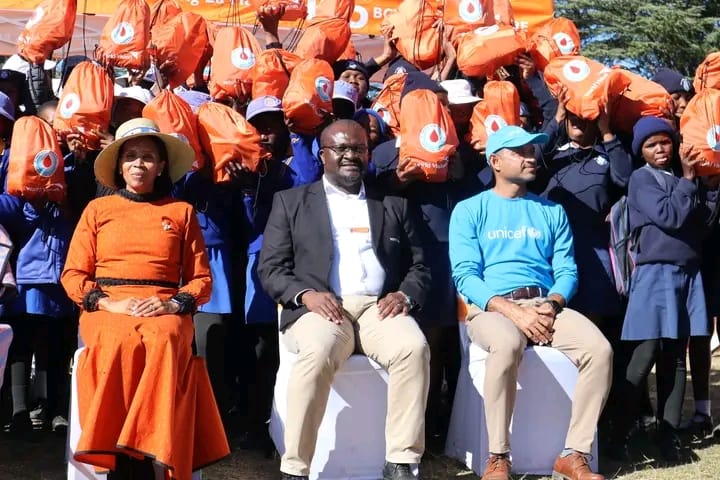
She made the call during Menstrual Hygiene Day 2025 commemorations held on Friday at St Theresa Primary School in Berea.
The event was organised by World Vision Lesotho with support from the United Nations Children’s Fund (UNICEF).
Addressing attendees, Queen ‘Masenate said it was an honour to take part in the day’s activities, which shine a spotlight on a subject too often neglected.
“Our aim today is to raise awareness about the importance of supporting girls in managing their menstrual health and maintaining personal hygiene during their cycles,” Her Majesty said.
“This responsibility belongs to all of us. We must work together to create a supportive environment where girls and women can thrive – not just during their periods, but in every aspect of life. That includes educating children at home, in schools, and in communities, and empowering them to take ownership of their health and wellbeing.”
Through the support from UNICEF, World Vision has already equipped over 500 schools with appropriate water and sanitation facilities tailored towards girls’ needs. More than 600 schools now have permanent handwashing stations. This was regarded as an essential step toward ensuring menstrual health and hygiene.
World Vision Lesotho National Director, James Chifwelu, said he was proud to mark Menstrual Hygiene Day with partners and communities. He emphasised that menstrual hygiene was not just a health issue, but a matter of justice and equality.
“It’s about equity, dignity, and empowerment,” said Mr Chifwelu.
“Over the years, we have supported more than 700 girls, and this year we aim to reach 330 more through our ongoing efforts.”
He stressed the urgent need for continued investment in water and sanitation infrastructure, and confirmed that World Vision’s upcoming 2026–2030 strategic plan will keep menstrual health as a top priority. He thanked Her Majesty and UNICEF for their unwavering support.
“We want to create a world where girls are free from stigma and shame about their periods. Menstrual hygiene should be normalised and openly discussed in schools and communities across the globe.”
The UNICEF representative, Deepak Bhaskaran, echoed these sentiments, underscoring the 2025 theme: “Together, the Period for a New World.”
“Menstrual hygiene is more than a health concern but a matter of dignity, equity, and opportunity.
“It directly impacts education, gender equality, economic empowerment, and the overall wellbeing of girls and women,” Mr Bhaskaran said.
He warned of the consequences of poor menstrual hygiene: increased health risks, missed school days, reduced income, and higher vulnerability to early pregnancy and HIV.
“No girl should have to miss school or suffer in silence because of her period.”
To combat these challenges, he said UNICEF was focusing on five key areas: normalising menstruation, providing comprehensive hygiene education for both girls and boys, and strengthening policy and strategic support.
Despite significant progress, challenges remain. Several schools in Lesotho still lack access to water, and many do not have private, safe toilets—leaving girls without the facilities they need to manage menstruation with dignity.
To address this gap, UNICEF and the European Union have launched the Metsi a Lesotho project at St Stephen High School in Mohale’s Hoek. The five-year initiative will provide gender-sensitive sanitation facilities in 125 rural schools across all 10 districts.
St Theresa Primary School principal, Peete Moeko, expressed deep gratitude to World Vision for its support. He reflected on the school’s early struggles when it opened in 1990.
“Our facilities were in terrible shape. The dormitories were run-down, the water pumps were unreliable, and toilets were practically non-existent.
“Students often fell sick due to poor hygiene conditions. But thanks to World Vision, we now have proper toilets and water access, which has significantly improved our students’ health and wellbeing,” Mr Moeko said.
He also highlighted the importance of involving local communities in managing these vital water resources. Many other schools have similarly benefited, paving the way for government partnerships that can ensure long-term, sustainable improvements.