

IN a country where public officials are often accused of silence, compromise or selective outrage, Lesotho is fortunate to still have a few institutions willing to speak truth to power without fear or favour. Two of the most outstanding examples today are the offices of the Auditor-General and the Ombudsman.
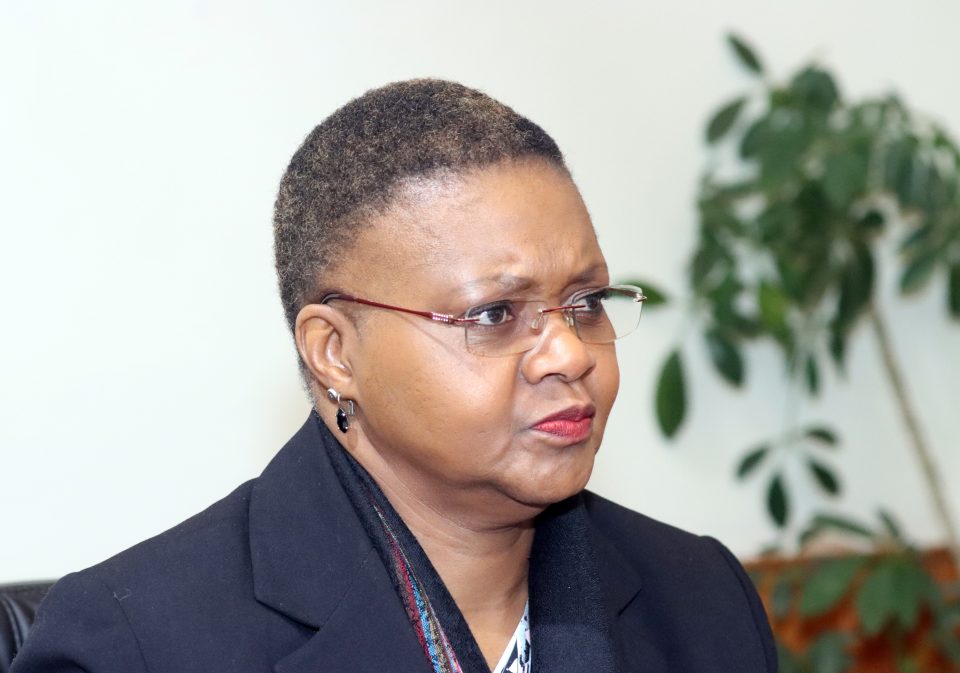
At a time when corruption, maladministration and impunity threaten to hollow out the foundations of governance, Auditor-General Mathabo Makenete and Ombudsman Advocate Tlotliso Polaki have emerged as rare public servants prepared to confront abuse of power head-on — even when doing so places them on a collision course with powerful political and bureaucratic interests.
They deserve their flowers now, while they can still smell them.
For years, Basotho have become accustomed to public reports that expose shocking levels of waste, incompetence and corruption, only for those reports to gather dust while nothing changes. Yet despite this culture of indifference, the Auditor-General and Ombudsman continue to do their jobs with remarkable courage and professionalism.
Just recently, Ms Makenete delivered another devastating audit report exposing how the government cannot account for more than M3 billion in public funds. Her report paints a frightening picture of weak controls, unexplained discrepancies, ballooning liabilities and chaotic financial management across the government ministries and departments.
The figures are staggering. The government records reportedly reflected cash balances differing by more than M3 billion. Public debt has climbed beyond M25 billion. Arrears have exploded. Treasury records conflict with each other. Reconciliation systems appear broken. Even liabilities and guarantees cannot be properly verified.
These are not merely accounting errors. They represent schools not built, medicines not bought, roads not repaired and jobs not created. They represent a dangerous erosion of public trust.
Yet Ms Makenete continues to raise the alarm despite immense pressure that often comes with exposing financial mismanagement at the highest levels of government.
Similarly, Adv Polaki has distinguished herself as one of the few public watchdogs prepared to confront systemic injustice with honesty and moral clarity.
Her recent reports on the Home Affairs ministry and national waste management reveal an office that is actively defending ordinary Basotho against state failure and bureaucratic cruelty.
In her investigation into the passport crisis, Adv Polaki exposed how corruption, incompetence and poor planning effectively rendered many Basotho “stateless” by denying them identity documents and passports for months and even years.
She documented heartbreaking cases of citizens losing employment opportunities, failing to access medical treatment and being unable to travel for education because the government systems had collapsed.
More importantly, she did not hide behind vague language or diplomatic caution. She directly called out “executive paralysis”, maladministration, corruption and abuse of discretion within the ministry.
Her report on waste management was equally fearless, warning that the new Tšoeneng dumpsite risks becoming another environmental disaster because of poor planning and weak governance. This is exactly what constitutional watchdog institutions are supposed to do.
Sadly, in many African countries, institutions meant to hold governments accountable are gradually weakened through political intimidation, budget cuts or leadership appointments designed to ensure obedience instead of oversight. Officials who expose wrongdoing are often isolated, attacked or quietly removed. That is why Basotho must never take independent institutions for granted.
The Auditor-General and Ombudsman are not enemies of the government simply because they expose uncomfortable truths. In fact, they are among the government’s most important allies. A state that cannot account for public funds or deliver basic services cannot sustain legitimacy forever. Accountability institutions help governments correct mistakes before they become national crises.
Instead of attacking these offices whenever damaging reports emerge, political leaders should strengthen them. Parliament must ensure they are adequately funded, protected from interference and empowered to enforce their recommendations.
More importantly, their findings must stop being treated as public relations embarrassments that disappear after newspaper headlines fade.
What is the point of audit reports if no one is prosecuted? What is the purpose of investigations if no corrective action follows? How many more billions must disappear before consequences become real? Basotho are tired of reports without accountability.
The danger is that if honest public servants repeatedly expose wrongdoing without seeing action, the public eventually loses faith not only in government, but also in the institutions meant to protect democracy. That would be a tragedy.
People like Ms Makenete and Adv Polaki remind the country that integrity in public office is still possible. They remind us that constitutional institutions can still function independently. They remind young public servants that professionalism and courage still matter.
Most importantly, they remind those in power that someone is watching.
Lesotho desperately needs more officials willing to defend the public interest with the same fearlessness and consistency.
For now, the least the nation can do is recognise and appreciate those already carrying that burden.
Because in a governance environment where silence is often rewarded and honesty punished, courage deserves recognition before it is extinguished.