

…as Lesotho takes steps toward joining the UN Water Convention
Moroke Sekoboto
BASOTHO have been urged to treat water as a vital national treasure because for Lesotho, water is not just a natural resource, but a powerful tool for development, resilience, and regional cooperation.
United Nations (UN) Resident Coordinator, Amanda Khozi Mukwashi, made these remarks at the national workshop on the Convention on the Protection and Use of Transboundary Watercourses and International Lakes: Lesotho’s National Accession Process, held at Victory Hall in Maseru on Thursday and Friday.
The UN Water Convention promotes regional cooperation, peace, and stability without replacing existing water agreements. It supports sustainable water resource management, like in the Orange-Senqu River basin, to benefit both people and the environment for future generations.
The workshop was intended to inform stakeholders about the UN Water Convention, share Lesotho’s accession efforts, gather stakeholder input, and discuss the next steps in the process.
Participants included Ms Mukwashi, the German Ambassador to South Africa, Lesotho, and Eswatini Andreas Peschke; European Union (EU) Head of Cooperation Mario Varrenti; the EU Ambassador to Lesotho Paula Amadei; Minister of Natural Resources Mohlomi Moleko and the Secretary to the UN Water Convention and United Nations Economic Commission for Europe (UNECE) representative Sonja Koeppel, as well as representatives from the Lesotho Highlands Water Project (LHWP), World Bank, Southern African Development Community (SADC) and the Orange–Senqu River Commission (ORASECOM) among others.
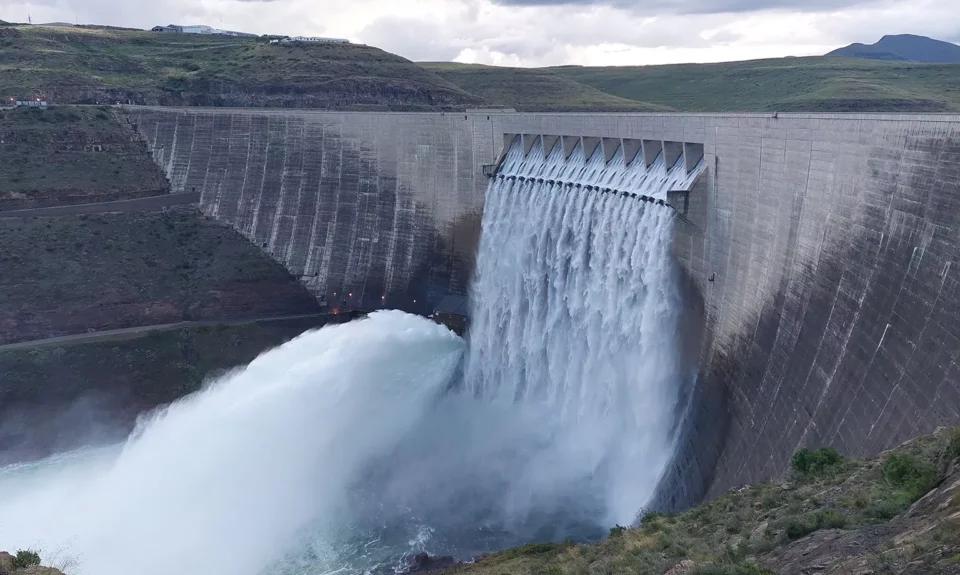
Ms Mukwashi highlighted the country’s unique position as a water-rich, landlocked, and mountainous nation. With its diamonds depleting and land degrading, she said Lesotho must now turn its focus to protecting what she called its “white diamond” (water).
“Water is central to Lesotho’s future. Projects like the Lesotho Highlands Water Project and partnerships through the ORASECOM show just how vital water is to the country’s development. The proposed water transfer to Botswana only adds to this, demonstrating how Lesotho can harness its advantage for shared growth and resilience,” Ms Mukwashi said.
She praised Lesotho’s track record in managing transboundary water, noting that all of its surface water sources are covered by existing agreements. However, she said there was still more to be done, especially when it comes to managing shared underground water, for which no formal agreements yet exist.
Accession to the United Nations Water Convention, she explained, would not replace current arrangements but would strengthen them.
“The Convention offers a globally recognized, legally binding framework to support regional cooperation, access to technical expertise, funding, and best practices. It reinforces Lesotho’s commitment to peace, sustainable development, and inclusive water governance. And we must remember that this is about people. Water governance is not just about policies; it is about inclusion, especially of women, who are often the primary stewards of water at home and in communities.”
Ms Mukwashi reaffirmed the UN’s full support for Lesotho’s journey toward integrated, climate-resilient, and inclusive water and ocean resource management.
Minister Moleko echoed the call to action, describing water as the “lifeblood” of communities, economies, and ecosystems. With Lesotho located entirely within the Orange–Senqu River Basin, a vital water system shared with South Africa, Botswana, and Namibia, he stressed that managing water responsibly upstream was crucial for the wellbeing of downstream countries.
“Lesotho is committed to strengthening cooperation in line with the 2000 SADC Revised Protocol on Shared Watercourses. We have already begun the process of acceding to the UN Water Convention,” Mr Moleko said.
He said his ministry had taken concrete steps, including attending the 10th Meeting of the Parties to the Convention in Slovenia in October 2024 and requesting support for Lesotho’s accession.
“An inter-ministerial committee, comprising key ministries including Foreign Affairs, Finance, and Justice, has been established and is now guiding the process, backed by a technical working group that has been reviewing the Convention’s legal and institutional frameworks.
“Acceding to the Convention will give us the tools to improve cooperation, prevent conflicts, and promote sustainable use of our shared water resources. It will also open doors to funding and technical support to bolster our national water policies.”
Principal Secretary of the Ministry of Natural Resources, Relebohile Lebeta, said the Convention was not just about water, it was also about peace and regional integration.
“Lesotho is making a deliberate choice to build capacity in transboundary water management. UNECE’s role in guiding countries through complex water challenges is invaluable,” Ms Lebeta said.
She highlighted how UNECE supported nations with technical assistance, peer learning, and policy development to tackle both existing and emerging challenges.
Mr Varrenti commended Lesotho’s leadership and bold steps toward accession, noting that the country formally expressed interest in joining the Convention in August 2024.
“In the last decade, 12 out of 14 new parties to the Convention have come from Africa, including Namibia, Zimbabwe, and Zambia. Botswana, Malawi, and Tanzania are also in the process. There’s real momentum here in Southern Africa,” Mr Varrenti said.
He emphasised that the Convention did not undermine sovereignty, it enhanced it by enabling smaller nations to stand on equal footing through rules-based cooperation.
“Lesotho will benefit from technical and financial support, capacity-building in water diplomacy and international law, and project funding. And the EU has been proud to support Lesotho every step of the way, from facilitating engagement with UNECE to backing today’s workshop.”
Mr Varrenti reaffirmed the EU’s commitment to safeguarding Metsi a Lesotho (Lesotho’s water) for current and future generations.