

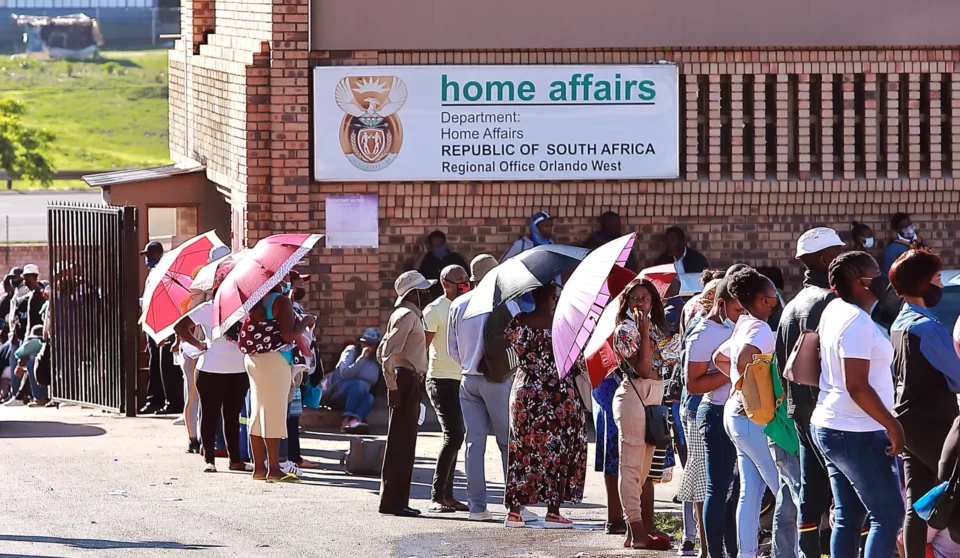
…PS Lebesa says gvt elated by the move
Mathatisi Sebusi
THE South African government has officially approved Lesotho’s request to grant its citizens a 90-day visa-free stay in that country.
This decision was confirmed in a letter dated 2 May 2025 by South Africa’s Minister of Home Affairs, Leon Schreiber, and addressed to Lesotho’s Minister of Local Government, Chieftainship, Home Affairs and Police, Lebona Lephema.
The letter, titled “Admission Period for ordinary passport holders of the Kingdom of Lesotho,” states:
“Subsequent to the conclusion of the second session of the South Africa–Lesotho Bi-National Commission in April 2025, I have considered and approved a conditional extension of the visa exemption period which applies to holders of ordinary Lesotho passports,” wrote Dr Schreiber.
However, South Africa has issued a stern warning regarding potential misuse of this exemption. The letter emphasizes that the South African government reserves the right to revoke the 90-day arrangement and revert to a 30-day stay if it is found that third-country nationals are using Lesotho as a backdoor to enter South Africa illegally.
“The condition attached to the visa exemption extension is that the Government of South Africa reserves the right to immediately revoke the 90-day arrangement and revert to 30 days, should it be found that third-country nationals are abusing it to enter South Africa illegally through Lesotho. The onus is, therefore, on the Government of Lesotho to prevent such abuse in order to uphold the 90-day arrangement,” the letter adds.
Ministry of Local Government, Chieftainship, Home Affairs, and Police Principal Secretary, Mamphaka Lebesa, confirmed the approval of the 90-day visa exemption to the Sunday Express.
“A formal statement from the minister’s office will be released soon. The 90-day visa exemption has been approved. We are celebrating,” Ms Lebesa said.
The decision has been welcomed by the Migrant Workers Association of Lesotho, which expressed gratitude and urged the government to address the challenges faced by Basotho working and studying in South Africa as the visa will not serve as a work or study permit.
“We welcome this achievement as it will address challenges currently faced by Basotho seeking employment, education, and those visiting families in South Africa. The 90-day visa will help Basotho who are job-hunting, looking for universities, or seeking medical services. However, the major issue of Basotho working and studying in South Africa without proper documentation still needs to be addressed,” said Lerato Nkhetše, Director of the Migrant Workers Association of Lesotho.
Mr Nkhetše referred to the Lesotho Exemption Permit (LEP), which was introduced in 2019 to replace the earlier Lesotho Special Permit (LSP). The LEP allows Basotho to legally work, study, and open businesses in South Africa, and is currently held by approximately 94,000 Basotho.
In February 2024, Dr Schreiber extended the LEP until 28 November 2025, providing time for the South African Migration Advisory Board (IAB) to consider, advise, and implement the steps necessary for the LEP’s renewal and compliance. However, no new LEPs are being issued, which remains a challenge for Basotho, according to Nkhetše.
The 90-day visa-free entry agreement was first discussed during the launch of the Bi-National Commission (BNC) on 28 September 2023 in Pretoria. It was officially signed by the Home Affairs ministers of both countries on 14 March 2024 and was initially expected to take effect on 1 April 2024, but its implementation was delayed.
Prime Minister Sam Matekane had urged South African President Cyril Ramaphosa to ensure the implementation of the 90-day free visa by 1 May 2025. This he said during the second session of the BNC held in Maseru on 22 and 23 April 2025.
The South African response to Matekane’s request, stating that “the Department of Home Affairs is still considering the implementation of the 90-day visa-free arrangement,” had angered many Basotho. Some critics argued that the BNC appeared to benefit South Africa while Basotho continued to face challenges even entering the neighbouring country.