

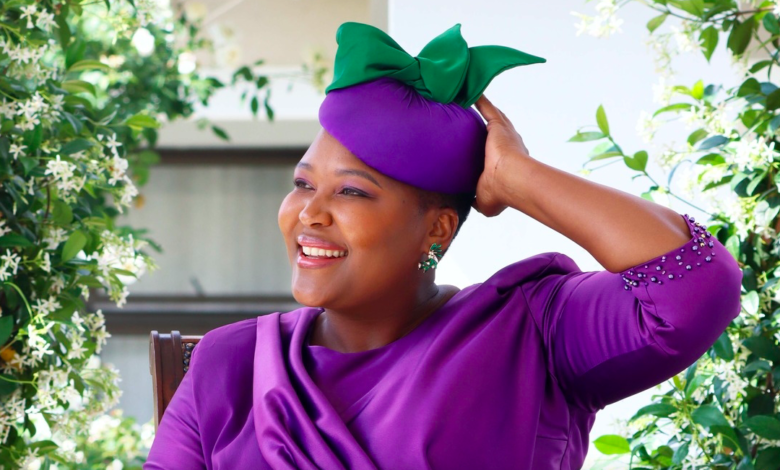
Moorosi Tsiane
THE Minister of Information, Communications, Science, Technology and Innovation, Nthati Moorosi, has called on Lesotho’s media to strike a careful balance between holding power to account and promoting responsible, development-oriented journalism.
Speaking at a two-day capacity-building workshop for editors and senior journalists, hosted by the Media Institute of Southern Africa (MISA) Lesotho in partnership with the United Nations Development Programme (UNDP) on Wednesday and Thursday in Thaba Bosiu, Ms Moorosi stressed that, while a free and vibrant media was essential to democracy, it ought to exercise its influence responsibly.
“The media is one of the most powerful institutions in any society. It informs our citizens, shapes public opinion, and holds those in positions of authority accountable,” Ms Moorosi said.
She cautioned, however, that the rapidly evolving media landscape – driven by digital platforms and emerging technologies such as generative AI – had introduced new pressures which could compromise the quality of journalism.
“In some cases, these pressures have contributed to reporting that is overly sensational, excessively negative, or lacking in context—sometimes even disinformation or misinformation,” Ms Moorosi said.
Despite these concerns, she emphasised that journalism remained vital.
“Critical journalism is not only welcome; it is an absolute necessity. Through scrutiny and accountability, institutions are strengthened and democracy is deepened,” she said.
However, she warned that persistent negative narratives, even when factual, risked eroding public trust and weakening social cohesion.
The minister highlighted the importance of newsroom leadership, saying editors and senior journalists played a pivotal role in shaping ethical standards and the overall direction of the media sector.
“You are the custodians of editorial standards. You determine not only what is published, but how it is presented and understood,” she told participants.
She defined ethical, development-oriented journalism as reporting that ensured accuracy and fairness, provides context, highlights solutions, and amplifies the voices of marginalised groups.
Ms Moorosi reaffirmed the government’s commitment to media freedom, describing the press as a “partner in development” rather than an adversary. She pointed to reforms aimed at strengthening media governance, including the establishment of a Media Ombudsman under the Tenth Amendment of the Constitution and the adoption of the Media Policy 2021.
The minister also shared updates on key legislative initiative – the Computer Crime and Cybersecurity Bill 2024 – saying it had been revised to include safeguards against abuse and align with human rights standards.
“I very much hope that by the end of 2026, the Computer Crime and Cybersecurity Bill will be enacted,” she said.
Ms Moorosi encouraged journalists and media leaders to embrace integrity and professionalism, urging them to use the training as a platform to rethink their role in society.
“Let this initiative mark the beginning of a renewed vision for journalism in our country—one that balances accountability with responsibility, and freedom with purpose,” she said.
Meanwhile, UNDP Resident Representative, Dr Jacqueline Olweya, reaffirmed UNDP’s support for the media sector, stressing the need for journalism that not only reports issues but also drives meaningful change.
“…I want to assure you of UNDP’s continued commitment to work with the media sector in this country, to ensure that while we report issues as they are, we also use our skills, knowledge, and experience to make a meaningful impact—to change the lives of the people we are trying to reach with your coverage,” Dr Olweya said.
The workshop, attended by 14 senior local reporters and editors, was facilitated by representatives from Kenya’s Nation Media Group, James Smart and Washington Gikunj.