

…with the 50MW expansion to cut electricity imports, create 400 jobs
Seithati Motšoeneng
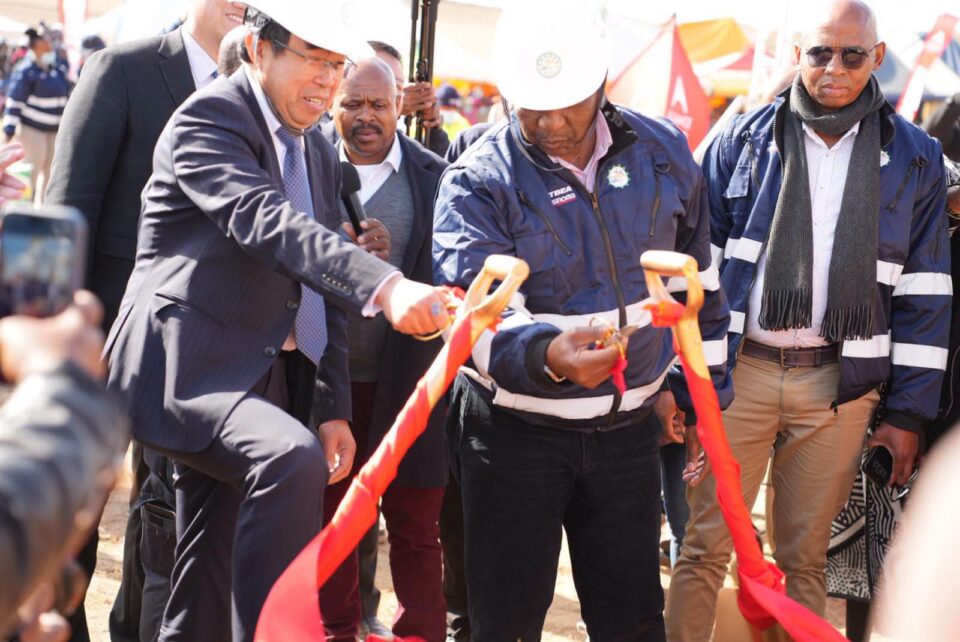
PRIME Minister Sam Matekane has launched the second phase of the Ramarothole Solar Energy Project, a M923 million renewable energy investment expected to increase Lesotho’s electricity generation capacity by 50 megawatts (MW) and raise the plant’s total output to 80MW.
The project, financed through a concessional loan from the Government of the People’s Republic of China and implemented by Chinese consortium Sinoma-TBEA, forms part of the government’s broader strategy to reduce dependence on imported electricity and strengthen the country’s energy security.
Addressing guests at the Friday launch in Mafeteng, Mr Matekane said Lesotho continued to face an electricity generation deficit, forcing the government to spend heavily on importing power from neighbouring countries.
“Electricity generated locally is still not enough to meet our needs, and the government continues to purchase electricity from neighbouring countries at a very high cost. Today’s event demonstrates the government’s commitment to addressing this electricity generation shortfall,” Mr Matekane said.
He said the second phase builds on the success of the first 30MW solar plant commissioned at Ramarothole three years ago, which was constructed at a cost of more than M667 million, also with Chinese financing. The new phase will add another 50MW, bringing the facility’s total generation capacity to 80MW and, for the first time, incorporating a Battery Energy Storage System to ensure electricity remains available even after sunset.
Once operational, the additional solar capacity will complement the 72MW generated by the ‘Muela Hydropower Station, a recommendable stride towards covering the national electricity need of 200MW.
“Through this project Lesotho will be able to add 80MW of power in total to augment the 72MW generated at Muela, thereby reducing, to some extent, the country’s dependence on imported electricity,” Mr Matekane said.
He added that the project reaffirmed Lesotho’s commitment to sustainable, environmentally friendly energy generation and a low-carbon development pathway.
Construction is expected to take 18 months, with completion scheduled for the end of 2027. The electricity generated will be connected directly to the national grid.
Mr Matekane said the government was not stopping with Ramarothole, revealing that several other renewable energy projects were in the pipeline. These include the proposed 80MW Oxbow project, a third 40MW phase at Ramarothole, the 1.1MW Katse project, a 24MW OnePower development, as well as feasibility studies for hydropower at Kobong, floating solar at Katse Dam and wind generation in Mohale’s Hoek.
He thanked the Chinese government for its continued financial support and commended Sinoma-TBEA for completing the first phase within the agreed timeframe, expressing confidence that the contractor would deliver the second phase with the same efficiency.
Minister of Energy and Mining, Lejone Mpotjoane, said Lesotho could no longer afford to spend huge sums importing electricity while possessing abundant renewable energy resources.
“More than M1 billion is spent importing electricity into the country every year. That money could instead be invested in other national priorities if we increase our own electricity generation,” Mr Mpotjoane said.
He pledged that the ministry would closely monitor implementation to ensure the project is completed within the agreed timeframe and that surrounding communities derive tangible benefits from the investment.
“We will closely follow the implementation of the project to ensure it is completed on schedule and that neighbouring communities receive the benefits that have been promised,” he said.
Minister of Finance and Development Planning, Dr Retšelisitsoe Matlanyane, said the second phase of the project would create approximately 400 jobs over the next 18 months during both the construction and operational stages.
She said priority would be given to employing people from surrounding communities to ensure that local residents directly benefit from the investment.
Dr Matlanyane said the project formed part of the government’s broader strategy to expand renewable energy infrastructure, improve access to electricity and stimulate economic growth while creating employment opportunities.
She added that the government would work with local authorities to ensure infrastructure and public services keep pace with the development and that implementation targets are met throughout the construction period.