

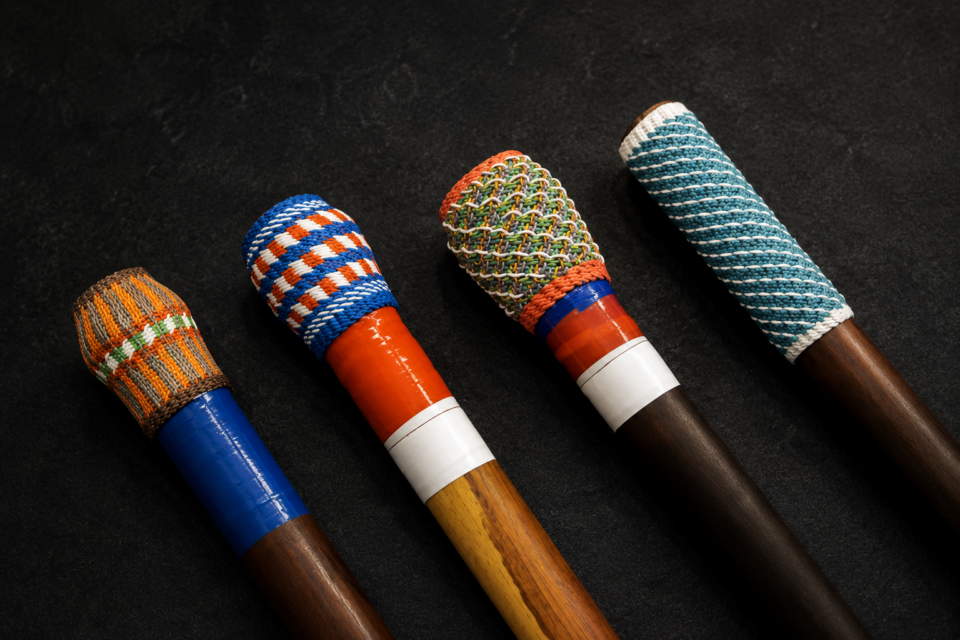
…from symbol of pride to instrument of violence
Kabelo Masoabi
FOR generations, the molamu (lebetlela stick) has occupied a revered place in Basotho culture. Far more than a simple walking stick, it has symbolised identity, heritage, dignity, and the enduring traditions of the Basotho people.
Whether carried by shepherds traversing the mountain highlands or paired with the iconic Basotho blanket and mokorotlo hat during cultural ceremonies, the molamu has traditionally represented pride, authority and belonging.
In recent years, the traditional stick has also gained prominence in contemporary fashion. Skilled artisans have transformed the molamu into an elegant accessory through intricate carvings, engraved patterns and decorative metal embellishments.
Today, it is commonly worn alongside both traditional and modern Basotho-inspired attire, serving as a stylish bridge between the country’s rich cultural heritage and contemporary expression.
Fashion designer Lindiwe Motaung said the molamu has evolved into an important cultural fashion statement.
Similarly, Makalo Ranthime, a member of a traditional dance club in Berea, said: “The stick is beautiful in dance. One cannot embrace mohobelo without spinning a molamu”.
Today, mohobelo remains one of the most recognisable Basotho cultural dances and is frequently performed at festivals, celebrations and heritage events across Lesotho. Tourists often refer to it as the “stick dance” because of the central role played by the molamu during its energetic performances.
A troubling shift
Despite its celebrated cultural significance, the molamu has increasingly become associated with a disturbing reality. What was once regarded as a symbol of responsibility, guidance and respect is now frequently linked to violence and criminal activity.
Across communities, traditional sticks are regularly used during disputes that escalate into assaults and, in some cases, fatal confrontations. The growing number of violent incidents involving melamu has become a source of concern for community leaders, law enforcement agencies and the judiciary.
Courts across Lesotho continue to hear numerous assault and murder cases in which traditional sticks feature prominently as weapons. Legal practitioners have repeatedly expressed concern over the prevalence of stick-related violence and its impact on an already burdened criminal justice system.
Case study 1: Fatal assault driven by jealousy
One recent case involved Tšepo Mokete, who was convicted in March this year for the death of 27-year-old Tšepo Serabele following a violent assault on 26 December 2019.
Court proceedings revealed that the incident stemmed from Mokete’s suspicion that Serabele was involved in a romantic relationship with his wife. Prior to the attack, Mokete had sought intervention from local traditional authorities. The matter was reported to the village chief, who convened a meeting involving Mokete’s wife and Serabele in an effort to restore peace.
However, tensions persisted.
According to Mokete’s testimony, he became alarmed when his wife failed to return home after dark. While searching for her, he encountered her standing with several villagers. Shortly afterwards, Serabele appeared nearby and walked past the group.
Mokete interpreted the encounter as confirmation of his suspicions and confronted Serabele while armed with a lebetlela. He repeatedly assaulted him, causing severe injuries. Serabele was rushed to Motebang Hospital but succumbed to his injuries hours later.
Following news of the death, Mokete surrendered himself to Pitseng Police Station on 27 December 2019.
Case study 2: A celebration ends in tragedy
Another case currently before the courts involves Masupha Katse, who faces a murder charge arising from the death of ’Mane Mothatjaneng following an altercation at a social gathering in Ha Seetsa on 3 August 2019.
Evidence presented during trial indicates that Katse had hosted a celebration at his homestead where sheep were slaughtered and guests gathered to enjoy food and traditional homemade beer.
A prosecution witness, Moitseki Sepono, testified that while guests were eating, he attempted to take some food for himself. Katse allegedly responded by striking his hand with a stick.
According to testimony, Mothatjaneng became angered by the incident and confronted Katse. What began as a verbal disagreement quickly escalated into a physical confrontation.
Prosecutors allege that Katse struck Mothatjaneng on the forehead with a stick. Although he was taken to hospital the following day, he later died from injuries sustained during the altercation.
Case study 3: Domestic dispute ends in death
Twenty-two-year-old Rahlao “Jabu” Phafoli of Ha Phafoli, Matelile, Mafeteng, has been charged with murder and remains in custody awaiting trial.
Police investigations revealed that on the night of 31 May 2026, the deceased had an argument with his girlfriend while they were walking near Ha Shekoe. The dispute allegedly turned violent when he assaulted her.
The woman fled and later encountered Phafoli while bleeding and asked him for assistance.
It is alleged that Phafoli then pursued the deceased and struck him with a stick, causing serious injuries. The deceased subsequently jumped into a dam.
Other men reportedly assisted in retrieving him from the water and transported him to a nearby military post. However, he later died.
The accused surrendered himself to police on 1 June 2026 after learning of the man’s death.
Inspector Itumeleng Mahapa of Mafeteng appealed to members of the public not to resolve disputes through violence, warning that the consequences can be devastating.
Case study 4: Brothers sentenced for brutal murder
Perhaps one of the most brutal examples involved two brothers from Leribe, Likobela Sepetla and Sepetla Sepetla, who were recently sentenced to 40 years’ imprisonment each for the 2020 murder of Masiu Manare Sasanyane of Matlameng Ha Phalole.
The High Court, sitting at the Ts’ifa-li-Mali Complex, found that the brothers acted together with direct intent to kill.
Acting Justice ’Manapo Motebele ruled that the attack was both premeditated and coordinated.
The court heard that on 12 May 2020, the brothers ambushed Sasanyane near the Morotong River in a forested area close to Ha Sebalabala. Armed with a sword and a traditional lebetlela, they launched a sustained assault.
Witness testimony revealed that Likobela Sepetla initially chased Sasanyane until he fell into the river. While the victim was vulnerable and unable to defend himself, Sepetla Sepetla joined the attack.
The brothers repeatedly struck Sasanyane until he sustained fatal injuries.
The court concluded that the attack demonstrated a clear intention to kill, resulting in lengthy prison sentences.
Case study 5: Assault on a chief
On 24 November 2025, Lehlohonolo Thuela, 35, of Matlameng Ha Moshoeshoe, was convicted by the Leribe Magistrate’s Court after being found guilty of assaulting a chief with a stick and causing serious injuries.
He was sentenced to pay a fine of M5,000 or, in default, serve five years’ imprisonment at Hlotse Correctional Facility.
The complainant, a 72-year-old chief, stated that the accused was herding livestock in a protected area when the chief approached him to reprimand him.
According to the chief, Thuela responded by boasting of his physical strength before striking and kicking him. The assault resulted in injuries including a broken elbow.
Following the conviction, the Officer Commanding of Pitseng Police Station, Senior Inspector Lebohang Sekonyela, urged members of the public to respect authority figures, noting that chiefs remain the eyes of Basotho communities.
Preserving heritage while preventing violence
These cases reflect a broader and increasingly visible trend in which traditional sticks are being used as instruments of violence rather than symbols of cultural identity.
The contrast is striking: an object once celebrated as a marker of unity, heritage and pride now frequently appears in police investigations and court proceedings involving serious crimes.
For many Basotho, the challenge lies in preserving the cultural value of the molamu while confronting the violence associated with its misuse.
Cultural custodians raise concern
Cultural custodians and elders argue that the increasing misuse of the molamu represents a distortion of its original purpose.
Traditionally, the stick was associated with discipline, wisdom, leadership and protection rather than aggression.
They warn that if the trend continues, the cultural significance of one of the Basotho nation’s most cherished symbols risks being overshadowed by its growing association with violence.
Senior citizen Ratumo Ntekoa said the future of the molamu will depend on whether Basotho continue to uphold it as a symbol of dignity, respect and cultural heritage — as originally intended — or allow it to become remembered primarily for acts of violence committed in its name.
Police response and public safety
The Lesotho Mounted Police Service regularly confiscates traditional melamu and other weapons where there is evidence they are being used to threaten public safety or assault individuals.
In areas experiencing heightened gang activity or community unrest, police may prohibit the carrying of any object capable of being used as a weapon in public spaces as part of efforts to protect citizens and maintain public order, including in Mafeteng.