

Moroke Sekoboto
THE Tshiamiso Trust has reached a historic milestone in its mission to compensate former gold mineworkers, officially distributing more than M1 billion (R1 billion) to eligible Basotho claimants and their dependents.
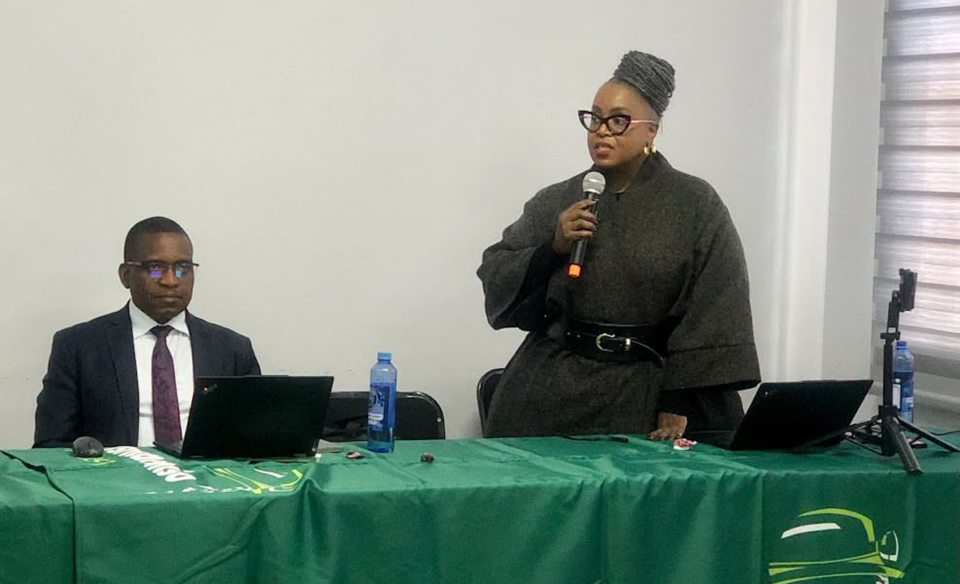
The achievement was announced during a media briefing at Kick4Life on Thursday, coinciding with a two-day regional high-level stakeholder workshop convened by the Ministry of Labour and Employment at Avani Maseru.
The milestone represented a massive influx of long-awaited financial relief for thousands of families affected by occupational lung diseases.
A total of 10 600 Basotho had been compensated, accounting for 40 percent of all compensation paid, followed by claimants from the Eastern Cape and Botswana.
The Tshiamiso Trust was established to implement the settlement agreement reached between six mining companies and claimant attorneys in the historic silicosis and tuberculosis class action.
Speaking at the briefing, Tshiamiso Trust Chief Executive Officer, Dr Munyadziwa Kwinda, expressed gratitude to the many partners whose collaboration had enabled the Trust to reach thousands of claimants across the country.
Dr Kwinda said the milestone reflected what could be achieved through sustained partnership and shared commitment.
“Through outreach programmes, stakeholder engagement, community awareness campaigns, and mobile claimant support initiatives, we have been able to identify and assist thousands of community members. While we celebrate the M1 billion milestone, we recognise that our work is far from complete. There are still potentially eligible claimants who have not yet come forward, and many who still require assistance to complete their claims successfully,” Dr Kwinda said.
He indicated that although significant progress had been made in compensating Basotho ex-mineworkers, the Trust continued to encounter challenges, particularly regarding the supporting documentation submitted as part of claims.
He added that many claims were delayed because some of the required documents submitted did not meet the Trust’s mandated criteria.
“This is particularly relevant for deceased mineworker claims, as many of the death certificates submitted do not show the primary cause of death. To aid this, you may recall that we amended the Trust Deed, allowing dependents to also submit a Medical Certificate of Cause of Death, or Death Notice, which more often specifies the cause of death.
“This has, unfortunately, presented its own challenges. Following a wave of fraudulent certificates submitted to the Trust, particularly in Lesotho, we had to tighten the requirements to ensure that the documents submitted comply with medical and legal standards, including World Health Organization guidelines and the Trust Deed.
“As such, the Tshiamiso Trust can now only accept a Medical Certificate of Cause of Death, Form 30, or Notice of Death that meets the following criteria: Must be a copy of the original document, and the copy must be confirmed by a duly authorised representative from the health facility or practice of that medical practitioner as being a true and accurate copy of the document on its records,” Dr Kwinda said.
He said the copies of the documents ought to be certified and issued within six months of the mineworker’s death.
He further said it had to bear the name, designation and signature of the authorised representative, the date of certification and the official stamp of the health facility or medical practice, all of which had to be clearly visible.
“Silicosis or cardio-respiratory Tuberculosis must be specified as the disease or condition directly leading to the death, or as the underlying cause of the death, or in the chain of events between the disease or condition directly leading to the death and the underlying cause. The contents of the Notice of Death must be in line with World Health Organization standards, as stipulated in the Tshiamiso Trust Deed.
“While obtaining the necessary documentation to prove cause of death may still be a challenge, we do have good news for claimants of mineworkers who had silicosis and died after 1 January 2008. If such a mineworker had X-rays confirming that they had silicosis, but do not have lung function test results, the Trust can now assess the degree of impairment using medical evidence of known complications associated with silicosis.
“While the M1 billion milestone is a significant achievement, it does not mark the end of our journey in Lesotho. We urge former mineworkers or their families who believe they may qualify for compensation to come forward without delay. In addition to the seven in-country lodgement centres, planning is currently underway for our next round of mobile services.”
Speaking at the same event, Parliamentary Chair of Chairs, Mokhothu Makhalanyane, welcomed the continued collaboration among stakeholders working to support ex-mineworkers and their families.
Mr Makhalanyane said the M1 billion compensation milestone was a significant step towards social justice. He lauded the Trust for exceeding its target.
“The progress achieved to date demonstrates the value of cooperation across institutions and communities. We remain committed to supporting initiatives that help ensure eligible Basotho ex-mineworkers and their dependents are informed, assisted and able to access the compensation to which they are entitled.
“In August 2025, I told the Trust to have paid M50 million by December 2025 but they had paid about M60 million, which is commendable.
“Our focus remains firmly on finding and assisting those who may still qualify for compensation,” Mr Makhalanyane said.