

Kabelo Masoabi
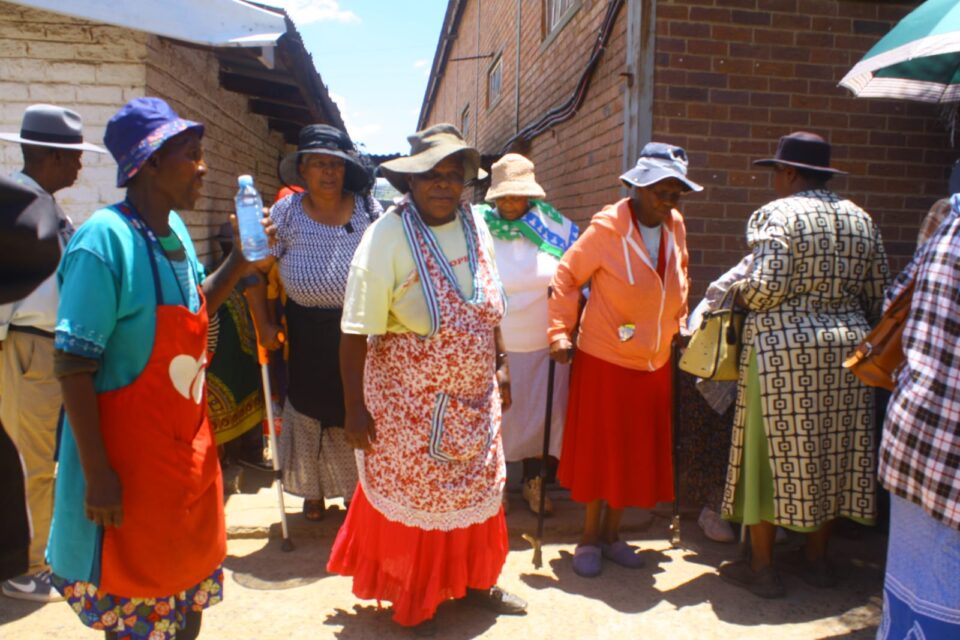
BEFORE dawn breaks over the rugged mountains of Lesotho, thousands of elderly women are already awake. Long before their villages stir to life, they are lighting fires, fetching water, preparing meals and caring for grandchildren who have become their responsibility through circumstances beyond their control.
Many once imagined spending their later years surrounded by the comfort of family. Instead, they have become parents for a second time, carrying the heavy burden of poverty, grief and responsibility on ageing shoulders.
Lesotho’s older population remains among the country’s most vulnerable. According to the 2016 Population and Housing Census, older persons accounted for 8.6 percent of the population, with most living in rural communities where poverty, isolation and limited access to healthcare remain everyday realities.
Migration, unemployment, HIV/AIDS and family breakdown have left thousands of grandparents raising children while surviving on modest pensions and coping with declining health.
Among them is 71-year-old ‘Masechaba from Lihloahloeng in Botha-Bothe. Tucked away in the country’s windswept mountains, she lives in a small leaking mud house with four orphaned grandchildren who depend entirely on her.
Her story is one of heartbreak, sacrifice and extraordinary resilience. It mirrors the lives of countless elderly women whose labour holds families together while their own struggles remain largely unseen.
Every morning, before the first rays of sunlight reach the mountain slopes, ‘Masechaba begins another day of survival. She lights the fire, prepares whatever food is available and cares for children who have already endured profound loss.
Her eldest granddaughter, 14-year-old ‘Mapaseka, shoulders responsibilities far beyond her age. The youngest, Thabo, still cries for a mother who will never return.
Loss has defined much of ‘Masechaba’s life.
Her eldest son died while working in illegal mines in South Africa. Her second-born daughter succumbed to an AIDS-related illness after years of suffering that drained the family’s savings.
Her youngest daughter disappeared in 2015 after leaving for Rustenburg in search of work. Rumours suggested she had turned to sex work and may have been murdered, but the truth has never been established.
For years, ‘Masechaba has lived with unanswered questions and painful memories, haunted by dreams of her missing daughter lying in an unmarked grave.
Two years ago, another tragedy struck when her granddaughter died following a dangerous backstreet abortion.
Her experience reflects the hardships faced by many elderly women across Lesotho. Rural communities have been deeply affected by migration, unemployment, drought and limited economic opportunities.
Many young people leave their villages seeking employment in towns, factories, farms and mines, particularly in South Africa. While some return, many disappear, become trapped in poverty or lose their lives far from home.
As a result, grandparents have increasingly become the primary caregivers of children left behind, providing food, shelter, discipline and emotional support despite their own declining health and limited resources.
Carrying the weight of survival
Every month, ‘Masechaba walks nearly seven kilometres to collect her old-age pension. The money helps her buy basic necessities, but it is rarely enough to sustain an entire household.
Many nights, she goes to bed hungry so her grandchildren can eat.
Lesotho’s universal non-contributory old-age pension, introduced in 2004, has become a vital lifeline for thousands of older citizens. By 2026, the monthly pension had increased to M1,000.
Yet for many recipients, that money must stretch far beyond its intended purpose, covering food, school expenses, healthcare, clothing and even unemployed relatives.
Research by HelpAge International shows the pension supports more than 83,000 older Basotho and has helped reduce extreme poverty, improve food security and increase access to healthcare.
Despite these gains, rising food prices and healthcare costs continue to erode its value.
For ‘Masechaba, the pension is more than an income. It is the foundation of her family’s survival.
Her hardships extend beyond poverty.
Her unemployed son, Morake, frequently disappears for months before returning home to demand money, steal from her and accuse her of causing family deaths through witchcraft. His accusations leave emotional scars as painful as hunger.
Winter brings even greater hardship. Cold winds creep through cracks in her house while smoke from damp firewood fills the tiny room. Despite her age and deteriorating health, she continues working the fields with a rusted hoe, hoping for enough rain to produce a harvest.
Years of physical labour, poor nutrition and chronic stress have taken their toll. Arthritis has stiffened her joints, high blood pressure threatens her health, her eyesight has deteriorated and a persistent cough has become part of daily life.
One winter morning, when little Thabo developed a high fever, ‘Masechaba had no money for transport. She carried him on her back for kilometres along rocky mountain roads to the nearest clinic.
By the time they arrived, nurses discovered that she herself was severely underweight, dehydrated and living with several untreated chronic illnesses.
One nurse quietly asked a question that has never left her: “Who is taking care of you?”
For decades, ‘Masechaba had devoted her life to caring for others. Few people had paused to recognise that she, too, needed care.
According to the World Health Organisation, older people in Lesotho continue to face significant barriers to healthcare. Chronic illnesses such as hypertension, diabetes and arthritis are common, while transport costs, long travel distances and limited specialised services prevent many from receiving adequate treatment.
The growing burden on grandparents
Across Lesotho, grandparents have become the backbone of family survival.
Their growing caregiving role is closely linked to migration, poverty, illness, unemployment, HIV/AIDS, family breakdown and changing household structures.
Many parents leave rural communities in search of employment. Others are unable to care for their children because of illness, disability, substance abuse, imprisonment or severe economic hardship.
In these circumstances, grandparents step in to ensure children remain within their families and communities.
While kinship care provides children with stability and a sense of belonging, it also places enormous pressure on elderly caregivers, many of whom struggle with poor health and limited incomes.
Although these grandparents are often praised for their resilience, their own struggles frequently remain invisible.
Another elderly caregiver, 73-year-old widow ‘Masafolane Sefolane from Ha Poulo in Leribe, who is raising two grandchildren abandoned by their parents, described the quiet pain carried by many older women.
“Sometimes, when you see successful children returning home to honour and celebrate their ageing parents with love and gratitude, your heart aches. You cannot help but wonder where you went wrong or why life never granted you such precious moments.
“The only time I truly find peace is when I am asleep. There are days when I silently wish I would not wake up again. But because of these vulnerable souls who still depend on me, I gather the strength to carry on. In the end, only God knows my destiny, and only He will decide my fate.”
Recognising the forgotten mothers
Supporting elderly caregivers requires a collective effort from government, communities, churches, civil society organisations and families, according to sociologist and local priest Pastor Paul Pitikoe.
He said priorities should include strengthening social protection programmes, expanding healthcare services, creating support networks for grandparents raising children, increasing community-based assistance and developing economic opportunities for vulnerable households.
He added that elderly caregivers need more than praise for their resilience—they deserve practical support, dignity and care.
Non-governmental organisations also continue to play an important role in supporting older people living in poverty.
HelpAge International, working with local partners, supports social protection programmes, healthcare outreach and advocacy for the rights of older persons.
The Ministry of Gender, Youth and Social Development is preparing to launch a sewing and vegetable production project targeting vulnerable adults aged 60 to 69 within the Hlotse Urban Council.
The initiative will particularly benefit older people caring for vulnerable dependants. Beneficiaries are expected to attend an introductory meeting at the Thakaneng Youth Resource Centre in Hlotse before implementation begins.
Looking ahead
Reducing poverty among older persons in Lesotho will require sustained investment in social protection, accessible healthcare and community-based support.
The International Labour Organisation’s Social Protection Department says strengthening old-age pensions, expanding age-friendly healthcare services and supporting families caring for elderly relatives could significantly reduce vulnerability among older persons.
Teacher Mosonngoa Peleha also called for greater public education on ageing and the challenges older people face.
She said community-based care systems should be strengthened and greater support provided to caregivers, including families, volunteers and paid carers.
Peleha further urged authorities to raise awareness among young people, from primary through secondary school, about ageing.
“Teaching children that ageing is a natural part of life will help build a generation that values, protects and cares for older persons both at home and within society,” she said.
For women like ‘Masechaba and ‘Masafolane, dignity is not found in grand gestures but in knowing their sacrifices are recognised, their burdens shared and their lives valued.
Their resilience has sustained families and communities for decades.
It is now time for the nation to stand beside the women who have spent a lifetime standing for everyone else.