

Moroke Sekoboto
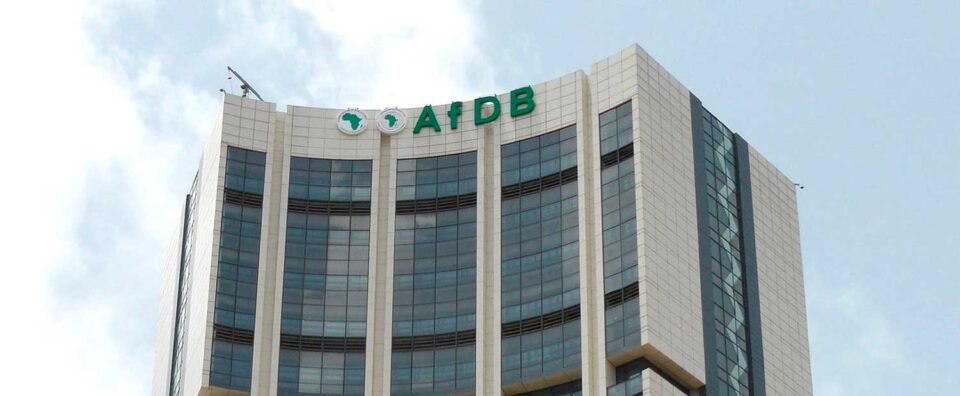
THE African Development Bank Group (AfDB) has approved a new M3.3 billion (US$209 million) funding programme aimed at accelerating Lesotho’s economic growth, diversification and resilience over the next five years.
The funding forms part of the Bank’s newly approved Country Strategy Paper (CSP) for Lesotho — a five-year plan that sets out how the AfDB will invest its money, what sectors it will support, and what results it expects to achieve in the country.
The strategy aligns the Bank’s support with Lesotho’s own development priorities and focuses on projects expected to deliver the biggest economic and social impact.
In a statement released last week, the AfDB said the approval comes at a critical time for Lesotho, which is grappling with serious economic challenges. These include the impact of a recent 15 percent United States tariff on apparel exports, the loss of official development assistance following the cancellation of the US$300 million (M4.7 billion) Millennium Challenge Corporation compact, and heavy dependence on regional economic conditions.
The Bank noted that nearly half of Lesotho’s population lives in poverty, while youth unemployment stands at about 39 percent. The new strategy, it said, seeks to address these pressures by stimulating private-sector growth, creating sustainable jobs and strengthening state institutions.
AfDB Deputy Director General for Southern Africa and Country Manager for Lesotho, Moono Mupotola, said the country was at a “critical juncture”.
“This comprehensive strategy leverages Lesotho’s abundant water resources, strategic location and youthful population to unlock new pathways for inclusive growth and economic diversification,” Ms Mupotola said.
She explained that the strategy focuses on two main priorities: building sustainable infrastructure to support industrialisation, and strengthening institutional and human capacity to improve competitiveness.
Key targets include achieving universal electricity access by 2030 under the Mission 300 programme, lowering broadband costs to support a growing technology start-up sector, and expanding access to safe drinking water for thousands more households.
The Bank will also support investments in water and agricultural infrastructure to raise productivity, while assisting the government to modernise tax collection systems and strengthen public sector management through training programmes for civil servants.
According to the statement, the AfDB will back policy reforms and infrastructure projects aimed at reducing the cost of doing business, expanding financing for digital innovation and promoting entrepreneurship.
Support will be directed at start-ups and small businesses, including those led by women and young people. Skills development programmes are expected to equip about 20 000 youths — 40 percent of them women — with digital skills needed in the modern economy.
Given Lesotho’s vulnerability to climate shocks, the strategy also includes measures to scale up climate-smart agriculture, strengthen disaster risk management, and increase investment in renewable energy and water infrastructure. These interventions are expected to help protect livelihoods while addressing social challenges such as child stunting, which affects more than a third of children under five.
The AfDB will further help position Lesotho to benefit from regional and continental markets by supporting cross-border infrastructure links with South Africa, improving trade facilitation under the African Continental Free Trade Area (AfCFTA), and strengthening participation in regional value chains, particularly in agro-processing.
By improving connectivity and reducing economic isolation, the strategy aims to open up wider opportunities for local businesses and workers.
The new Country Strategy Paper builds on lessons from past AfDB projects in Lesotho and emphasises stronger implementation, integrated planning across sectors and improved management of funded projects. It aligns with Lesotho’s National Strategic Development Plan II (2018–2028), the AfDB’s 10-year Strategy (2024–2033), the African Union’s Agenda 2063 and the United Nations Sustainable Development Goals.
Funding will be drawn from several AfDB financing windows, including the African Development Fund, the Regional Operations Window and the Climate Action Window, with implementation carried out in partnership with other development institutions.