

. . .by banning NGOs from representing them in court
Moorosi Tsiane
HUMAN rights organisations, Women and Law in Southern Africa (WLSA) and Seinoli Legal Centre, have launched a constitutional challenge against what they describe as the Law Society of Lesotho’s (LSL) “draconian” decision to bar them from representing vulnerable and indigent Basotho in court.
The two organisations want the Constitutional Court to nullify an April 2024 resolution by the Law Society which bars non-governmental organisations (NGOs) and their legal practitioners from being issued with practising certificates, confining them, instead, to non-practising status.
They argue that the decision effectively shuts the doors of justice on poor and marginalised Basotho who rely almost entirely on NGOs for legal assistance.
Following the April 2024 resolution, the Law Society declined to renew the practising certificate of WLSA’s head of legal department, Advocate Bataung Ntoko. This prompted WLSA, Adv Ntoko and Seinoli Legal Centre to jointly institute constitutional proceedings, challenging the decision as unlawful, irrational, procedurally unfair and an abuse of power.
The Law Society, the Minister of Justice and Law, Richard Ramoeletsi, and the Attorney General, Rapelang Motsieloa KC, are cited as the first to third respondents, respectively.
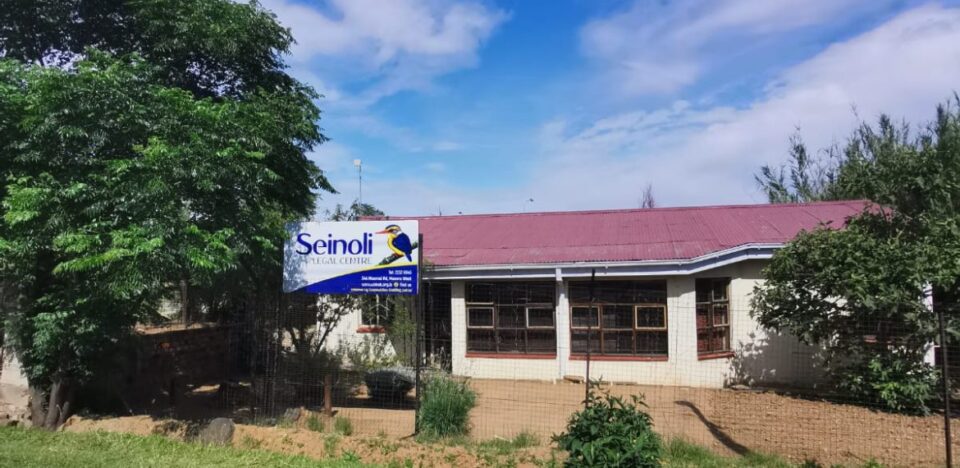
WLSA fights for?women’s human rights, while Seinoli advocates for vulnerable Basotho.
In her founding affidavit, WLSA executive director, Limpho Mokhochane, asks the court to review, correct and set aside the Law Society’s decision refusing to issue Adv Ntoko with a practising certificate. She also seeks an order compelling the Law Society to issue practising certificates to WLSA, Adv Ntoko and Seinoli Legal Centre upon payment of the requisite fees.
Ms Mokhochane argues that the Law Society’s actions strike at the very heart of access to justice, particularly for marginalised communities that depend on NGOs for legal support.
“The first applicant (WLSA) has consistently rendered legal assistance and related services to vulnerable, marginalised and indigent persons in Lesotho for a period exceeding two decades,” Ms Mokhochane submits.
She states that WLSA has been operational since its registration under the Societies Act No. 20 of 1966 and has long been accredited by the Law Society. Acting through duly admitted legal practitioners and trained paralegals deployed according to expertise, the organisation has provided free legal representation and support to people who would otherwise be unable to afford legal services.
“Over the years, the first applicant has also undertaken legal education and awareness-raising campaigns on the rights and duties of vulnerable groups, particularly women and children, and on mechanisms for accessing justice.”
According to Ms Mokhochane, these empowerment initiatives have enabled beneficiaries to become better informed and increasingly assertive in enforcing their rights, resulting in many approaching WLSA for free legal services, either to institute proceedings or to defend themselves when sued.
She emphasises that since its registration, WLSA’s legal practitioners have always had their practising certificates renewed annually by the Law Society without any problems.
Change of LSL’s attitude
Ms Mokhochane contends that the problems surrounding WLSA’s accreditation and the renewal of its lawyers’ certificates only arose after the organisation’s former programmes director, Mamosa Mohlabula-Nokoana, lodged a complaint with the Law Society.
The complaint was reportedly filed after WLSA submitted a list of its admitted legal practitioners for the issuance of practising certificates. Adv Mohlabula-Nokoana’s name did not appear on that list.
Ms Mokhochane alleges that this omission marked a turning point in the Law Society’s attitude towards WLSA.
“The first respondent’s attitude towards the first applicant changed drastically,” she avers, pointing to the subsequent withdrawal of WLSA’s accreditation and the refusal to renew its lawyers’ practising certificates.
She further claims that the Law Society went as far as instructing WLSA to surrender its clients’ files on the basis that the organisation and its lawyers would no longer be issued with practising certificates, but only non-practising ones.
Ms Mokhochane says WLSA objected to these measures, citing procedural irregularities and the failure by the Law Society to afford the organisation a right to be heard before taking such drastic action.
“It is apposite to record that WLSA duly brought to the attention of the Law Society the procedural irregularity inherent in the measures adopted against it without being afforded the right to be heard.”
She adds that the Law Society rejected both the objections and WLSA’s request for a fair hearing, arguing that such a hearing would serve no purpose.
“The reason for the rejection was that a hearing as sought by WLSA serves no purpose as it cannot reach any other conclusion but subverting illegality. Therefore, the Law Society saw no need to comply with the request,” Ms Mokhochane argues.
She contends that the Law Society abused its powers and erred in law by refusing to afford WLSA and Adv Ntoko a hearing before denying them practising certificates.
“The Law Society erred in law in asserting that affording WLSA a hearing would have served no purpose,” she submits.
Ms Mokhochane points out that the Law Society’s predecessor council accredited WLSA based on representations duly made, and that successive councils, including the current one, for several years found no lawful, rational or legitimate basis to depart from that position.
“I aver that those councils were evidently satisfied that WLSA fulfilled an important and unmet need by providing legal aid services to indigent members of society who would otherwise be unable to access justice.”
“Abuse of power”
She argues that the revocation of WLSA’s accreditation without a hearing was unlawful, irregular and irrational.
“Moreover, the Law Society should have known better but acted as it did simply because the power to issue and to withhold certificates reposes in it. This is just an act of abuse of power that has nothing to do with the lawful exercise of the powers conferred on the first respondent by law.”
Ms Mokhochane further challenges the Law Society’s decision to withhold practising certificates from WLSA’s legal practitioners, again emphasising the lack of due process.
“I aver further that the decision to withhold the issuance of practising certificates to WLSA’s legal practitioners, without first affording them an opportunity to be heard, is likewise irregular and irrational.”
She argues that legal practice before the courts is primarily a matter between the practitioner and their employer and does not ordinarily engage the regulatory functions of the Law Society to the extent exercised in this case.
Ms Mokhochane also rejects allegations that WLSA contravened sections 30(c), (d), (h) and (i) of the Legal Practitioners Act of 1983.
“All processes relating to client matters, from the initial consultation and case assessment, through the drafting and preparation of legal documents, to appearance and representation before the courts of law are conducted solely by qualified and duly admitted legal practitioners.”
She warns that the Law Society’s policy could have devastating consequences, including job losses.
“As a direct consequence of the first respondent’s irrational policy… the first applicant faces the prospect of having to retrench several of its legal practitioners,” she says, adding that this would worsen Lesotho’s already high unemployment levels among law graduates.
Denial?of?justice
Ms Mokhochane further argues that the withdrawal of WLSA’s accreditation effectively denies access to justice to indigent and vulnerable members of society, particularly in rural and hard-to-reach areas.
“In many of those areas, there are no legal practitioners practising on their own account available to provide legal assistance, and the services offered by the first applicant constitute their only means to access legal remedies and the justice system.”
She dismisses reliance on?pro bono?services as unrealistic and insufficient, noting that such services are neither compulsory nor adequately regulated.
“Pro bono?legal assistance cannot serve as an effective substitute for the structured and accessible legal services previously provided by the first and third applicants.”
Ms Mokhochane also contends that section 7 of the Law Society Act of 1983 does not prohibit NGOs such as WLSA and Seinoli from providing free legal aid services through duly qualified and admitted legal practitioners.
She argues that any contrary interpretation would be inconsistent with section 19 of the Constitution, which guarantees equality before the law, and section 12, which protects the right to a fair trial.
She is therefore asking the court to declare WLSA’s accreditation to provide legal representation valid and binding, to review and set aside the Law Society’s withdrawal of that accreditation, and to order the issuance of practising certificates to WLSA, Adv Ntoko and Seinoli Legal Centre.
Ms Mokhochane further seeks a declaration that practising membership of the Law Society includes legal practitioners employed by WLSA and Seinoli who have been duly admitted by the High Court and have regularly appeared before the courts.
The Law Society is yet to file its opposing papers.
1 comment
Hello https://is.gd/tvHMGJ
Comments are closed.