

…as LNDC hosts Letsema Blended Finance Forum for industrial transformation
Moroke Sekoboto
LESOTHO is moving away from sovereign financing towards blended finance to unlock capital for economic growth and accelerate industrial transformation, under the Lesotho National Development Corporation (LNDC)’s Letsema Strategy 2026–2031.
The strategy aims to diversify the economy, boost value-added production and mobilise domestic investment through stronger collaboration between government, business and investors.
Blended finance combines public, concessional, development and commercial funding to make key investments attractive and bankable for private investors.
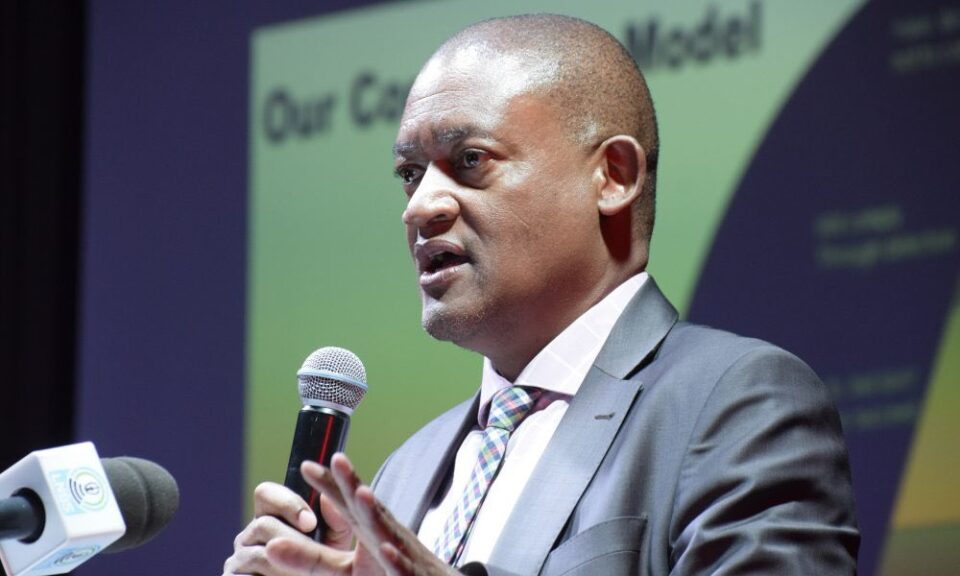
LNDC convened the Letsema Blended Finance Forum on Friday at Avani Lesotho, bringing together government officials, development partners, financial institutions and industry stakeholders to explore ways to mobilise capital for industrial transformation.
Held under the theme “Unlocking Capital for Growth: Mobilising Blended Finance in the Spirit of Letsema,” the forum covered industrial transformation, private investment mechanisms, LNDC’s role in blended finance, and risk-sharing and guarantee structures.
Minister of Trade, Industry and Business Development, Motlatsi Maqelepo, said the real challenge was not closing the financing gap, but mobilising the right capital, at the right scale, for the right investments.
He said tightening financial conditions, elevated interest rates, rising public debt and shifting global priorities had reduced the availability of concessional finance.
“We have significant development needs, but constrained fiscal space. We need infrastructure, investment, productive enterprises, new sectors, technology, skills, export capacity, jobs. Yet the government cannot – and should not – be expected to finance all of these requirements from the public purse,” Mr Maqelepo said.
He said the private sector must take its rightful place in the economy, while government focused on creating an enabling environment for investment and innovation.
Blended finance, he said, was about sharing risk intelligently – using scarce public funds not to finance whole projects, but to remove the specific obstacles blocking private investors.
“What part of the risk must government or development partners absorb so that the private sector can confidently finance the rest? That is a fundamentally different way of thinking about development finance,” he said.
Mr Maqelepo said the Letsema Strategy addressed Lesotho’s structural economic problem: an economy concentrated in a narrow range of activities, with limited diversification and value addition. The strategy called for expanding productive capabilities, diversifying industry and pushing Lesotho into higher-value segments of regional and global value chains.
A key shift under the strategy is repositioning LNDC from a retail intervention institution to a wholesale development catalyst, he said, since individual transactions rarely deliver the scale of impact needed for structural transformation.
“LNDC’s strategy is to increasingly focus on structuring and mobilising capital at scale, using partnerships, blended finance structures and catalytic financing mechanisms to crowd in domestic and international investors. This means LNDC cannot think of itself simply as another lender or investor. It must increasingly become a market maker, convener, structurer and catalyst,” he said.
Government’s role, he added, was to provide policy certainty, strengthen the investment environment, remove regulatory bottlenecks and support project preparation – deploying public resources strategically, where appropriate, to unlock larger pools of private capital.
Mr Maqelepo challenged financial institutions to stop asking whether a project was bankable, and start asking what would make it bankable. He said projects were often held back not by weak opportunities, but by financing tenor, perceived risk, insufficient collateral, poor preparation, foreign exchange risk, limited market access, infrastructure gaps or early-stage technology risk. Blended finance could pinpoint these constraints and identify who was best placed to fix them.
“Grant resources and concessional capital are increasingly scarce. We therefore need to maximise their development impact. A concessional Loti should ideally be used to unlock several additional Loti of commercial and private investment wherever the risk profile allows,” he said.
LNDC Chief Executive Officer, Thabo Khasipe, said Lesotho’s financial sector had capital available, but needed more investment-ready projects and stronger partnerships to unlock funding for economic growth and industrial transformation.
“Blended finance can reduce risk, attract private investment and unlock capital for practical industrial development opportunities. We are positioning ourselves as a coordinator and catalyst for partnerships that support investment, enterprise development and inclusive growth,” Mr Khasipe said.
He said Lesotho had to be more strategic with its resources, as fiscal space remained tight while development needs grew.
“The answer lies in partnership, smarter risk-sharing, mobilising capital rather than simply allocating it, and building an ecosystem in which government, LNDC, financial institutions, development partners, investors and entrepreneurs work together. That is the spirit of Letsema – collective effort directed toward solving a common challenge. Let this forum mark the beginning of a more deliberate national approach to blended finance. Let us move from fragmented financing to coordinated capital mobilisation,” Mr Khasipe said.
He said the shift must be from projects chasing money to capital chasing well-structured opportunities, and from public resources funding development alone to public resources unlocking far larger pools of private capital.
Forum participants reached a common understanding of blended finance and identified priority sectors for investment, including agro-processing, renewable energy, digital and ICT-enabled industries, and the Trans Maluti Corridor – a planned link from the Free State through Lesotho to the Port of Durban.
The forum is expected to help turn these priorities into investment-ready opportunities and strengthen collaboration between government, financiers, investors and the private sector.
2 comments
I’ve tried a few sites lately but this one feels the smoothest. The payouts are quick and the interface is very user friendly. Highly recommend checking out phjiliuno if you love slots.
Had a lucky streak here last night! The system is transparent and the wins feel legit. Can’t wait to go back to pk999win
Comments are closed.