

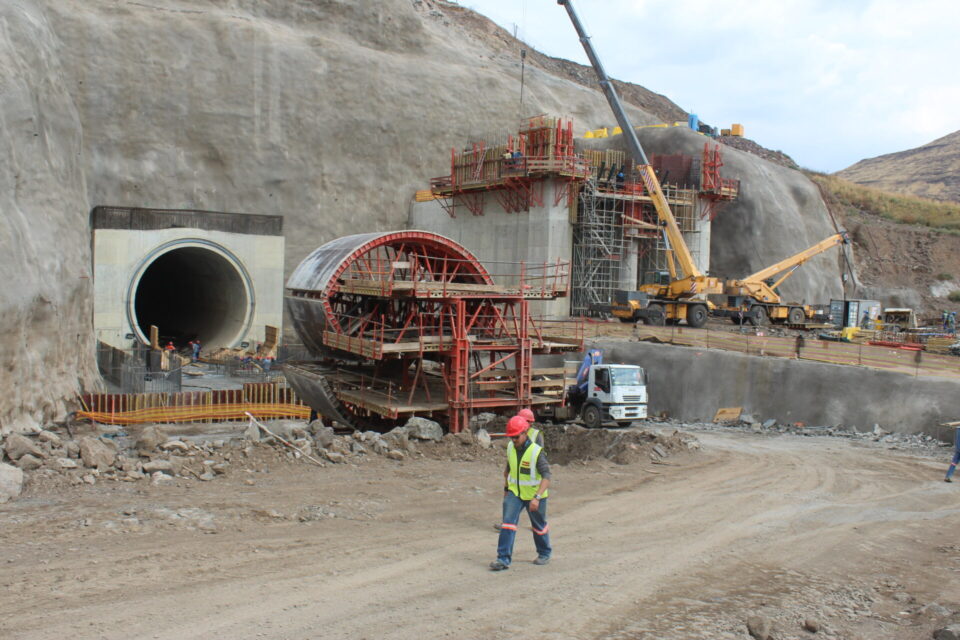
THE recent revelations surrounding the Polihali Dam project should serve as a wake-up call for everyone entrusted with managing public resources.
Reports that the Lesotho Highlands Development Authority (LHDA) had to strip significant portions of the multi-billion-maloti contract from the main contractor, SUN JV, after an independent panel of engineering experts concluded it lacked the capacity to deliver should alarm every taxpayer.
Whether one agrees with every aspect of the experts’ findings or not, one uncomfortable truth remains: when governments award contracts worth billions of maloti, there is no room for error. The consequences of appointing an incapable contractor extend far beyond delayed completion dates. They inflate costs, compromise quality, undermine public confidence and, in the case of critical infrastructure, may burden generations with the consequences of today’s poor decisions.
Lesotho is a developing country with limited financial resources. Every Loti invested in public infrastructure is hard-earned taxpayers’ money or borrowed funds that future generations will have to repay. That money deserves the highest level of care, scrutiny and accountability. Awarding contracts cannot simply be treated as an administrative exercise. It must be a rigorous process driven by competence, experience, financial strength and proven technical ability.
The Polihali Dam is not just another construction project. It is one of the largest infrastructure investments in our nation’s history and the centrepiece of Phase II of the Lesotho Highlands Water Project. It is expected to generate water royalties for decades while strengthening the country’s economy. Such a project must be built to last not for five or 10 years, but for generations.
Infrastructure of this magnitude should never become an experiment in whether a contractor can rise to the challenge after winning the tender. Governments are expected to ensure beforehand that those entrusted with such responsibilities have already demonstrated the capacity to deliver similar projects successfully.
Of course, no procurement system is foolproof. Even the most experienced contractors can encounter unforeseen technical challenges, economic shocks or supply-chain disruptions. Authorities cannot predict every obstacle that may arise after a contract has been signed.
However, what the governments can and must do is conduct exhaustive due diligence before making an award. That means thoroughly examining a contractor’s financial health, previous performance, available equipment, technical expertise, staffing capacity and ability to complete projects on time and within budget. It also means scrutinising joint ventures carefully to ensure they are genuine partnerships capable of delivering, rather than convenient alliances assembled merely to win lucrative tenders.
Procurement must never become a box-ticking exercise where compliance with paperwork outweighs actual capability. Technical evaluations should carry real weight, and decision-makers must be prepared to reject bidders who fail to meet the required standards, regardless of political influence, commercial pressure or other considerations.
Equally important is continuous monitoring once contracts have been awarded. The governments should not wait until projects are years behind schedule before taking corrective action. Strong performance benchmarks, regular independent assessments and enforceable contractual penalties must become standard practice. Contractors who consistently fail to meet agreed milestones should face meaningful consequences.
South Africa provides one useful example. There, contractors found guilty of serious misconduct, fraud or persistent non-performance on public projects can be restricted or blacklisted from doing business with the state for up to 10 years. Such sanctions send a powerful message that poor performance has lasting consequences.
Lesotho should seriously consider strengthening its own procurement laws along similar lines. Contractors who repeatedly abandon projects, deliver substandard work or grossly fail to meet contractual obligations should not simply move on to secure another government tender elsewhere. Likewise, public officials found to have negligently or improperly facilitated such appointments must also be held accountable.
Accountability cannot stop with contractors alone. Public procurement decisions are made by people, and those people must answer for their decisions when projects fail because basic due diligence was ignored or compromised.
Ultimately, every school, hospital, bridge, road, dam or government building constructed today represents an investment in future generations. Basotho yet unborn will inherit these assets, just as they will inherit the debts incurred to finance them. We therefore have a moral obligation to ensure those assets are built properly the first time.
The lesson from Polihali is bigger than one project. It is about the culture of procurement in Lesotho. Our national development depends not merely on spending billions, but on spending those billions wisely. Vigorous vetting, uncompromising standards and unwavering accountability are not obstacles to development—they are the very foundation upon which lasting development is built.
And when authorities are failed by the contractors that they would have contracted to implement big infrastructure work, the best thing is to be upfront with the public.
When the LHDA decided to descope the work, it had given to the SUN JV following the recommendations by its panel of experts engaged to advise it on a way forward, it should have been proactive in its communications and taken the public into its confidence. After all these are all publicly funded projects.
Yet at the briefings for the descoped work, the LHDA did not bother to explain why it had taken the drastic move. The problem with trying to conceal information – as any competent corporate communications strategist would know, is that it always comes out in the end. And when it does, it leaves those responsible for the original contested decisions with huge swathes of rotten egg on their faces.
Public officers cannot realistically be expected to get everything right. But they have a role to constantly explain their decisions to the public, especially in cases where their original expectations have not gone as expected.