

. . . as EU-sponsored decentralisation gathers steam
Mohloai Mpesi
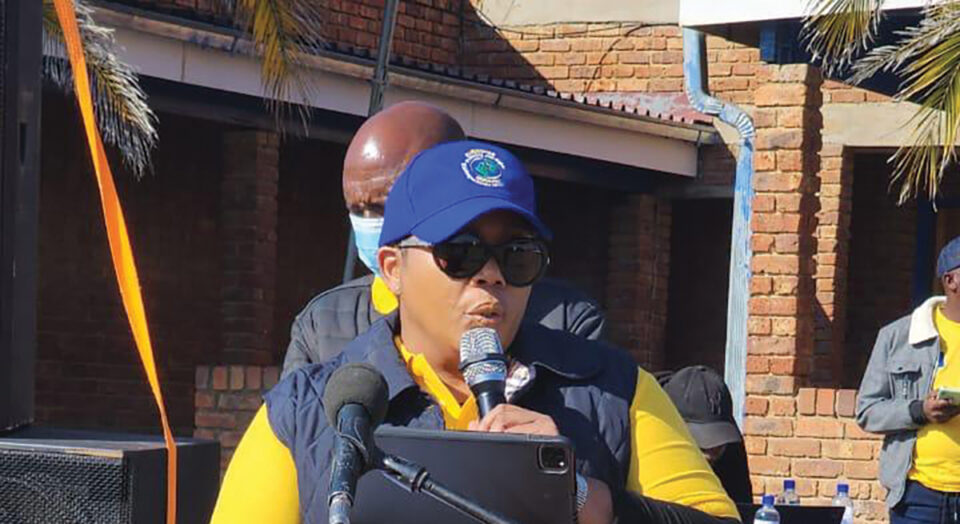
OMBUDSMAN, Advocate Tlotliso Polaki, officially opened a new regional office in Butha-Buthe on Thursday this week as the Office of the Ombudsman embarks on a drive to spread its services across the country to ensure access to justice for all.
This follows the recent launch of a similar office in Mohale’s Hoek on 31 May 2025.
Funded by the European Union under the programme Support for Reform and Strengthening of Governance in Lesotho, the drive aims to decentralise the Office of the Ombudsman, which has operated solely from Maseru for the past 32 years.
The office is mandated to promote justice, accountability, transparency, and to ensure that the voices of ordinary Basotho, especially those who feel marginalised or powerless, are heard in the face of institutional injustices.
Thanks to the EU, Mohale’s Hoek office serves the southern districts of Mafeteng, Mohale’s Hoek, and Quthing, while the new Butha-Buthe office will serve the northern districts of Mokhotlong, Butha-Buthe, and Leribe.
Ombudsman
Delivering her remarks, Advocate Polaki told the gathered audience that the expansion of her office is a testament to “our continued commitment to strengthening governance, promoting the observance of the rule of law, accountability, and protecting human rights in Lesotho.”
She said operating solely from Maseru for such a long time had made the Office of the Ombudsman inaccessible to many people, especially those living in rural areas.
“I am incredibly delighted and proud to introduce to you this achievement. In the time that we have been in existence, we have been operating from Maseru alone, and it has, for a very long time, made the Office of the Ombudsman not so accessible to many people — more particularly those living in remote areas — due to the inconveniences and cost of travelling to the central offices,” she said.
She thanked the European Union for the support that made the office’s expansion possible.
“I’m proud that, with the dedication and support received from the EU, we have overcome this challenge and brought services closer to the people in this region. We are especially grateful to the European Union for this support under the banner ‘Support for Reform and Strengthening of Governance in Lesotho.’
“This partnership affirms the international community’s confidence in our resolve to build a just, inclusive, and democratic society.”
She said the expansion strengthens the office’s role in Lesotho’s institutional framework for oversight, justice, and service delivery.
“The significance of this event lies not merely in the opening of the physical office but in the strengthening of our national architecture for oversight, justice, and service delivery.
“The main role of the Ombudsman is to receive and investigate complaints from aggrieved members of the public against government ministries, departments, and agencies, together with public authorities.”
Adv Polaki explained that as an Alternative Dispute Resolution (ADR) entity, the Ombudsman has authority to work on a broad range of issues including corruption, maladministration, and violations of human rights.
“As an ADR, our mandate is very broad, and we have jurisdiction to handle complaints related to maladministration, corruption, violation of human rights, environmental degradation, and injustices. We offer services for free and use a more informal and speedier mechanism to resolve issues than courts normally do.
“This regional office in Butha-Buthe brings services close to you, thus bridging the gap between yourselves and the state. It ensures that the values of transparency, equity, and fairness are not just aspirations, but living principles embedded in our governance framework.
“As an oversight entity, I deeply appreciate the importance of strong institutions working in synergy. The Ombudsman shares a common mission with other sister institutions such as the DCEO in fighting corruption, the AG, the DPP, and law enforcement agencies — to ensure that justice is not only done but is seen to be done, so that no person is above the law and people can trust the institutions of the state to act in their best interests.
“Let this office stand as the beacon of hope to the people of Butha-Buthe and beyond. Let it remind us that public service is a sacred trust, and that accountability is not a burden, but a duty we owe to the people of this nation.”
Auditor-General’s Office
Speaking on behalf of the Office of the Auditor-General (OAG), which could not attend the official opening due to other pressing assignments, spokesperson Mantletse Maile, said the Office of the Ombudsman had taken an important step by bringing its services closer to the people.
“This is an important step toward making government more accessible and responsive to its citizens. With this office, the Ombudsman is bringing services closer to the people. It means that more citizens can now report problems, ask for help, and speak out if they feel they have been treated unfairly and unjustly.
“The Office of the Ombudsman plays a critical role in our democracy. It listens to the people and holds public officials accountable. It ensures that civil servants do their jobs honestly and properly. As the Office of the Auditor-General, we congratulate and fully support the Ombudsman’s mission,” Ms Maile said.
She emphasised that both offices share a common goal of promoting proper service delivery, protecting public resources, and ensuring accountability.
“This means that when the office gets issues at the local level, it will carry out investigations quicker and help communities get justice more speedily.”
Deputy Speaker of National Assembly
The Deputy Speaker of the National Assembly, T?epang T?ita-Mosena, said the Ombudsman’s office is entrusted with restoring citizens’ trust.
“In a country like Lesotho, where the public service often faces challenges of inefficiency, non-compliance, and corruption, the Ombudsman plays an indispensable role in restoring citizens’ confidence in their government.
“It is our fervent hope and continued belief that this office promotes fairness, upholds human rights, and strives for accountability within the public sector. It is an impartial and independent body that identifies systemic issues, mediates disputes, and makes recommendations to improve policies and practices within our institutions,” Ms T?ita-Mosena said.
Oversight bodies such as Parliament, the Auditor-General, and the Directorate on Corruption and Economic Offences (DCEO) all work towards ensuring that government remains transparent and accountable, she added.
“The Ombudsman, alongside other oversight bodies like Parliament, the Auditor-General, and the DCEO, is essential in ensuring that our government remains transparent, accountable, and responsive to the needs of its citizens.”
She stressed that the more accessible the Office of the Ombudsman becomes, the greater public trust and confidence it builds, adding that strengthening oversight bodies is crucial to achieving the reforms necessary for socio-economic development.
“When Parliament or other institutions fail to act or fall short of their responsibilities, the Ombudsman steps in as a safeguard for the people. It goes without saying, therefore, that the more accessible the Ombudsman becomes, the more trust and confidence it will inspire among the people.
“As we look to the future, we must continue to work together to address the challenges facing our parliamentary system. Strengthening oversight institutions like the Ombudsman, Parliament, and others is essential if we are to achieve the reforms necessary for socio-economic development in Lesotho. If we are to meet the ambitious goals of Agenda 2030 and Agenda 2063, we must prioritise transparency, accountability, and good governance across all sectors of government.
“I encourage the Ombudsman’s office to continue its efforts to decentralise and extend its services to every corner of our country, ensuring that every Mosotho citizen has access to justice and that public service accountability is strengthened.”
Minister of Law and Justice
On behalf of the Minister of Law and Justice, Richard Ramoeletsi, Minister of Public Services Steven Mputi said he supports the initiative of decentralising the Office of the Ombudsman and will continue to ensure that it is available in every district so that Basotho can file their complaints in a timely manner to curb maladministration in government ministries.
“If you can look at the National Strategic Development Plan II, you will realise that one of the Key Priority Areas is to strengthen administration of government sectors and to ensure that those who have been given power over government property and finance take full accountability for the decisions they make in strengthening national governance and accountability systems.
“Since the Office of the Ombudsman is mandated to ensure that justice is served and that ministries work in a manner that demonstrates transparency to every Mosotho, it is important that it is made available in every district so that it becomes easy for every Mosotho to lodge their complaints on time wherever there is maladministration in government.
“In other words, I support this decentralisation, and I will provide every support necessary to ensure that this office is accessible in every district,” Mr Ramoeletsi said.
Paola Amadei
Head of the European Union Delegation, Paola Amadei, said the Support for Reform and Strengthening of Governance in Lesotho programme is instrumental in integrating different aspects such as strategic capacity building and institutional engagement.
She affirmed the EU’s commitment to decentralisation, which she said has always been one of its guiding principles.
“One important point to make is that this particular project takes a holistic approach. It integrates different aspects, including strategic capacity building, it engages with stakeholders, and it strengthens institutions across all dimensions. Such a holistic approach is a guarantee for future sustainability.
“Decentralisation has been one of the mantras of EU support to Lesotho because we want to see more services in the community.
“We believe in the importance of an independent judiciary and independent oversight bodies. We look forward to the legislative process currently in the National Assembly to deliver reforms and help strengthen the independence of such oversight bodies,” Ms Amadei said.