

Renewed fighting in northern Ethiopia is placing the country’s 2022 Pretoria peace agreement under its most serious strain since the deal ended a devastating two-year civil war.
Clashes have spread across parts of Tigray, Amhara and Afar, raising fears that Ethiopia could slide back into a broader conflict. The latest escalation follows months of political tension, unresolved territorial disputes and disagreements over disarmament and the return of people displaced by the 2020–2022 war.
IOL reported on Thursday that seven armed and opposition groups formed the Ethiopian Peoples’ Forces Alliance for Survival on 20 September. The grouping brings together forces that have found common cause against Prime Minister Abiy Ahmed’s government, although their political goals and regional interests remain different.
The report said federal forces carried out air and drone strikes on 22 September, while Tigrayan forces claimed the following day to have taken control of airports at Mekelle, Axum and Shire. Independent verification of battlefield claims remains difficult because access to affected areas and reliable communications are limited.
The human cost is already mounting. According to figures cited by IOL from Médecins Sans Frontières, medical teams treated more than 420 wounded people in Korem and Alamata and more than 300 in Shire. Those numbers underscore how quickly renewed military operations can overwhelm hospitals in a region still recovering from the previous war.
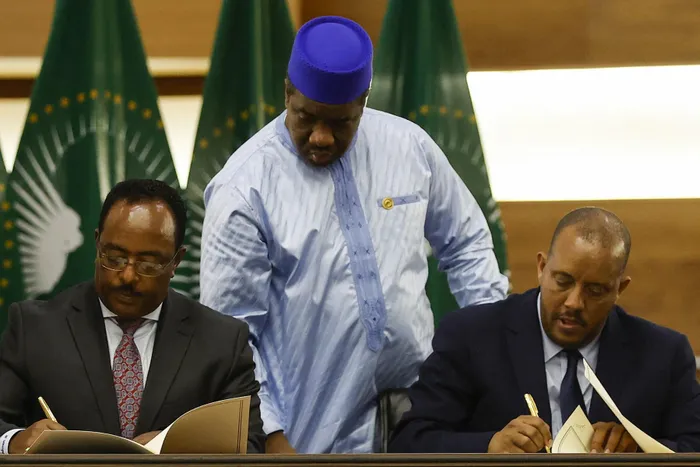
The African Union-brokered Pretoria agreement, signed on 2 November 2022, halted large-scale fighting between Ethiopia’s federal government and the Tigray People’s Liberation Front. It provided for the restoration of federal authority, humanitarian access and the disarmament of Tigrayan forces, but important parts of the settlement have remained incomplete.
Disputes over contested areas, the pace of disarmament, accountability for wartime abuses and the safe return of displaced communities have continued to weaken confidence in the accord. Political divisions inside Tigray and shifting alliances elsewhere in northern Ethiopia have added further pressure.
The United Nations has urged the parties to de-escalate and protect civilians. A return to sustained war would carry risks beyond Ethiopia’s borders because the Horn of Africa is already dealing with conflict in Sudan, insecurity in Somalia and recurring tensions involving Eritrea. Ethiopia also depends heavily on the trade corridor through Djibouti, making regional stability important to the wider economy.
The immediate test is whether political leaders can revive the Pretoria framework before battlefield gains replace negotiation as the main way disputes are settled. With hundreds of casualties already reported, delays in opening credible talks would deepen the danger facing civilians and make the peace agreement harder to rescue.
Source: IOL, 2 October 2026. Featured image: Redwan Hussein and Getachew Reda sign the Pretoria peace agreement in Pretoria on 2 November 2022. Credit: AFP via IOL.