

Kabelo Masoabi
TWENTY investors have expressed interest in setting up businesses at the Belo Industrial Estate in Botha-Bothe, raising hopes of thousands of jobs and increased economic activity in the district.
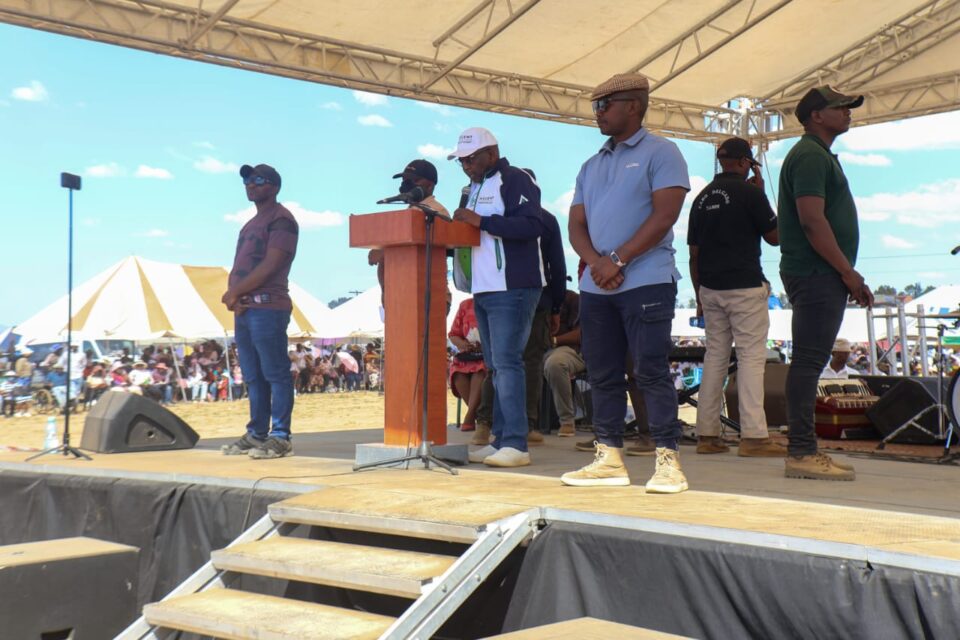
Prime Minister Sam Matekane announced this on Friday during the handover ceremony of a newly constructed electricity substation at Ha Belo, which will supply power to the industrial estate.
Mr Matekane said the Lesotho National Development Corporation (LNDC) had invited prospective investors to establish businesses at the industrial zone. However, their applications would undergo thorough scrutiny before approval.
The assessment will examine the investors’ business profiles, the products they intend to manufacture and the number of people they expect to employ.
He said the government wanted to ensure that only credible investors with the financial and operational capacity to run sustainable businesses were admitted. This, he said, would also protect Basotho from investors who might exploit local resources before abandoning their operations.
Mr Matekane said the 16 factory shells were expected to accommodate between 15 000 and 20 000 workers once fully operational.
He added that the factories would also create business opportunities for local entrepreneurs, as workers would spend their earnings on goods and services within Botha-Bothe, extending the economic benefits beyond the industrial estate.
The Prime Minister said the industrial facilities would be expanded when necessary to accommodate growing investment and business operations.
In a related development, the government plans to purchase 20 electric buses in January next year to improve public transport, particularly for factory workers and schoolchildren.
According to Mr Matekane, 10 buses would operate in Maseru, five in Maputsoe and another five in Botha-Bothe.
Each bus is expected to carry up to 100 passengers, helping to ease transport challenges and improve access to workplaces and schools.
The planned investment in public transport is expected to complement industrial development by making it easier for workers to commute to and from their places of employment.
Meanwhile, Trade, Industry and Business Development Minister Motlatsi Maqelepo said the Belo factories project had taken nine years to materialise since its inception in 2017, with previous administrations failing to complete the construction works.
Mr Maqelepo said the current administration had managed to bring the project to fruition within a relatively short period after assuming office.
He disclosed that M20 million had initially been allocated for the construction of the factories.
He said the government was making progress towards implementing the National Strategic Development Plan through initiatives that promote private-sector participation in infrastructure development and economic growth.
Mr Maqelepo said the private sector was critical to job creation and economic development, while also helping the country attract foreign currency, including US dollars and euros.
He further revealed that his ministry would use November and December to prepare and issue the necessary documentation, including licences and permits, to prospective investors.
He stressed the need to simplify and expedite investment approval processes to make it easier for businesses to establish operations in Lesotho.
This, he said, would help position the country as a leading investment destination while strengthening private-sector participation and economic growth.
The event also saw the donation of staple food, including maize meal, beans and rice, to 300 vulnerable families. Five wheelchairs were also donated to people with disabilities.
The Belo Industrial Estate is an M800 million project undertaken by the LNDC, with construction beginning in 2016.
The 16 factory shells were completed in April last year, but their operationalisation was delayed by the absence of the electricity infrastructure required to supply power to the industrial complex.
Construction of the Ha Belo 33kV substation began in 2021 at an estimated cost of M36 million but was halted following irregularities involving the performance of the initial contractor.
Work resumed in August 2024 under a new contractor, with an initial completion period of 18 months. However, unforeseen circumstances resulted in an extension of the deadline.
Earlier this week, Energy and Mining Minister, Lejone Mpotjoane, announced that the reconstructed substation was ready to supply electricity to the factories.
The project cost eventually rose to M44 870 892, with funding provided by the World Bank.
Mr Mpotjoane said the government had exerted pressure on the relevant authorities to ensure the completion of the infrastructure, which had been a major obstacle to operationalising the factories.
He expressed satisfaction with the performance of the new contractor, contrasting it with that of the previous contractor, whom he accused of failing to deliver as expected.
“This is a big national project that stalled because some people did not do their work accordingly. To dismiss people is not enough. We have to quantify how much the country lost and responsible people have to be held accountable. We still have that journey to complete,” he said.
His remarks suggest that the government intends not only to establish the financial losses resulting from the project’s delays but also to pursue accountability against those responsible.