

The Democratic Republic of the Congo has recorded more than 8,000 Ebola cases and almost 4,000 deaths in the worst outbreak in the country’s history, according to the latest figures from Congolese authorities.
Official data show 8,067 cases, including 3,901 deaths and 2,070 recoveries, since the outbreak was declared in mid-May. Those figures put the recorded fatality rate at 48.4 percent and underline the scale of the public-health emergency.
IOL reported on Saturday that the outbreak began in the northeastern province of Ituri and has since reached seven provinces. Ituri, North Kivu and Upper-Uele account for most of the recorded infections.
The rate of new infections has levelled off after an earlier surge, but the Africa Centres for Disease Control and Prevention says the outbreak is still not under control. The virus involved is the Bundibugyo strain, for which no approved vaccine or treatment is currently available.
Several vaccines and treatments are being tested, while frontline workers face severe practical and security challenges. Remote health facilities have limited capacity, armed groups restrict movement in parts of the affected region, and mistrust has contributed to attacks on humanitarian personnel.
A health worker responsible for finding suspected cases was killed in an armed attack at a checkpoint in North Kivu, according to a Congolese health authority report cited by IOL. The same report described weak treatment capacity in Ituri and a complete shortage of an experimental Bundibugyo vaccine in Tshopo province.
Health workers have also begun administering the Ervebo vaccine to frontline volunteers as part of a clinical trial. Ervebo is effective against the more common Zaire strain of Ebola, and about 70,000 doses from the global vaccine stockpile were allocated to the DRC in August.
The United States announced a further $267 million in support for the Ebola response last week. Funding, reliable vaccine supplies and safe access to communities will be central to slowing transmission and improving the chances of patients reaching treatment early.
The outbreak is the DRC’s 17th recorded Ebola emergency. Although the recent stabilisation in case growth offers some hope, health authorities face the difficult task of sustaining surveillance and treatment across a wide area while protecting staff operating in insecure conditions.
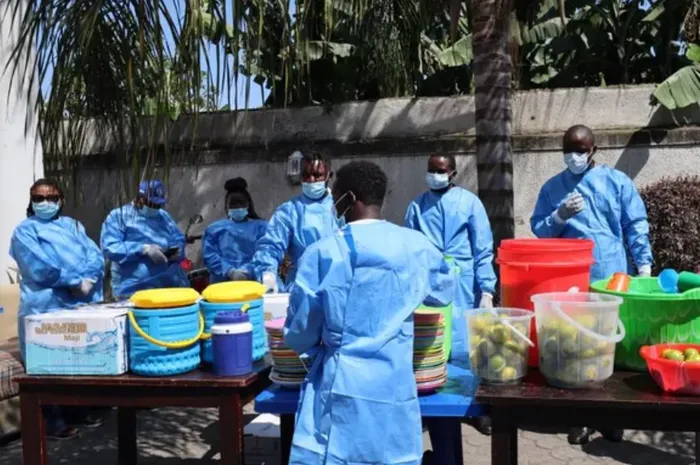
Source: IOL/AFP, 3 October 2026. Featured image: Staff prepare meals for people under quarantine in Goma, Democratic Republic of the Congo. Credit: Xinhua via IOL.