

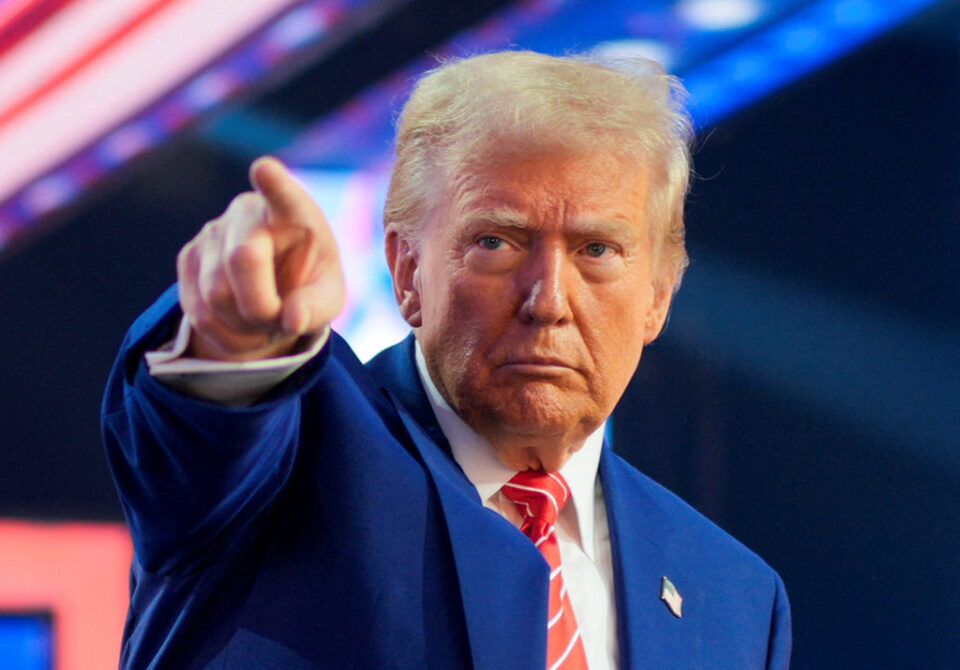
. . . temporary reprieve lapses on Tuesday
Mohloai Mpesi
LESOTHO’S fate regarding reciprocal trade tariffs remains uncertain as the temporary suspension deadline fast approaches, without the United States having commenced the long-awaited negotiations.
The three-month reprieve from the tariffs, initially granted by US President Donald Trump, is set to expire on July 8, 2025, which is in two days’ time.
President Trump had imposed the significant reciprocal tariffs on Lesotho earlier this year, basing the action on the trade deficit each country holds with the US.
These substantial tariffs are anticipated to severely impact the African Growth and Opportunity Act (AGOA), under which Lesotho’s textile sector has flourished since 2000, riding on duty-free access to the US market.
Should the United States proceed with implementing the tariffs, Lesotho stands to lose at least 12,000 jobs in its textile industry.
The introduction of reciprocal tariffs has already led to a noticeable decline in orders.
Maseru E Textile, a major local manufacturer, reportedly threatened to lay off 1,200 employees in June.
According to the Minister of Trade, Industry and Business Development, Mokhethi Shelile, the Lesotho government has not yet begun formal negotiations with the US.
Speaking to Sunday Express yesterday, Minister Shelile said that the United States Trade Representative (USTR) cited a heavy workload, indicating that they are currently engaged in negotiations with numerous other countries.
He added that the USTR had asked Lesotho submit a list of tariff-related issues for discussion during future talks. Lesotho complied with this request on June 4, 2025, but the United States has not provided a date for a meeting yet.
The Minister also said that the US is considering further extending the deadline due to their heavy workload.
“They admitted last week that they have a backlog of work volume with countries they are currently negotiating with,” Mr Shelile said.
“They are weighing the options of extending the date, which has been considered given the load of work they have on their table. We hope they go through with the extension although they are yet to decide.”
Recalling an online meeting, he explained, “They asked that we should send a list of issues relating to reciprocal tariffs they wanted us to submit, so that we will discuss them when we convene the negotiations meeting. We sent that list on the 4th of June 2025, and they have not reverted to us. I tried to make a follow-up recently, but they said they are not ready to meet with us right now.”
Mr Shelile expressed frustration with the expected timeline.
“These kinds of issues take about five years of negotiations, and they want to do them within months,” he said.
He explained why repeated extensions are problematic for Lesotho’s businesses.
“These extensions are not useful for us because it takes a long time for investors to make orders for clothes, shipping comes into play, and it also consumes a lot of time. It takes about six months for all these things to be done.”
Mr Shelile concluded that the uncertainty caused by the delays and potential extensions negatively impacts textile companies and investors.
“These extensions are not favourable to the investors,” he said. “The important thing is for them to answer so that the investors know. So, the unpredictability of this thing is giving us problems.”
On the other hand, Malikhabiso Majara, Executive Secretary of the Lesotho Textile Exporters Association, told Sunday Express yesterday that some textile companies have begun laying off staff.
This action is a direct result of the ongoing uncertainty leading to a halt in new orders from the United States.
“Due to the absence of orders, some companies are already implementing layoffs,” Ms Majara said.
“However, they are not indicating that employment has permanently ended. It’s a temporary measure, a ‘wait and see’ approach. Employees have been laid off for approximately three months, after which they are expected to return.”
She added, “Should the situation persist beyond three months, companies would likely start considering retrenchments. But this isn’t a final decision yet, as we are awaiting clarity on July 8th.”
Ms Majara also noted that companies are currently not placing orders for raw materials and those still operational are only working through stocks purchased last year.
“The companies that remain active are those processing materials acquired last year before the reciprocal tariffs were implemented,” she explained. “They are presently finishing off those existing supplies.”
She detailed the typical process: “We usually have 30 days for collecting raw materials, 30 days for production, and another 30 days for shipping to America . . . sometimes there are delays at borders, which are beyond our control. The maximum time to complete everything is 180 days, but normally it takes just 90 days.”
She expressed frustration that the uncertainty is impeding their progress, as buyers in America are not placing orders.
“This issue is completely hindering us,” she lamented.
“We cannot move forward or backward. It’s damaging because it creates significant market uncertainty. Buyers in America are unable to place orders.”
“We have attempted to inquire about potential solutions for situations like this but have not received any responses,” she said.
“We are currently waiting for July 8th, after which we will decide on the necessary steps.”
Meanwhile, President Trump announced Thursday that he had signed letters detailing “take it or leave it” tariff offers for 12 countries, scheduled to be dispatched tomorrow (Monday).
Speaking to reporters aboard Air Force One, Mr Trump declined to name the countries involved, stating the list would be made public tomorrow.
He noted that the timing had shifted from an earlier expectation that the letters would go out Friday.
The move comes as part of a global trade dispute. Mr Trump had previously announced a 10 percent base tariff rate in April, along with additional amounts for most countries, some potentially reaching 50 percent for countries like Lesotho.
However, all rates above the 10 percent base were suspended for 90 days, until July 9, to allow for negotiations.
Early Friday, Mr Trump suggested tariffs could potentially rise to as high as 70 percent, with most expected to take effect August 1.
Confirming his actions, Mr Trump said, “I have signed letters for probably 12 countries with different amounts of money, different amounts of tariffs, which will go out Monday.”