

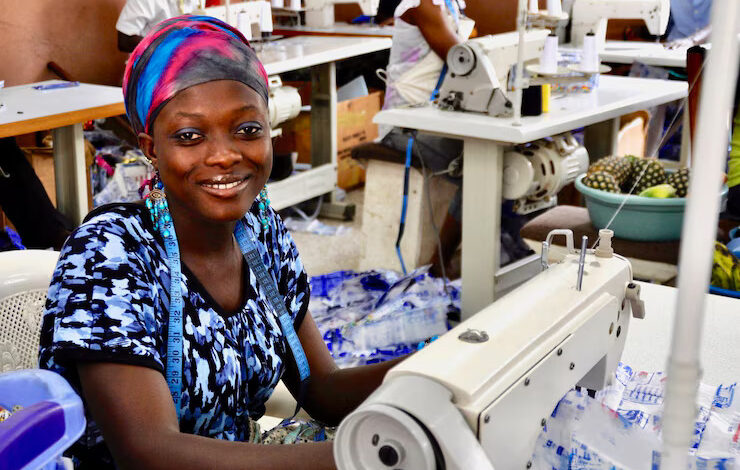
— As Lesotho’s textile industry falters
Seithati Motšoeneng
OVER 1,200 jobs are at risk as Lesotho’s textile sector faces a major crisis, threatening the livelihoods of thousands of families.
Maseru E Textile, one of the country’s leading manufacturers, has announced it will suspend operations for three months because of a sharp decline in orders, largely blamed on new 50 percent tariffs imposed by the United States.
The factory began winding down operations on June 10, with a complete shutdown expected by June 19.
The temporary closure will last until September, leaving workers uncertain about their future.
According to the United Textile Employees (UNITE), the worker’s representatives, Maseru E Textile management says the company cannot afford to keep running due to financial losses and a drastic fall in exports.
During the shutdown, workers will receive severance pay calculated at about M1,000 per year of service for long-standing employees.
UNITE representative, Sam Mokhele, told workers during a recent meeting outside the factory premises and witnessed by the Sunday Express that, after tough negotiations, the union was able to secure this compensation to help offset the loss of income during the layoff.
“We pushed for the employer to offer severance pay during this period, even though the company argued it could only afford payments for up to two years because of budget constraints,” Mr Mokhele said.
He criticised Prime Minister Sam Matekane’s government for failing to support the textile industry, arguing that stronger intervention could have prevented such job losses.
Workers, already under financial strain from previous short-term layoffs, say the prospect of three unpaid months is devastating.
Speaking on their behalf, ‘Mangaka Molefi, a long-serving employee, told the Sunday Express that receiving their severance pay in full would help ease their burden.
“Many of us have been loyal to this company, and a full severance payout would make a significant difference,” Ms Molefi said.
The crisis follows the introduction of a 50 percent tariff under US President Donald Trump’s news trade policy, which penalises countries with trade deficits with the US.
Lesotho, with little trade volume, has been hit particularly hard, especially as most of its exports to the US are textiles.
Since 2000, Lesotho has relied on the African Growth and Opportunity Act (AGOA) for duty-free access to US markets, helping the country become one of sub-Saharan Africa’s top garment exporters and at its height supporting over 53,000 jobs, mostly for women. But as AGOA’s future becomes uncertain and tariffs threaten to return at the end of next month, the entire industry—and the jobs it supports—are in jeopard