

By Mohloai Mpesi
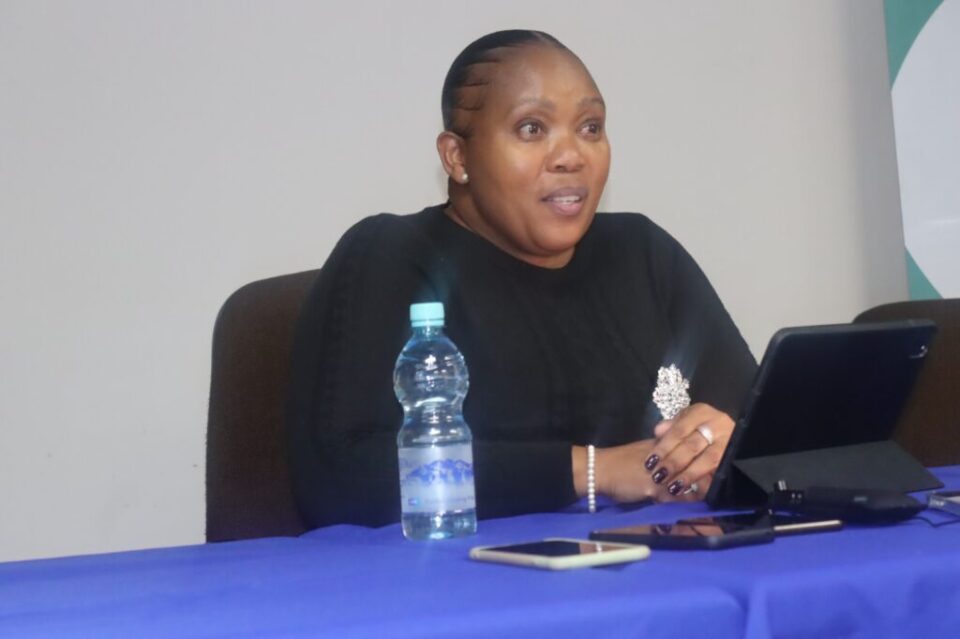
ADVOCATE Tlotliso Polaki, the Ombudsman, has emphasized the need for increased funding and full autonomy for the Office of the Ombudsman to effectively fulfil its constitutional duties.
Speaking at the conclusion of a strategic plan validation workshop on Thursday, Adv Polaki highlighted the importance of ensuring the office is adequately resourced.
The workshop focused on finalizing the Ombudsman’s five-year strategic plan for 2025-2030, which outlines a series of initiatives aimed at strengthening the institution.
Key elements of the strategy include building the office’s capacity, expanding access to Ombudsman services, improving accountability, raising public awareness about the office’s role, and enhancing engagement with stakeholders to promote good governance.
Recent restructuring of the office has already led to a 25 percent increase in resolved cases, demonstrating the positive impact of institutional improvements.
The strategic plan also stresses the need for committed staff, sufficient operational funding, and ongoing support.
“With our expanded mandate, we are hopeful the government will increase our funding and grant us the independence necessary to serve effectively,” Adv Polaki said.
“This strategy underscores our dedication to integrity, transparency, and fairness. To achieve the Ombudsman’s full independence and impartiality as outlined in the Constitution, we require adequate financial, material, and human resources.”
Adv Polaki also expressed gratitude to European Union Ambassador Paola Amadei for the EU’s support through the “Support for the Reforms and Strengthening of Governance in Lesotho” program, crediting it for much of the office’s recent progress.
She cautioned, however, that this external support should not lead to complacency within the government.
“Developmental support is valuable, but it is essential for the government to sustain and build on these programs independently. We need both financial and administrative backing,” she said.
Adv Polaki also called for strong political will and government commitment to ensure the Office of the Ombudsman can carry out its constitutional mandate.
“We need political support to effectively navigate our expanded responsibilities,” she said.
The Ombudsman’s role includes investigating and resolving complaints against government agencies and officials, particularly in cases involving maladministration, human rights violations, administrative corruption, environmental harm, and unfair treatment. The Ombudsman also works to foster transparency and uphold the rule of law.
She is authorized to examine complaints brought by individuals or agencies against government bodies, statutory corporations, and their officials.
Additionally, she initiates inquiries when there are reports or suspicions of fundamental rights violations by relevant authorities.
The office aims to advance good governance and accountability, safeguard human rights, ensure the rule of law is observed by all, and enhance the quality of public services.
As part of its strategic approach, the Ombudsman commits to handling all matters transparently, free from external pressure, and bases all decisions on solid evidence.
In a side interview with the Sunday Express on the same day, Dr Letsazo Kometsi of the National University of Lesotho (NUL) acknowledged that the Ombudsman’s new strategic plan included an implementation plan, which he sees as a positive step.
However, he criticized the plan for not addressing several important issues.
Dr Kometsi pointed out that the role of the Ombudsman is limited, “especially given that appointments are made on a contractual basis; after four years, a new person may be chosen, which disrupts continuity within the office”.
He expressed concern that the strategic plan lacks a clear approach to legal reforms that could strengthen the institution and expand its functions.
While he noted that the Ombudsman had mentioned mediation and Alternative Dispute Resolution (ADR) as part of her work, Dr Kometsi observed that the strategic plan itself does not clearly define these functions.
“Instead, it focuses mainly on investigation and making recommendations, which the government is not obligated to act on,” Dr Kometsi said.
He added that although the law specifies procedures for recommendations, these measures do not necessarily resolve issues more effectively. He would have liked to see the plan address these limitations more directly.
Dr Kometsi also raised concerns about the Ombudsman’s financial independence, arguing that it is problematic for an oversight body to rely on the very government it is supposed to monitor for funding.
He clarified that “I am not calling for complete independence, but rather for a semi-autonomous arrangement that would allow the Ombudsman control over its own budget and its implementation”.
On the other hand, Teboho Handy, Assistant Deputy Clerk of the National Assembly, praised the strategic plan, saying it would enhance the effectiveness of the Ombudsman’s office. He said the plan was well-researched and addressed the office’s weaknesses while aligning with modern administrative standards.
Mr Handy emphasized the need for “government offices in Lesotho to keep up with international best practices” and noted that, “unlike parliament’s own recent strategic document, the Ombudsman’s plan includes an implementation component, which he sees as an advantage”.
Mr Handy expressed his support for the Ombudsman’s pursuit of full independence, emphasizing that such autonomy is necessary for the office to fulfil its constitutional responsibilities without outside interference.
“The Ombudsman’s office must be independent. Like the DCEO, Auditor-General, and Parliament, it serves as a watchdog institution,” he explained. “Watchdogs need to operate free from control or direction in order to effectively carry out their duties. Otherwise, their work risks being compromised.”
He went on to criticize the lack of political will in the country to implement Ombudsman reports, noting that ministries frequently ignored the Ombudsman’s recommendations.
“There’s still a long way to go. Ministries often fail to act on reports brought to Parliament by the Ombudsman, and nothing changes,” he said.
“Politicians rarely surrender power willingly. Historically, the executive has overshadowed both the legislature and the judiciary, though now those branches are beginning to assert their independence.”
Mr Handy also highlighted the challenges posed by party loyalty. “Political will is still distant because party lines dictate decisions. Even when individuals recognize wrongdoing, they often feel compelled to vote with their party,” he said. “Changing the current situation will not be easy.”