

…as communities fear for the dead
Kabelo Masoabi
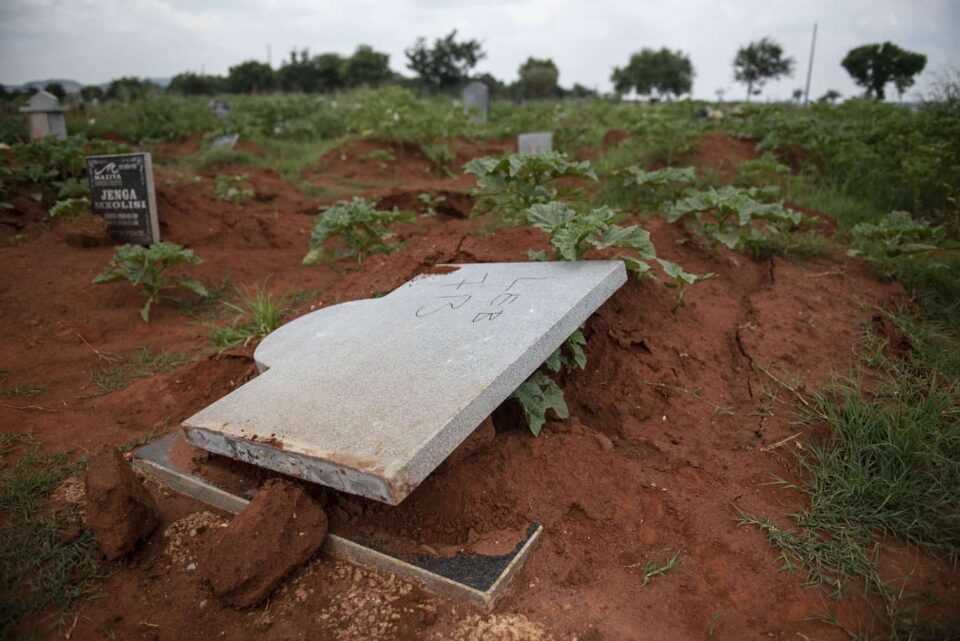
THE quiet of Lesotho’s cemeteries is being shattered by a disturbing pattern of grave desecration, with human remains reportedly removed and families left to confront the violation of their loved ones’ final resting places.
In Peka, Leribe, police say they are increasingly concerned about reports of graves being disturbed in villages across the area.
Inspector Ntoa Malefane of the Criminal Investigations Division said a body was recently discovered to have been exhumed from a grave at Ha Lechesa, raising fears that the practice could be spreading following similar incidents reported elsewhere.
The incident has deepened concerns about the security and integrity of burial sites in the community.
An official from the Chief’s Office in Ha Leburu, Molefi Mathola, said a particularly disturbing incident occurred last month at Ha Lechesa, where a grave was found to have been dug up and the corpse removed.
The circumstances surrounding the disappearance of the body remain unclear, but the incident has raised serious concerns among residents and local authorities about who may be responsible and what motivated the act.
The Ha Lechesa incident reportedly followed another disturbing occurrence at Ha Lepapa some months earlier, where two corpses were discovered to have been exhumed and their heads removed.
The reports from Peka are part of a wider series of incidents that have raised concerns about the security of burial sites. Among the most disturbing cases reported in Peka occurred in 2023.
On 30 August that year, police received a report that the grave of a 68-year-old grandmother at Ha Ntahli, Peka, appeared to have been tampered with. She had been buried on 19 February 2022.
On 22 September 2023, detectives from Peka Police Station, accompanied by officials from the Ministry of Health, went to the site and exhumed the body to establish what had happened.
After reaching the coffin, investigators reportedly discovered that its lid had been opened and that the body had been decapitated. The head was missing. A headscarf believed to have belonged to the deceased was also reportedly found at the scene.
Police subsequently appealed to members of the Basotho community with information that could assist in identifying those responsible.
“This is a bad act that is not acceptable — tampering with graves and the dead — and it is also a criminal offence,” police said in a statement.
A similar incident occurred last year when human remains were reportedly stolen from an isolated grave at Ha Polaki in Maputsoe.
The remains belonged to a person who had reportedly been struck and killed by lightning before being buried outside the village. It is alleged that a spade was used to excavate the grave and remove the remains.
Police suspect that some of those involved may be acting on behalf of traditional healers or individuals seeking human remains for ritual purposes. Insp Malefane has therefore called on the Ministry of Health to facilitate engagement with traditional healers to promote awareness of lawful and appropriate medical practices.
The allegations have intensified concerns about the intersection of traditional beliefs, criminal activity and the protection of burial sites.
Under Lesotho’s Public Health Order 1970, exhumation is regulated by law. Section 74 generally prohibits the exhumation or removal of human remains without the prescribed permit, while allowing judicially ordered exhumation for purposes such as an inquiry into the cause of death.
Arrests in Berea
The concern extends beyond Leribe. In August last year, three men were arrested in Berea in connection with the alleged disturbance of a grave at Ha Letsoela, Bela-Bela.
The accused were identified as Tsietsi Mojakisane, 42, Tumo Nyaka, 31, and Relutse Tefo, 24, all from Bela-Bela.
Officer Commanding Mapoteng Criminal Investigations, Inspector Thomas Chaotsane, said investigations began after a skull was reported stolen from a grave in Bela-Bela.
According to Insp Chaotsane, officers eventually arrested one of the suspects, Koleba, at Futhong, where he had allegedly been hiding.
Among his belongings was a drum commonly associated with traditional healers. When police opened it, they reportedly found a human skull inside.
Insp Chaotsane said Koleba told police that he had dug up the skull from a grave in Bela-Bela. Investigations also allegedly linked him to a hat found near the grave on the day of the incident.
Following his arrest, Koleba reportedly led police to Nyaka and Tefo. Insp Chaotsane said the three had worked together to exhume the skull and were subsequently arrested.
He appealed to the public to be cautious about customs and beliefs that could lead people into criminal activity, particularly beliefs that human skulls can be used to obtain wealth.
He also urged relatives of the deceased to regularly check and maintain graves so that any interference can be detected as soon as possible.
A family member, Katleho Letsoela, said the accused should reveal who had allegedly sent them to carry out the work.
He questioned whether they had been instructed by a traditional healer and said several graves in the area had been disturbed, raising suspicions that the incidents could be part of a wider scheme.
Chiefs call for action
Chief Boshoane Peete reported that graves had also been dug up at Ha ’Matsoai, Moeaneng and Bela-Bela, including two graves at the latter location.
However, he said the perpetrators had not managed to reach the bodies because of the difficulty involved.
At one grave, they had dug from the feet rather than the head. At another, the suspects reportedly fled after dogs chased them away.
In a police report, Chief Peete condemned the practice and called on traditional healers who use human body parts or remains in their practices to stop, warning that such activities inflict further suffering on bereaved families and create tension within communities.
For residents, the fear is not confined to the physical damage caused to graves. It is also the realisation that places traditionally regarded as sacred and secure can become targets of criminal activity.
“A grave, traditionally regarded as the final resting place of the deceased, can suddenly become the scene of a criminal investigation,” said resident Makhoaba Ntima.
Authorities have urged the public to reject beliefs that disturbing graves or taking human remains can bring wealth, protection or prosperity.
Traditional healing
The incidents have also raised a sensitive question about the relationship between traditional healing, cultural beliefs and criminality.
Traditional healer, Thabo Maola, said traditional medicine remains an important part of Basotho society and cautioned against portraying traditional healers collectively in a negative light because of allegations involving human remains.
“The challenge is to distinguish legitimate traditional healing practices from individuals who may exploit cultural beliefs for criminal or financial purposes,” he said.
Mr Maola stressed that traditional healing should not simply be equated with criminal activity. At the same time, he said cultural sensitivity should not prevent authorities from thoroughly investigating allegations involving human remains.
If remains are being obtained illegally, he argued, investigators should seek to establish who is behind the demand rather than focusing only on those caught disturbing graves.
“The bigger question is therefore not only who is digging up graves, but who, if anyone, is demanding what is being taken from them,” he said.
The human cost
Bokang Futho, whose brother’s grave was reportedly found disturbed in Bela-Bela, said the issue goes beyond individual graves.
“It touches on how society treats its dead and how it protects the living from the fear and trauma that follow when even a final resting place is no longer considered safe,” he said.
Mamokete Tlapane, who offers counselling services in Leribe, told this publication that the motives behind the incidents ought to be established through evidence and proper investigation.
“What is already clear, however, is the damage being done. For a grieving family, burying a loved one is supposed to bring a measure of closure. Discovering that a grave has been opened, remains removed or a resting place violated can reopen grief and replace mourning with anger, fear and helplessness,” she said.
For families and communities, she said, the priority should now be stronger investigations, greater protection of burial sites and a clear distinction between legitimate traditional practices and criminal acts.
“Because when the dead are no longer left to rest, the living are left to carry a different kind of burden — the fear that even death cannot guarantee peace.”