
Mohloai Mpesi in Nasrec/Johannesburg and Agencies.
LEADERS at the major international forum, the G20 Leaders’ Summit, have called for decisive action on global debt sustainability, with particular emphasis on African countries.
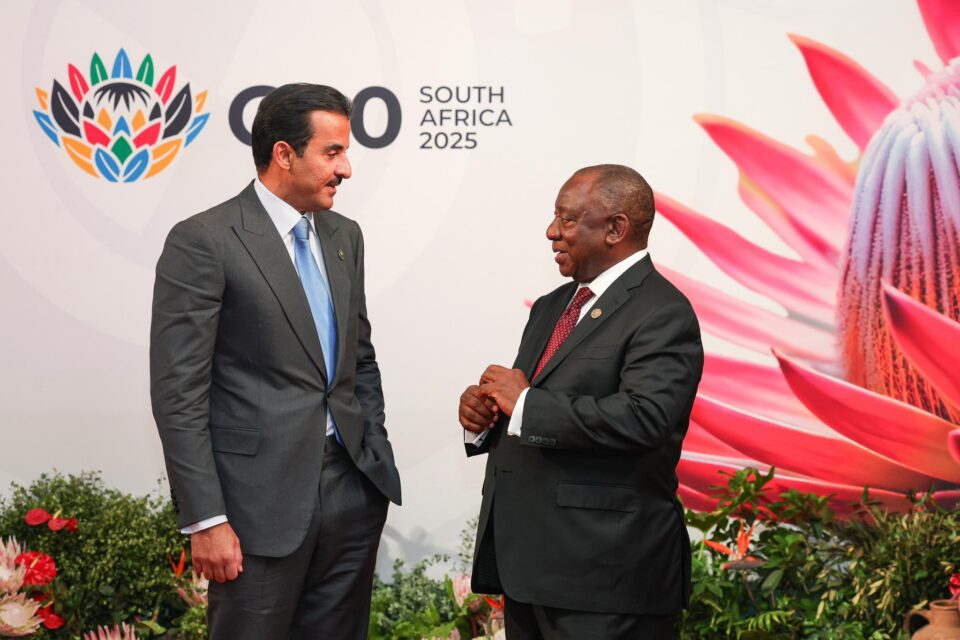
This emerged during discussions at the G20 Summit hosted by neighbouring South Africa at the Expo Centre, Nasrec, Johannesburg.
Founded in 1999 as an informal economic grouping of the world’s largest economic powers, the G20 comprises 19 countries—Argentina, Australia, Brazil, Canada, China, France, Germany, India, Indonesia, Italy, Japan, the Republic of Korea, Mexico, Russia, Saudi Arabia, South Africa, Türkiye, the United Kingdom and the United States—as well as the European Union and, since 2023, the African Union.
Among the attendees are China’s Premier Li Qiang, French President Emmanuel Macron, India’s Prime Minister Narendra Modi, Germany’s Chancellor Friedrich Merz, United Kingdom Prime Minister Keir Starmer, Brazil’s President Luiz Inacio Lula da Silva, Türkiye’s President Recep Tayyip Erdogan, Italian Prime Minister Giorgia Meloni, Japanese Prime Minister Sanae Takaichi, Canadian Prime Minister Mark Carney and Australian Prime Minister Anthony Albanese. African Union Commission chairperson Mahamoud Ali Youssouf, President of the European Council Antonio Costa, President of the European Commission Ursula von der Leyen and United Nations Secretary-General António Guterres are also in attendance.
The leaders’ summit, held under the theme “Solidarity, Equality and Sustainability”, began yesterday and ends today. It proceeded without representation from the United States.
Summit Chairperson, President Cyril Ramaphosa, said in his opening remarks that leaders had agreed to take concrete action to ensure debt sustainability for low-income countries.
“We have agreed that it is essential for the global community, international financial institutions, development banks and the private sector to scale up post-disaster reconstruction.
“Secondly, we agreed that we must take action to ensure debt sustainability for low-income countries. The G20 needs to renew its efforts to advance debt sustainability, with particular emphasis on African countries,” he said.
Mr Ramaphosa also underscored the importance of increasing the quality and quantity of climate finance flows to developing countries.
“Thirdly, we said we should mobilise finance for a just energy transition, increasing the quality and quantity of climate finance flows to developing economy countries.
“Fourthly, we emphasised the importance of harnessing critical minerals for inclusive growth and sustainable development through beneficiation at the place of extraction.”
He highlighted the widening disparities in wealth and development both within and between countries, citing divisions of economic status, gender, race, and geography as barriers to sustainable development.
“The disparities in wealth and development within and between countries are unjust and unsustainable. It is also one of the greatest impediments to sustainable growth.
“It is essential that we break down divisions of economic status, gender, race and geography. Sustainability involves meeting the needs of the present without compromising the ability of future generations to meet their own needs.
“This is vital for global stability and security, alleviating resource pressures, managing population movements and reducing the risk of conflict.”
He further warned that escalating global threats—geopolitical tensions, global warming, pandemics, energy and food insecurity, inequality, unemployment, extreme poverty, and armed conflict—pose severe risks to humanity’s collective future.
“We must use this framework to catalyse development investments at scale in developing economy countries. We must continue the reform of the international financial architecture, ensuring that institutions are strengthened, more inclusive, and equipped to meet present and future challenges.”
Namibian President, Netumbo Nandi-Ndaitwah, echoed similar sentiments, calling for strong commitment to inclusive and sustainable economic growth aligned with the Sustainable Development Goals (SDGs).
“Let us reaffirm our firm commitment to inclusive and sustainable economic growth, guided by the SDGs, by focusing on three pillars: strengthening trade to drive economies, securing finance for development while responsibly managing debts, and reducing inequality through inclusive policies.
“All these speak to the theme of this conference – solidarity, equality and sustainability,” Ms Nandi-Ndaitwah said.
Speaking on behalf of the Dutch Prime Minister Dick Scoof, the Netherlands’ Minister of Finance, Eelco Heinen, stressed that high debt levels obstruct economic growth and highlighted the importance of debt transparency.
“It is a fact that high debt levels stand in the way of growth. Every dollar spent on interest cannot be spent on investing in a stronger economy. That’s why the Netherlands strongly supports the G20’s work on debt sustainability.
“Transparency can help boost investors’ confidence in borrowing countries, stimulating financing for development. We know there are insufficient public funds to tackle the enormous needs of developing countries. Therefore, we also need private capital mobilisation,” he said.
Zimbabwe’s Vice President, Constantino Chiwenga, warned that many countries are forced to choose between servicing debt and funding essential public services. He called for innovative solutions to restore sustainability.
“The growing debt burden continues to constrain development. Many nations are forced to choose between servicing debt and funding essential social services.
“We need a comprehensive and equitable debt resolution approach. We encourage innovative solutions, such as debt-for-climate and debt-for-development swaps.”
He urged reforms to strengthen the G20 Common Framework and advocated for Zimbabwe’s inclusion in the process.
“Zimbabwe seeks inclusion and active participation in an improved G20 Common Framework for debt treatment. We are ready to engage constructively to that end.”
Mr Chiwenga further emphasised the need to reinforce a fair multilateral trading system under the World Trade Organisation (WTO) and intensify the fight against illicit financial flows (IFFs).
“The G20 must reinforce a fair and transparent multilateral trading system under the WTO. We welcome efforts to reform the international financial system and propose the recharacterisation of multilateral development banks to expand concessional and climate finance.
“Curbing illicit financial flows, tax evasion and profit shifting is critical to enhancing domestic resource mobilisation in developing countries,” he said.