

. . . news renews hope for troubled textile sector
Mathatisi Sebusi
LESOTHO, heavily dependent on textile exports to the American market duty-free since 2000, is upbeat after the United States this week tabled a Bill to extend the African Growth and Opportunity Act (AGOA) for three more years.
The US House Committee on Ways and Means this week approved the AGOA Extension Act by a vote of 37-3, describing the initiative as “the cornerstone of economic relations between the US and Sub-Saharan African nations.”
In an interview with the Sunday Express yesterday, the Minister of Trade, Industry and Business Development, Mokhethi Shelile, welcomed the news reiterating that only three out of 40 members of the committee had voted against AGOA’s extension.
The development provides a last-minute reprieve to Lesotho’s textile operators and thousands of workers as the year draws to a close, after a lot of uncertainty in the sector following the expiry of AGOA on September 30.
The Agoa Extension Act, seeks to renew the programme until 31 December 2028, which would give Lesotho textile exporters and those from other African countries much-needed certainty.
Mr Shelile said if AGOA is not renewed, Lesotho would bear tariff burdens of over 30 percent.
“If AGOA is not renewed, Lesotho will have to pay Most Favoured Nation (MFN) tariffs — 15.6% for cotton garments — on top of the 15% reciprocal tariff already in place. That means our goods will be hit with a total tariff burden of 30.6% when entering the US market,” he said.
Enacted in 2000, AGOA allows eligible sub-Saharan African countries duty-free access to the US market for more than 1,800 products, plus over 5,000 items covered under the Generalized System of Preferences.
AGOA was last renewed in 2015 and, since it expired at the end of September Lesotho’s economy has been staring at a bleak future.
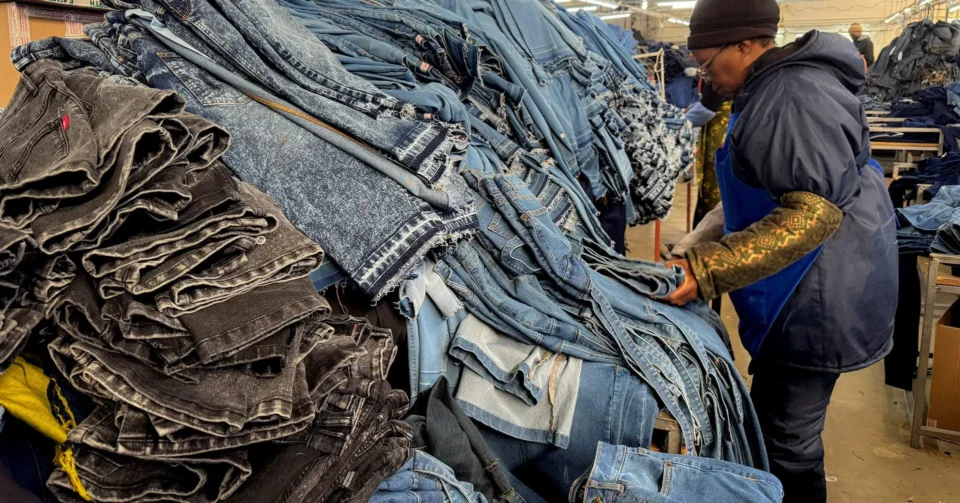
The country’s textile sector employs over 12 000 workers and over 40 000 workers at its peak around 2009, making it one of the largest employers after the government.
Mr Shelile noted that if AGOA’s renewal were to fail, 11 textile factories exporting goods to the US market will be affected.
“If we lose AGOA, 12 000 direct jobs will be in jeopardy. This also means that businesses that depended on these factories, including truck businesses, taxis, rental rooms, and domestic workers will be affected,” he said.
The government has been negotiating towards the renewal of AGOA for the past two years.
Mr Shelile was part of the high-level Lesotho delegation that visited the US in September to negotiate and safeguard the agreement.
The delegation included Ministers of Labour and Employment, Tšeliso Mokhosi, Finance and Development Planning, Ret?elisitsoe Matlanyane, officials from the Ministry of Foreign Affairs and International Relations and representatives of the Lesotho Textile Exporters Association
Uncertainty over AGOA’s extension has dimmed the prospects of Lesotho’s textile industry, already reeling under the weight of the current tariffs.
Many factories have reported a sharp decline in US orders, leading to layoffs and temporary shutdowns.
Local factories exporting to the US have already scaled down operations, with many of them implementing rotational schedules requiring workers to report to work for only two weeks a month.
Towards the September expiry date of AGOA, factory owners, already struggling under America’s new tariff regime warned that unless tariffs are reduced to 10 percent, they will be forced to shut down, as Lesotho’s textiles cannot compete with similar products from countries like Kenya, which pay only 10 percent and enjoy other logistical advantages.
Chairperson of the Lesotho Textile Exporters Association, David Chen, told the Sunday Express the US’s introduction of the new tariff regime had severely undermined Lesotho’s competitiveness.
“Other AGOA-eligible countries face tariffs of only 10%, while we are dealing with 15%,” he said. “Buyers are simply going where they can get products cheaper. These tariffs are paid by the buyers, so naturally they choose lower-cost sources.”
Mr Chen added that many factories have not received any new orders from the US since the tariffs took effect. Some have closed down entirely, while others have retrenched workers or placed them on indefinite leave.
However, the proposed renewal does not affect the administration’s separate tariff agenda, which operates outside AGOA’s statutory schedule.
Jason Smith, chairman of the Ways and Means Committee, told The Africa Report this week that the renewal of AGOA serves America’s economic and national security interests, adding that Africa alone is home to roughly one third of all the world’s critical minerals.
“In Africa, China and Russia have been aggressive players, economically bullying developing nations, extracting and controlling that continent’s critical minerals in dirty and dangerous ways, all in a bid to assert global dominance. AGOA is a key part of how America protects our interest in a region important to our future,” Smith said.
“As China continues to grow its presence around the globe, America must provide an alternative path to nations looking to tie their economic prosperity to the United States and not our adversaries.”
The Bill’s sponsors say a three-year extension would provide a stable future for US firms sourcing from Africa.